Showing posts with label lifestyle. Show all posts

Sunday, September 29, 2019

The Jungle Effect: Notes on Indigenous Diets

In The Jungle Effect: The Healthiest Diets from around the World--Why They Work and How to Make Them Work for You (2008), Daphne Miller, MD, seeks to explore the traditional diets of some of her patients whose ethnic heritages haven't been generations of American-born and raised. When various patients from ethnic backgrounds outside of the United States were having health complications that people of their own heritage rarely had, Dr. Miller sought to question the "new" diet and look at the differences between the SAD (Standard American Diet) that seemed to be causing the health issues and the patients' native heritage diet. Following are a collection of anthropological discoveries she made in her search to form better diets for her patients:

  • Research has shown the 80% of medical problems involving heart disease, stroke and type 2 diabetes and 40% of cancer cases could be avoided by following a healthy diet, exercising regularly, and avoiding tobacco.
  • San Francisco bay area is a hot spot for breast cancer.
  • "Nixtamilization" is a process used to treat maize in Central and South America. To prepare corn for consumption, corn is boiled in an alkali solution of lime and water which removes the tough outer layer of the kernels, and which also enriches the corn with essential nutrients like calcium, niacin, and certain amino acids. Without nixtamilization, Mesoamericans would have suffered from severe vitamin deficiencies, including pellagra (niacin deficiency). 
nixtamilization
  • Table manners and patterns of eating are apparent in almost all cultures, and in countries that practice communal eating, one simply does NOT eat alone. That is, how one eats is extremely important in many cultures. Take Cameroon and Crete, for example. In both cultures one is absolutely expected to eat slowly--a practice that very much improves digestion, and interesting enough, less food is consumed. Also, in Okinawa, the dictum Hara Hachi Bu, or "eat only until you are eight parts full," is a standard reminder not to overeat. In outcome, Okinawans maintain their weight from age 20 to 100, Americans on the other hand typically put on one pound per year after the age of 30.
  • Why are most toddlers disgusted by coffee, but many adults addicted? Because acidic, spicy and bitter foods are acquired tastes.
  • Eskimo tribes (Inuits), until recently, ate whale meat, seal, fish, sea bird and caribou, and despite this indigenous diet comprising about 50% high protein and 30-40% fat, Eskimos eating this diet had some of the lowest rates of heart disease and cancer in the world. Why? Probably because their blood levels showed very high levels of two omega-3 fats: EPA and DHA, fats known to prevent many chronic diseases. Eskimos ate fats from seafood and wild game, which in turn synthesized their omega-3s directly from sea greens and vegetation from the tundra. 
  • Peruvian villagers in Las Palmas in the Amazon eat the cashew fruit but avoid the nut, which is known to cause stomach cramps and nausea after a few hours of ingestion due to urushio, a toxin, in the nut. These Peruvians are amused to learn that Americans consider cashews a luxury food and cook them to make them edible.
  • Thiamine deficient people will have mental confusion and problems walking, but eating a thiamine-rich meal of, for example, whole grains, beans, and lean meat, immediately improves one's sense of well-being.  
  • The practice of adding spices like garlic, onions, chilis, turmeric, and ginger not only aid digestion but also delay food spoilage. Many also have anti-inflammatory qualities. These tangy, spicy additions are acquired tastes. 
  • Many cultures developed fermented and pickled foods which they discovered aided their digestion: Icelandic skyr (yogurt), Greek yogurt, Cameroonian fou fou and millet beer, Korean kimchi, Japanese tempeh and natto, and German sauerkraut. 
various kinds of fermented foods
  • Refining grains involves removing the two most nutritious parts -- the coarse husk and the oily inner germ. These two parts give bread a rough texture and a nutty flavor, but their removal leaves only a white endosperm, a fluffy form of starch with little nutritional value. Even whole-wheat bread (as opposed to whole-grain bread) is a highly refined food as it's made with flour which has retained some husk but no germ. Basically, the flavor is removed and sweetness remains.
  • Lactose intolerance. A good portion of the world's population has some discomfort or difficulty after eating dairy products. This is because their bodies don't produce lactase, the enzyme for digesting the carbohydrate lactose. Blacks, American Indians, and Asians are large ethnic groups commonly known to have difficulties with milk, while northern Europeans, some tribes in East Africa and the Middle East are able to digest lactose into adulthood.
  • The Pima Indians in Arizona have some of the highest rates of type 2 diabetes in the world. Scientists have found that the Pima have a host of gene mutations that may relate to insulin reaction and sugar processing. Ironically, the Pima's cousins, the Tarahumara Indians living several hundred miles south in Sonora and Chihuahua, have a low rate of diabetes.
  • 35% of Hawaiians are considered to be morbidly obese with similar numbers suffering from diabetes type 2 and heart disease. Middle-aged Hawaiians 100 years ago had the bodies of 20-year-olds, so what happened? The traditional diets of taro, breadfruit, fern shoots, purple yams, kukui nuts, fish, and free-range chickens are now only available at expensive prices in supermarkets for tourists while the foods of modern convenience are the only foods subsidized.
  • Type 2 diabetes in the past 70 years in the US has increased 700% and is now affecting even the younger population. The ethnic groups most dramatically impacted by this change are Latinos, Asian Americans, Native Americans and African Americans. 
  • All carbohydrates are not equal. The traditional carbs (e.g. cheeky yam, black bean seed, bush onion)  eaten by Pacific Islanders and Aboriginals seem to have had a protective effect against diabetes while Western food carbs (russet potatoes, white bread, white pasta, mass-produced corn, and white rice) seem to switch on diabetes.
  • Over 50 species of beans are native to the Americas.
  • Cretans of two generations previous consumed a guesstimated 50 kilos of olive oil per year, and lived to be quite old. A health-challenged Cretan returned to the old ways of stone-pressing olive oil when he realized the pesticides and fertilizers he used were in his precious olive oil and getting in his water supply, He also realized the modern way of processing olive oil of washing with large quantities of water, which, since antioxidants are water soluble, was washing away the most important nutrient. He returned to natural living without fertilizers and started stone-pressing his olive oil again. Health problems resolved.
stone press for making olive oil naturally
  • Depression, second only to heart disease, ranks as the highest health disability worldwide, and in the U.S., 20% of women are likely to experience depression and 12% of men. In Europe, depression rates for people over age 65 are influenced by seasonal affective disorder (SAD, or "winter blues") and by location, that is, Munich, London, Amsterdam, Verona, and Berlin have the highest depression rates, whereas Iceland (with its quite Northern, sunless winter) ironically had the lowest.
  • Icelanders love their fish and consume 225 pounds of fish per year, while Japanese consume the second-most at 147 pounds annually. People in the US consume only 48 pounds. The countries with the lowest per capita fish consumption rate (e.g. West Germany, New Zealand, and the United States) have, perhaps not so surprising, higher depression rates. Icelanders believe that eating high omega-3 fish, depression is greatly reduced. 
  • Lamb is almost as rich in omega-3s as fish.
  • Swiss alpine cheese (from Switzerland) is a dairy product of free-range cows grazing on clover and moss-rich pasturage. The cheese from these cows have milk five times the omega-3 fats and has 20-30% less saturated fat than the standard US cheddar.
  • Colon cancer, next to lung cancer, is the second biggest cancer killer in the US, affecting all ethnicities fairly equally. Western and southern Africa are cancer cold spots; it's suggested that they eat virtually no processed foods, large amounts of omega-3 fish, and their cooking oils are made from simple home-processing. Americans, on the other hand, eat a diet high in refined carbohydrates and meat, both of which promote bacteria in the gut. The traditional western and southern diet contain a diet rich in fiber, probiotics and nutrients, and the people evacuate much more frequently, which in turn eliminates the build-up of toxins more regularly.
  • One of the staple foods of Okinawans is sea vegetables. Like maize in Mexico, potatoes in Iceland, and barley in Crete, sea veggies appear in an array of traditional dishes: raw in salads, pickled as sauces and relishes, dried for a snack or a wrapper for rice, cooked in soups, sweetened in jelly or ice cream. It also appears in traditional herbal medicines, cosmetics, and treatments for asthma to hemorrhoids to stomach ulcers. Studies have showed that the people eating the highest amount of sea veggies were the healthiest in villages.
various kinds of seaweed -- a seaweed salad

Wednesday, July 10, 2019

China: Influenced by and Influencing the West

"Western Knowledge Flowing into the East"

Since the 16th century, with the opening of sea routes and development of sea trade, the distance between the East and the West drew closer and closer. Europeans could come into direct contact with the mysterious Orient, discovery complexity and the richness of Chinese civilization, and the Maritime Silk Road was the link of communication between the two worlds.

European merchants and missionaries unceasingly arrived to promote and market their lifestyles, religion and sense of values, while the mainstream mentality of the Chinese empire responded mostly with defense, restriction and objection. The delineation between Chinese and foreign things and the notion that "our heavenly kingdom is perfect in every way" severely hindered the rational observation and awareness of the world outside of China.

From the Ming to early Qing, foreign missionaries, while carrying out missionary work, also introduced Western science and technology to the Chinese and ultimately advanced the development of science and technology for the Ming-Qing China.

Map-making


Well-known missionary Matteo Ricci was a literati, and at the same time, affluent in astronomy, calendric systems, geography, mathematics and engineering, among other knowledge and fields of study. After coming to China, he continually presented Western sciences to Chinese governmental officials and scholars, especially the knowledge of astronomy and geography. In Zhaoqing City, Matteo Ricci re-illustrated the map of the Western world, accompanied by Chinese annotations (this is the famous Complete Map of the Earth's Mountains and Seas). In 1601, after entering Beijing, Matteo Ricci made special efforts to illustrate the Complete Map of the Myriad Countries of the World, in which he divided the earth into "five continents" and "five zones" [terms still used today unlike the Western concepts of the seven continents and the seven seas]. The five continents were Asia, Europa, Libia (Africa), Americhe and Magellanica (Antarctica); the five zones were the north frigid zone, north temperate zone, tropical zone, south temperate zone and south frigid zone. And to suit the traditional concept and custom of China [that yellow represents the emperor and since yellow is central, the emperor must be in central position], Matteo Ricci placed China at the center of the map, making Emperor Wanli quite pleased. [Typically when a country makes a map, their country is centrally located.]

Source - Jesuit missionaries, like Fr. Matteo Ricci, and Adam Schaal von Bell (above) recognized that the coherence between the teachings of Christianity and those of Confucius, made Chinese civilization receptive to Western Science.

Matteo Ricci introduced to the Chinese that the earth was round, as well as concepts of the north and south poles, the equator, longitudes and latitudes, to name a few. The new knowledge completely overthrew "the heaven is round and the earth is square" theory, and widened the horizon of many Chinese.

After Matteo Ricci, there was Didace de Pantoja (1571-1618) who was ordered by Emperor Wanli to translate the European map (a work which remained unfinished). In 1623, Giulio Aleni (1582-1649) completed the An Extra Record of Geography, a book illustrating the customs and geography of the countries in five continents, a rather complete account of world geography. In the early Qing Dynasty, missionaries including Luigi Buglio (1606-1677) and Ferdinand Verbiest together compiled the Important Accounts of the Western World, specially devoting attention on Western countries, their people and routes, a book which complemented Matteo Ricci and Giulio Aleni's works.

Source - Beijing observatory, designed and built by Fr. Ferdinand Verbiest.

The Italian Jesuit missionary Martino Martini (1607-1661) on the basis of field surveys, combined academic achievements from Chinese and foreign scholars, published the New World Map and the Map of the Chinese Empire in Augsburg in 1654. The following year he published Novus Atlas Sinensis (New Atlas of China) in Amsterdam (it's contents were detailed and precise), and Martini was considered the "father of geographical studies on China" in the West.

In 1707, Emperor Kangx ordered missionaries Joachim Bouvet (1656-1730), Jean-Baptiste Regis (1663-1738) and Pierre Jartoux (1668-1720) along with Chinese scholars He Guodong, Ming Antu and others to organize a cartography team, which then traveled to every province of China. Using longitudinal and latitudinal coordinates, they drew a detailed map of China: Complete Map of the Empire of Kangxi, a cartographic work considered very advanced.

Calendars

In 1601, Matteo Ricci had recommended the Western calendar to Emperor Wanli in Beijing, and Matteo along with scholar Li Zhizao and others finished many works, including Illustrated Explanation of the Sphere and Astrolabe, by using the Western calendar, knowledge in mathematics and in geography.

Following Ricci, other Jesuit missionaries like Didace de Pantoja, Sabbathin de Ursis (1575-1620), Nicolas Longobardi (1559-1654) Jean Terrenz (1576-1630), Johann Adam Schall von Bell arriving in China were affluent in astronomical calendars. They served the Chinese government by translating western teachings, participated in the revision of the calendar, made astronomical equipment, and contributed to the reforms of the calendric systems of the Ming and Qing dynasties, which ultimately abolished the old system of Datong Calendar and implemented the new Shixian Calendar.

Other Developments


During the Ming and Qing dynasties, missionaries introduced other Western disciplines to China, some of which included physics, agronomy, biology, medicine, architecture, music, fine arts, linguistics, philosophy, and more. There were also hands-on executions in the areas of horology, firearms, gardening, to name a few.

China Influencing Europe and America

Since the 16th century, Europeans who visited China were mostly missionaries, and they introduced a great deal of Chinese culture to the West. The missionaries studied Chinese literature and were pioneering figures in Western Sinology, and profoundly influencing modern cultural development in Europe. The Jesuits periodically reported in writing to the Church about developments in China, and these writings were the most crucial materials for informing Europe about Chinese thinking and culture.

Chinese literary works translated by missionaries included The Doctrine of the Mean, The Great Learning, and The Analects of Confucius by Prosper Intercetta (1599-1666), Confucius Sinarum Philosophus by Philippe Couplet (1624-1692), The Four Books, Book of Filial Piety, and Learnings for Children by Franciscus Noel (1651-1729), Idea Generalis Doctrinae libri Ye Kin by Joachim Bouvet, The Book of History by Antoine Gaubil (1689-1759), and more.

In the 18th century, translated by Jesuit missionaries, as many as 15 volumes of Chinese works on history, science, arts, and customs appeared in Europe. And disseminators of Chinese culture beyond missionaries were the journal logs of navigators along with adventurers and merchants to China.

Evidence of Chinese influence beyond China


18th century French ideologist Denis Diderot (1713-1784), Baron d'Holbach (1723-1789) and leaders of the French Enlightenment movement Montesquieu (1689-1775) and Voltaire (1694-1778) appreciated traditional Chinese culture and were keen to absorb its soul. Voltaire especially was an advocator of Chinese philosophy, ethics, and politics, and in his eyes, Confucius was greater than Jesus. Voltaire dreamed of finding a "rational religion" in which Confucius served as its model.

Traditional Chinese thinking with "emphasis on agriculture" profoundly impacted "physiocratic" theories of French economists Francois Quesnay (1694-1774) and Anne Robert Jacques Turgot (1727-1781). German philosopher Leibniz (1646-1716) was fascinated by the Yi Jing (The Book of Changes) and diagram of the 64 hexagrams, which influenced his Monodology and Natural Law. The great Russian author Leo Tolstoy (1828-1910) performed systematic studies on Chinese thinking and culture late in his life, particularly praising Lao Zi, whom he referred to as his "most adored philosopher".
 
 The eight trigrams and the 64 hexagrams
 
In the 1760s British classical economist Adam Smith (1723-1790) learned of Chinese physiocracy and policies through Francois Quesnay, and this knowledge became a principle ideology behind his classical masterpiece on political economy, An Inquiry into the Nature and Causes of the Wealth of Nations (Wealth of Nations).

In the 17th and 18th centuries large quantities of Chinese silk, porcelain and tea in fad proportions were shipped to Europe, along with household items like fans, sedan chairs, wallpapers, and garments, Eastern cultural additions which brought a poetic and fresh feeling to the West. 
 
Pair of large imari vases
From the 1770s to the 1780s, the pinnacle of "Chinese fashion" manifested in consumer fashion as well as in art style. The art style was a rebellion and negation against the Baroque art style that dominated Europe before the 18th century. This new style called "Rococo", originating from the French word "rocaille," which means having the characteristics of fineness, lightness, flamboyance, intricacy and dynamism. This style primarily influences landscape architecture that advocated Chinese fresco with floral patterns, home furniture with Chinese flower and bird paintings, Chinese prints, etc. Rococo art was popular in Europe for about a century until neoclassicism in the 1760s emerged and gradually became the mainstream art of Europe.
 
__________________________________________________________________________
 
Text Source:
 
This fascinating selection was taken from Li Qingxin's 2006 book "Maritime Silk Road", translated by William W. Wang, and published by China Intercontinental Press, pp. 183-189. An absolute read for the historian!

Sunday, January 6, 2019

Best Pedometer Apps (Dec 2018)

My loyalties to Accupedo have seriously been challenged the last two or three months, namely because I walk extensively throughout the day and access my pedometer rather frequently, but the last couple of months the app hasn't worked for me. The app sensor didn't clock my steps unless I held my cellphone in my hand! How irritating since the pedometer app is my second most used app, and for years I've made a game of getting at minimum 10,000 steps a day!

Several years ago when choosing a pedometer app, I carefully read through numerous online pedometer app reviews and decided that Accupedo, which was repeatedly featured as one of the best, had the qualities I thought to be most useful: nice appearance, quick visual access to the number of steps taken, a step widget so I wouldn't have to open the app itself, a history log of steps taken, and the bonus of seeing the average steps by day, week, month and year. Nice little package! I downloaded it and have happily used it for years ... until about two months ago. Hmmph! [I do think some of my problems were coming from the slow death of my five-year-old Note 4, and then complicated by the app not automatically updating (which I wasn't aware of) when I bought a new phone and switched the data over to it.]

So I went searching for a new pedometer app, and one that would work. Here's what I found:


So I tested these 6 pedometer apps for 2 consecutive days to draw my conclusions (commenting on them in order from left to right). Info included from the Google Play Store is the name of the app, the creator, the rating based on the 5 point scale, number of people rating the app, and the number of downloads:


PEDOMETER (blue)
ITO Technologies, Inc
4.4 (447,939) 10 million downloads

Comments:

This app didn't start counting till I actually pushed the "start" button. But until I push the "stop" button, it will keep counting, day after day. This is the only app among this group like this, and I don't like this feature. 

However, hello! This is probably going to be my new pedometer app! Why? It counts the steps well, a little more of a hyper counter than the others, which I don't like, but what I really really like about this is -- everything important is on the face screen -- the number of steps and what time during the day the most activity took place! I don't have to flip to another screen to find out what my day's activity was like! Another great point is this app had some of fewest advertisements, and the advertisements stayed at the bottom of the page, not obscuring the quick access when opening or closing the app. 


PEDOMETER STEP COUNTER (pink)
Leap Fitness Group
4.7 (169,403) 10 million downloads

Comments:

Nice appearance but right away I was put off by the pop up advertising to get in and to exit from the app. This totally destroyed my interest in the app, because, as I said earlier, I access this app several times a day and therefore I would be irritated not just in this testing mode, but several times a day. No thanks! That said, it does have a lot of nice features, counts pretty accurately I would say, and has a lot of extra features on other screens, but since it doesn't package the number of steps AND show the activity throughout the day on the face screen while other apps do, this app doesn't "shine" for me. 


PEDOMETER STEP COUNTER (blue)
Simple Design Ltd.
4.7 (86,722) 5 million downloads

Comments:

This app is almost identical to the Pedometer Step Counter (pink) although it is made by Simple Design. It has some extra calorie features, something I don't give a care about but which I turned off for the testing. However, the very very big downside is this app has even more pop-ups than the other Pedometer Step Counter. A lot more! As soon as I downloaded this one, I knew that despite it's pleasant appearance I was going to nix it. I did use it, however, as a kind of control group to test out how evenly the steps would be measured across the six apps. This one seemed to measure quite nicely. If the company would minimize the ads, I'm sure this app would become a popular ped counter. It really has a lot of bonus offerings and isn't limited to just being a pedometer.


DAILY PEDOMETER (dark blue)
ZJB Group
4.5 (17!) 500 downloads

Comments:

Erg. This app loads slowly, and then has a full page advertisement before getting into the app, and then a full page ad exiting. Erg! However, I love the face of this app - not cutesy like many apps are heading nowadays. Simple, somewhat elegant and very clean layout. No, the activity does not show on the face screen, but it does have a bar at the bottom that points toward awards earned. I actually like this feature, namely because I'm a big walker and want to have the challenge of some interesting goals beyond the 10,000 steps a day. I'm already motivated but the awards are unique and would make great competitive goals with a few of my big-time walking friends as well! Awards come in three categories: steps per day, combo, and total distance. 

The total distance category is what I'd like to earn towards:
Everest - 8848m
Marathon - 42km
Canals of Amsterdam - 100km
F1 Circuit - 305km
Thousand Miles - 500km [sic]
A Fuel Tank - 700km
Million Meters - 1,000km
2018 Challenge - 2,018km
Circle the Earth - 40,076km

PEDOMETER STEP COUNTER (blue)
Pacer Health
4.6 (593,802) 10 million downloads

Comments:

This app does have the two key points I'm most interested in: the total number of steps per day and the walking activity measurement, although that activity is not particularly easy to read. This app has a nice appearance, isn't cutesy, puts a lot of focus on calories (something I don't care about), BUT the counter seems to be rather inaccurately low. Notice the totals on all of the apps in this blog entry and you'll see what I mean -- this app has clocked 1,000 - 2,000 less steps than the other 5 apps, so for that reason, if someone is wanting something with a bit more accuracy, this app would NOT be an option. This app has a clean uncluttered appearance (big criteria for me) and is pretty good for my purposes because of the step counter and activity log on the face screen, but it does have some full screen ads, which are annoying and it's very inaccurate in the step count. So, no, this app, while nice, still needs a bit of development.


ACCUPEDO
Corusen LLC
4.0 (50,452) 5 million downloads

Wow, surprised at these statistics because 6-7 years ago when I was choosing a pedometer app, this app along with Noom, which also isn't so popular anymore, were in the top rankings! Since updating this app for this test, the Accupedo works just fine, but it's a little high in the step count, although I think that can be explained as I kept adjusting the step sensitivity so that it would count ... so it now counts in hyper-sensitivity. Anyway, it works and apparently I just had to get a more reliable phone and update the app! However, because Accupedo didn't work during a 2 month period and I've actively embarked on finding the best pedometer app for my purposes, I realize that there are now better apps (for my purposes) on the market and so I'll be saying goodbye to Accupedo. That said, after I updated it, it now has a map to be used with GPS that logs the daily walking trail. This would suck battery and I wouldn't use much at all, but it is a very nice feature and one which was not included in any of the above apps tested.

So, in outcome, the best app for me based on pleasant and not cutesy appearance, the face screen having both step count and activity log, and minimal advertising is ........ Pedometer by ITO Technologies. I have to say, though, that there are now a huge number of great apps to choose from, and this particular one is just my favorite among the tiny number of 6 tested here.

Thursday, June 7, 2018

29 "Difficult" Women Who Wrote Their Own Rules


Amelia Earhart is greeted by her husband George Palmer Putnam on her return to Newark Airport, New Jersey, after a transcontinental flight on June 22, 1931. When Earhart and Putnam married, she told him that she wasn’t going to be a “traditional” wife.
PHOTOGRAPH BY CSU ARCHIVES, EVERETT COLLECTION/ALAMY
Journalist Martha Gellhorn and Ernest Hemingway traveling together shortly after their 1940 marriage. Gellhorn was a noted writer and war journalist in her own right.
PHOTOGRAPH BY EVERETT COLLECTION HISTORICAL, ALAMY
Martha Gellhorn, the writer and journalist, is best known for being the partner of Hemingway. But she was much more than that, wasn’t she?
When I give shorter interviews, Martha is always Hemingway’s third wife. I know she is spinning in her grave, because she was a writer and intrepid journalist in her own right. In fact, she wound up leaving the marriage to Hemingway, the only wife who did leave, because she couldn’t bear the insular life they had. She wanted to be where the world was being made or unmade, as the case may be. 
She was extraordinarily courageous. She made it to the front in WWII by hook or by crook. She was forever sneaking aboard a ship, or flying under false pretenses, or pretending to be a nurse, in order to get to the front lines. Throughout her life, she was concerned with injustice—particularly economic injustice—for people all over the world who were not getting a good deal. She was smart, very difficult, and also glamorous! She was blonde, long-legged, and would wear these great hunting outfits.
Artist Frida Kahlo stands by her painting, entitled Me Twice, on October 24, 1939. Kahlo, like many “difficult women,” was gender-fluid, refusing to be limited in any area of her life, says author Karen Karbo.
PHOTOGRAPH BY BETTMAN/GETTY

Wednesday, January 24, 2018

Sailing Alone around the World

Captain Joshua Slocum, born in Nova Scotia in 1844 and who later became an American citizen, had been lured by the sea his entire life. At 14 he ran away to work as a cook on a fishing schooner and two years later when his mother died he left home for good, enlisting as an ordinary seaman on a British merchant ship bound for Ireland. Then from Britain he shipped again sailing for China, the Philippines, and Singapore, and by 18 he had been awarded the certificate of second mate.

Around 1870 he was given command of a merchant ship that he sailed out of San Francisco to Japan, China, the Spice Islands, and Sydney Australia, where he met an American woman, Virginia Albertina Walker, who he married. The two were well matched for ship life and together for the next 13 years sailed the world, with Virginia giving birth to and schooling their seven children (only four survived) on the various ships that Slocum commanded. 

But this ideal marriage to the sea and a wife did not last and Virginia took ill and died. Two years later Slocum married his cousin Henrietta aka Hetty and with a crew of 10, including two of Slocum's sons, the newlyweds set out for South America. The voyage was conflicted with problems -- a cholera outbreak, a smallpox epidemic, and a mutinous crew before finally running aground near Paranagua, Brazil. Stranded, Slocum salvaged what he could from the wreck and constructed the Liberdade, a 35-foot long "canoe" that he sailed for 5,500 miles home, the adventure that he later published in his Voyages of the Liberdade, 1890. Hetty was completely disenchanted with ship life, and on their honeymoon voyage at that, and the forever-after land-loving Hetty and old sea-wolf Slocum stayed married but pretty much only in name.

With the advent of steamships, sailing the seas became steaming the seas, yet old-school Slocum refused to adjust. In 1892 Slocum was offered the rotting shell of a 37-foot long oyster boat, the Spray, which Slocum rebuilt from the keel up. And with this oyster boat Slocum determined to circumnavigate the earth alone, a feat emphatically expressed as impossible.

Many books by Joshua Slocum titled Sailing Alone around the World. I read the Barnes and Noble 2005 edition. It came with a timeline of Slocum's life juxtaposed with world events affecting him (e.g. the outbreak of the Spanish-American War in 1898 affecting his solitary return) and a glossary of sea terms.
In April 1895 Slocum sets sail aboard the Spray. He had almost no money and lacked critical navigational equipment. The last leg of his journey he even lacked a map as the goat that had kindly been given him as a companion chewed through his ropes, equipment and seemed to have a palette partial for maps. On June 27 Slocum sails into Newport, Rhode Island, completing the world's first solo circumnavigation, a passage of 46,000 miles. 

To earn money for his journey, along the way at various ports he would entertain people in halls and informal places with his stories, charging them a small fee. At some of these ports he would stay but a few days or even hours while at others he would stay for extended periods of time, like at the southern tip of Africa where he was given a free rail pass and just wandered, enjoying the sites, for three months. On his return to the States, he achieved great fame and his adventures printed first as a serial and later as a book, Sailing Alone around the World, were well received. With the proceeds he was able to purchase a house on the Martha's Vineyard, Massachusetts. 

Yet, the sea still called and restless Slocum sailed off to the Caribbean for the winter of 1905, returning with rare Caribbean orchids for President Theodore Roosevelt. On November 14, 1909, the aging Slocum in the aging Spray set sail for South America, and the story of him and his Spray, which to this day is one of the most replicated boats due to its reliable and well-balanced construction, disappeared. 

Sailing Alone around the World (Barnes and Nobles 2005), p 230-231

Monday, April 24, 2017

Unbowed: Wangari Maathai (1940 - 2011)

Wangari Muta Maathai, born in Nyeri, Kenya (1940) ultimately became the first woman in East and Central Africa to earn a PhD (1971). She also became the first woman in her region to be a chair of the Department of Veterinarian Anatomy and to be an associate professor (1976). Seeing a political deficit and unmet needs by politicians, she entered politics and became an active member of the National Council of Women of Africa (1976-1987), which was where her idea of empowering women while rehabbing the environment was conceived, the birthchild of The Green Belt Movement. Over the years, she assisted women in planting more than 20 million trees on farms and schools and church compounds, and by 1986 the Movement had become a Pan African Green Belt Network. 

She became internationally recognized for her persistent struggle for democracy, human rights and environmental conservation. On several occasions she addressed the UN on behalf of women. She authored articles, books, served on boards of several organizations, and in 2002 was elected to parliament with an overwhelming 98% of the vote. Subsequently she was appointed by the president as Assistant Minister for Environment, Natural Resources and Wildlife in Kenya's 9th parliament. 

In 2004 the Nobel Peace Prize was awarded to Wangari Maathai "for her contribution to sustainable development, democracy and peace."

Her book Unbowed: A Memoir (2006, 2007) documents some moments that gave her a solid foundation of family and nature and which were fundamental in raising her awareness of a large escalating environmental problem ripping across the environment that had been so untroubled in her youth.

As the story goes, the name of Kenya was named by the explorers Johan Ludwig Krapf and Johannes Rebmann, when they encountered the awe-inspiring 17,000-foot-high mountain known today as Mount Kenya. "What do you call that?" they asked of their guide, and thinking the two were asking about the gourds he had in his hand, the guide answered, "Kii-nyaa", and thus the name of the mountain and the country became known by the colonial name and not the Kikuyus indigenous name of Kirinyaga, or Place of Brightness. Today the country of Kenya still feels the tug of conflict in their development and concept of self caused by the colonial and the indigenous ideas.

Before Wangari went to school, in her area the colonial government decided to establish commercial plantations of non-native trees. She remembers huge bonfires as the native fig trees went up in smoke. By the mid-1940s the British had introduced many exotic tree species to Kenya—pine in the north and eucalyptus and black wattle in the south. These trees grew fast and strong and contributed to the newly emerging timber business, but they eliminated local plants and destroyed the natural ecosystem. While the old trees had pierced deeply into the earth and allowed other trees and shrubs to thrive in their shadows, the new trees eliminated local plants and didn't retain the rainwater. Eventually, rivers and streams either dried up or were greatly reduced.

The native fig trees were strong trees, burrowing deeply into the ground, breaking through rock and into depressions and ultimately hitting water. It was known that wherever a fig grew, water would be found. Communities had great reverence for these trees and they were never used for fire wood. These trees held the soil together, reduced erosion and landslides. These trees brought life-sustaining water. 

In the early 1970s Wangari realized that many ticks were affecting livestock. While gathering ticks from many places and going out in the rural areas, she noticed the people did not have good food but were eating the colonial flours and processed foods and because there was not enough firewood for cooking and preparing food, the crops were in drought because of loss of trees, the cattle were not well watered and certainly not the land. After looking at the people and the environment, she came up with the idea to give women jobs by planting trees, which would bind the soil, retain and collect water, be a home to birds and provided fruit and food for the people. Trees would heal the land and regenerate the vitality of the earth.

And thus began her journey of planting trees ... to foster a strong relationship between people and their land once again.

"I'm doing the best I can."

Wangari Maathai closed her book with a story she heart from a Professor Suji in Japan. One day a massive fire broke out in a forest and the animals, with flames coming closer, fled the forest, all of the animals except one, a tiny hummingbird who said, "I'm going to do something about the fire!" And she flew to the nearest stream and in her tiny beak scooped up a drop of water and flew to the conflagration, dropping her water droplet, and then flying back to the stream. The other animals watched in horror and dismay, "Why are you doing this? You cannot begin to put out the fire!" And the little hummingbird turned briefly to them and said, "I'm doing the best that I can!" 

Wangari Maathai encourages everyone to work towards a better and greener world. She encourages everyone to plant, even if it's just one tree, just one tree at a time.

Tuesday, January 3, 2017

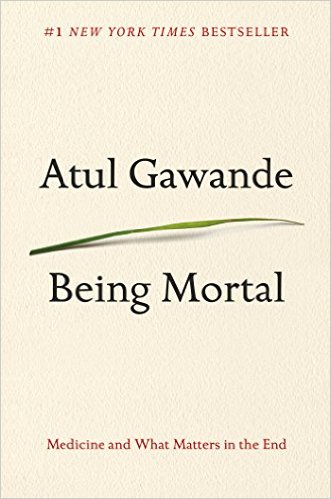
Getting Old, Being Mortal

Atul Gawande's 4th book!
Atul Gawande — author (of three best-selling books - Complications, Better and The Checklist Manifesto), surgeon at Brigham and Women's Hospital in Boston, staff writer for The New Yorkers, professor at Harvard Medical School and Harvard School of Public Heath— is one of my favorite authors. Despite being a physician himself, he is forthright in saying that doctor's are not gods and astute in analyzing the odd triangular relationship of doctors, patients and medicine in general. His book Being Mortal is even more of an eye-opening analysis of the "problem" of aging, for that is how society now views it ... not aging as inevitable but more as a problem. He looks at the history of aging, perceptions of aging and how advanced medicine has changed those perceptions. This book must be read, shared, concepts discussed must become more than just concepts but must enter mainstream dialog, for by talking through our aging processes, Dr Gawande is showing that people are more accepting of the inevitable rather than undergoing massive amounts of medical treatments for extended life, but at what cost, longer life but one that has little value.

Points of awareness I want to retain:

The elderly in the US are classed by health care professionals as to what functions they can perform: 
  • The 8 "Activities of Daily Living" - If you are incapable of doing without assistance — use the toilet, eat, dress, bathe, groom, get out of bed, get out of a chair, walk — you lack the capacity for basic physical independence ... therefore nursing home care is required.
  • The 8 "Independent Activities of Daily Living: - If you cannot— shop for yourself, prepare own food, maintain housekeeping, do your laundry, manage your meds, make phone calls, travel alone, handle your finances— you lack capacity to safely live on your own ... therefore, assisted living is required.
The teeth tell the aging story— experts say they can gauge a person's age to within five years by the examination of a single tooth (if the person has any teeth left). How? Teeth are the hardest substance in the human body, but with age the white enamel wears away exposing the softer, darker layers. Meanwhile, the blood supply to the pulp and roots atrophies and saliva flow diminishes. The gums become inflamed and pull away from the teeth, elongating the appearance, esp the lower ones.

To really know how an elder person is, always examine the feet! (p 40) Elderly can look dapper and fit but the feet tell the truth. Clipped toenails? Fungus? Bunions? Problems that cause poor fitting shoes, or shoes that are incorrect for posture, or injuries that affect walking ... which in turn affects hips and back being thrown out of alignment, or broken by pending falls. Can in fact the person touch his/her feet? 

A geriatrician should realize that aging of the body and the mind cannot be stopped; therefore, he/she should look at what functions the elderly have (like good shoes and proper foot care, and prescription medicines that don't, in combination, cause dizziness) and focus on prevention (like falls from floor mats and floppy shoes) rather than only giving prescriptions. 

Swallowing becomes a problem as people age. The lordosis of the spine tips the head forward, so when he/she looks straight ahead, it's like looking up at the ceiling for the non-aged. Therefore, for the elderly trying to swallow while looking up is a recipe for choking. The elderly might therefore need to eat while looking down.

Keren Brown Wilson, one of the originators for the concept of assisted living, built her first assisted living home for the aged in Oregon in the 1980s. In doing so, she was trying to eliminate nursing homes for the elderly and give them a home where they could age with autonomy, in other words, give them a "home". (In mind, she had her own mother who had suffered a debilitating stroke at the age of 55.) From there, the concept of "independent living" took off, but lacking Keren Wilson's vision for living with autonomy, assisted living residences only became an intermediate step before going to the nursing home.

(blog link - excellent read on Bill Thomas's audacious conversation to get the dogs, cats and birds)

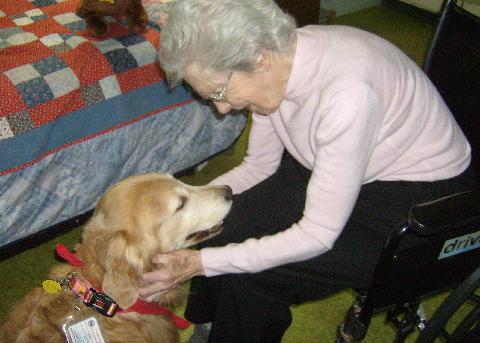
Bill Thomas, of upstate New York, was a young physician that performed a radical experiment. In school he was "a pain", never studying, always questioning, and if the term had existed then, he would have been labeled as ODD - Oppositional Defiant Disorder. Ultimately, he connected to the idea of being a physician and did an about-face from not studying to studying and gaining entrance to Harvard Medical School. After graduation, he moved back to quiet upstate New York, eventually accepting a job at a nursing home, and with his glib tongue, wrangled the counsel members to allow him to bring in animals into the nursing home to give the residents, who had no inertia or desire to live, something to focus on. Not just a dog or a cat, but he started with 2 dogs, 4 cats and 100 parakeets. Residents were asked if they wanted a cage with parakeets in their rooms ... and the place came alive. People who didn't talk, took interest, named their birds, gave directions on the care of their birds, one man even came out of despondency, gained health again and returned back to his home to live by himself. The place was an utter success! According to research on the outcome, drug costs (mostly drugs for psychotropic agitation) dropped to just 38% and death fell 15%. Dr. Thomas writes about his experiment: Life Worth Living ... the Eden Alternative in Action.

The national Coping with Cancer project published a study that showed that caregivers of terminally ill patients who spent their last days in ICU were three times more likely to suffer major depression. In short, spending one's final days in ICU is like failure, failure to live life and pass with dignity as they are attached to ventilators, in delirium and permanently beyond realizing that they will ever return home.

People in the past died quickly, but in the present people don't want to accept death, and so extend life with medical "advancement", often compromising the quality just to obtain quantity. Examples of US presidents who died quickly:
  • George Washington - throat infection one evening and died the next
  • John Quincy Adams, Millard Fillmore, Andrew Johnson - had strokes and died within 2 days
  • Rutherford Hayes - heart attack and died 3 days later
Not passing quite so quickly:
  • James Monroe, Andrew Jackson - died from long-lasting tubercular consumption
  • Ulysses Grant - oral cancer, died after 1 year
Mistakes doctors make are often conceptual. No one wants to admit that death comes. No one wants to sit down and talk directly about whether they want chemo or not, to be resuscitated or not, hospice or not. Basically, there's little to no discussion about facts and options. Doctors see themselves as prolonging life, and that image is often forced onto the patients and their families.

To discuss mortality with someone can be approached responsibly. According to palliative specialists, no one should say, "I'm sorry things turned out this way," which is distancing, but a preferably approach could be, "I wish things were different". And instead of asking, "What do you want when you are dying?" could be rephrased as "If time becomes short, what is most important to you?"