Showing posts with label Vietnam. Show all posts

Tuesday, March 15, 2016

11 Endangered Traditions from Around the World

The sum total of all ideas, dreams, legends, rituals brought into the world by the mankind since the dawn of our time—this is our ‘ethnosphere’. This is humanity’s great legacy.

As Wade Davis, author of Dreams from Endangered Cultures and National Geographic explorer, describes, some of this legacy is expressed in physical objects or impressive constructions, for example the man-made wonders of the world. However, other aspects can be less tangible living cultural expressions that have been passed down through generations and contribute to our collective sense of identity and community. Whether these expressions take the form of rituals, festivities, skills, dance or knowledge—they elicit certain emotions within us or make us feel a sense of belonging. It is an unavoidable truth of modernity that, along with many of the benefits that globalization has brought to society, it is also causing some of our gloriously diverse cultural heritage to be lost.

The legendary anthropologist Margaret Mead said before she passed away that her greatest fear was that as we headed towards this blandly amorphous generic worldview, not only would we see the entire range of the human imagination reduced to a more narrow modality of thought, but that we would wake from a dream one day having forgotten there were even other possibilities.
“In the end, then, it really comes down to a choice: do we want to live in a monochromatic world of monotony or do we want to embrace a polychromatic world of diversity?— Wade Davis
UNESCO is currently safeguarding and attempting to preserve 298 traditions that the organization has listed as ‘intangible cultural heritage’. Below are eleven illustrations of very intriguing and delightful traditions from this endangered extravagant ethnographic record. Illustrating them here is a gentle reminder that there are an infinite number of ways of thinking and orientating one's self on this pale blue dot we call home.

1 | Vanuatu Sand Drawing


Long before Snapchat existed, the artists from the Vanuatu archipelago in the South Pacific were creating ephemeral messages—traced by a single finger along a continuous meandering line of an imagined grid to produce a graceful set of geometric patterns in the cooled ash of cooking fires over the volcanic black soil. Not only are they beautiful, these sand drawings possess several layers of meaning: they can be repositories of information, illustrations for stories, signatures, or simply messages and objects of contemplation. (source)


2 | Generational Vietnamese Gongs

Originating from the appropriately named ancient ‘Dong Son’ civilization, the belief systems of the communities form a mystical world where gongs produce a privileged language between men, gods and the supernatural world. Behind every gong there is a god or goddess, that grows more powerful as the gong ages. In the central Vietnamese highlands, gongs are a symbol of a family’s wealth and prestige; every family owns at least one to pass down through generations. In fact, no rite of passage in their lives, from sacrificing bullocks to victory celebrations, is complete without them. (source)


3 | The Hopping Procession of Echternach

If hopping alongside 13,000 people sounds like fun, head down to the medieval town of Echternach in Luxembourg on the Tuesday of Pentecost (a Christian religious festival) and join in the fun! It is a thoroughly light-hearted occasion, yet also served as a gesture of defiance in days gone by when foreigners threatened Luxembourg’s survival as a country. The secret to the harmonious hopping lies in the folded cloth held by the dancers in each row. Watch closely to notice subtle differences in the dancing styles, German pilgrims being more energetic in contrast to the relaxed steps of the Belgians. (source)


4 | Chinese Shadow Puppetry

A form of theatre in which the colorful silhouette figures, many of which have between 12-24 movable joints, are manipulated by puppeteers who are often also masters of improv singing and falsetto. The puppetry show isn’t purely for entertainment either, since it passes on cultural history, social beliefs and unique local customs. (source)


5 | Chinese Wooden Movable-Type Printing

One of the world’s oldest printing techniques, wooden movable-type printing, takes place in Rui’an County, Zhejiang Province. The men who draw and hand-engrave the characters by hand require intensive training—at present only 11 people over 50 years of age have mastered all of the techniques. (source)


6 | Croatian Gingerbread Making

Gingerbread has become a symbol of Croatian identity—not only is the process of making the gingerbread difficult, each craftsman will also decorate the gingerbread in a specific way with small pictures, messages, motifs and mirrors—no Croatian festival or wedding is complete without an ample supply of gingery deliciousness. (source)

7 | Turkish Oil Wrestling Festival

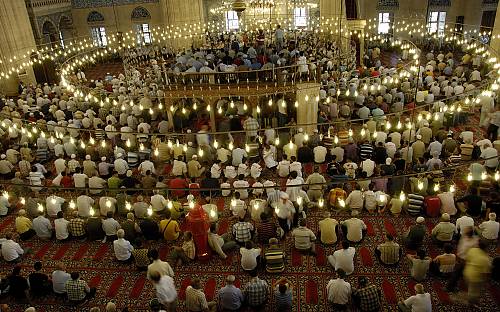
Since 1346, that is, for the past seven centuries (making it the longest-standing annual sporting event in the history of the world) ‘pehlivan’ wrestlers have travelled to Edirne in Turkey for Kirkpinar—a competitive oil wrestling festival. Each one-on-one oily battle is decided by the ‘pehlivan’ who can pin the other for long enough. When this happens, the winner will kiss the defeated as is the custom, and not unlike in a gladiator’s ring in ancient Spartacus, the testosterone-fuelled audience goes wild. (source)

8 | Tsiattista Poetic Duelling

Picture an epic rap battle... now imagine it’s in Greek-Cypriot poetry and performed with violin or lute in the background. The ‘Tsiattista’ performers improvise rhyming couplets on specific themes within strict time constraints and attempt to outwit their opponents to win over the crowd. (source)


9 | Tibetan Opera

Tibetan Opera has roots in Tibet’s pre-Buddhist era (the Bön religion), which in turn goes back even longer and incorporates elements from the pre-Bön era—when a shamanistic, animist-oriented religion was practiced. For this reason Tibetan Opera has been dubbed a ‘living fossil of traditional Tibetan culture’ and remains an integral part of the cultural identity of the Tibetan people. The opera itself requires a skillful combination of martial arts, singing, dancing, comedy and precise elocution, woven gracefully together into a story that shares everyday scenes from daily lives of ordinary people, all of which transform into nothing less than a universal statement about people's hopes, aspirations and the human condition. (source)
“Today, we are going through a critical period in time… protecting an ancient culture like this is the responsibility not only of the concerned nation, but also of the world community as a whole.— His Holiness the 14th Dalai Lama

10 | Yamahoko Moving Museums

On July 17 every year, the Gion Festival in Kyoto in central Japan culminates with a grand procession of yamahoko—floats known as ‘moving museums’, with gorgeous drape decorations. The floats are paraded through the main streets of central Kyoto, and were originally intended to summon the plague god, so that he could be transformed into a protective spirit through music, dance, and worship. (source)


11 | Catalonian Human Towers

Every year in Catalonia, Spain, there are festivals in which people come together to build colorful—and ridiculously tall—human towers called castells, meaning ‘castles’ in Catalan. These castells can be anywhere between six to ten levels high and consist of about 100-500 men, women and children—supported by nothing other than sheer strength and courage. (source)


Local Catalan photographer David Oliete is fascinated by these human towers and their capacity for evoking human emotion. He begun photographing the castells eight years ago and hasn’t stopped since. Explore the gloriously kaleidoscopic shots of human towers in David’s Maptia story: ‘The Human Towers of Catalunya’.

The above document is borrowed from 11 Endangered Traditions from 
Around the World as compiled by the Maptia team.

Thursday, June 4, 2015

Somaly Mam, from Cambodian Prostitute to Activist

Somaly Mam was not her original name. Like many people, she's had many names, but Somaly was in a position to choose a name and she embraced the name that would give her the most freedom of identity. As a child she was called Ya, and sometimes just Non, or "Little One". When she was taken by a old man as a child and became his slave, she was called Aya, and upon occasion Viriya. Years later a man who said he was her uncle, and who became a father-figure to the young unloved girl, gave her the name Somaly, meaning "the necklace of flowers lost in the virgin forest". She never knew what her own parents had called her, being an orphan from a young age, but she knew the love steeped in this name and the bequeathal of acceptance for her pure soul, and so she claimed this name. Typical Khmer advice is never to find out about your past, and her "uncle" told her to look toward the future. He gave her a future with his love, and as her parent-figure and adoptive siblings, she had the foundation of her success in escaping prostitution later on.

When she was quite young, the old man came to her village and took her away with promises of reuniting her with her parents. No one cared for the small orphan, and very likely no believed his promises, but no one interfered. She was taken away and became the slave of the old man, whom she was to respectfully call grandfather. He was an inveterate gambler, a wastrel and young Somaly had to work hard carrying morning wash water and doing other tasks to earns coinage to feed "her" grandfather, who never worked. When Somaly became a teenager, and started growing breasts, the old man began touching her and Somaly did all she could to escape his attentions by quickly doing her household duties and then fleeing the tiny hut. One day grandfather sent her to a merchant to buy some oil, but in hindsight she realized that she was to repay her grandfather's gambling debts by giving the merchant her virginity. This was the first rape of many, and she was only about twelve.

She had no one to really turn to, because her "maternal uncle" was trumped by the "grandfather". Her "uncle" who she now calls "father" explained to her that there is much suffering in life, and no matter how much life hurts, one must remain silent. This seems to be strong Khmer philosophy.  His advice was, "If you want to stay alive, grow a dam kor tree in front of your house." The dam kor is the silk-cotton tree, but the word, kor, also means mute. To survive, you must remain silent.


When she was about 14, she was married by her grandfather to a soldier in his mid-20s, a surly aggressive man who raped her violently multiple times on their wedding night and every night afterwards when he wasn't fighting. She hated marriage. Marriage put women in a prison. Her husband was particularly violent, slamming her head again and again against the hut structure, gashing her face with a fingernail kept intentionally long, abusing her in any way if the food she prepared wasn't to his liking or anything at all didn't strike him like he wanted. He started taking shots at her with his military rifle, but in all this, she learned that to the Khmer you must not let the fire that is outside come inside your house, and the hearth fire must not be allowed outside. You don't talk about what happens in your household.

When her husband was away, she worked at a clinic to bring in some coins. She worked at night for 30 pounds of rice every month, a high wage. All she wanted was work, she wasn't frightened of the dead, she lived with a husband who was worse. The hospitals were notorious for "killing" people. No one was a proper nurse or a trained doctor; treatments were on trial and error basis and washing hands was not a habit. Treatments were based on traditional belief: young mothers hemorrhaged on the inside and developed fever (puerperal fever) but this was interpreted as a dead person has used the labor to enter the body and perform a dance. If the young mothers survived, custom dictated that they drink a glass of a boy's urine and lay a coal fire under their beds as well as eat a lot of pepper to regain their energy and lighten their skin.

When she was fifteen she got her period for the first time. Another "nurse" explained to her what this meant. Her husband was away fighting but the doctors at the clinic preyed on the young women and there was nothing they could do but submit. Again, though being raped was not her fault, she lived in fear of her husband finding out because in Cambodia, if a married woman has sex with another man, it is believed she should kill herself. Somaly did try. She swallowed a lot of Russian sleeping drops but only woke the next day stunned and bleary.

She only remained married a few months and then her husband no longer returned from fighting. Her grandfather however came for her and took her to Phnom Penh where he sold her into prostitution to feed his gambling habit. The first day when she refused to service a patron, she was raped by the owner's husband and beaten violently with his crutch and then raped by both of the brothel guards. The next day she didn't refuse a patron ... there was just no choice.

Many parents or relatives sell their daughters to a brothel and the price depends on their freshness and beauty, their cleverness and their connection to the seller. Today some girls are kidnapped into prostitution, but that didn't happen so much when Somaly was young. The girls in the brothels were bought on a kind of downpayment and once the girls worked it off, they could go free. Often however parents would continue to take out new debts on their "working girls" keeping their daughters in perpetual servitude. Even if the girls did work off their debt, the word for prostitute in Cambodia is srey kouc, "broken woman", and broken things cannot be mended and nobody wants people to know they have a prostitute in their family. The girl can never return home. Prostitution is their lot for life.

Somaly was often beaten by the customers, beaten by the owner's husband and the guards, put into the punishment room and while tied covered with snakes and left overnight. Cuts and welts were common things. But what Somaly suffered in prostitution and what young girls suffer now is vastly different. Now, girls have nails driven into their heads, girls are beaten with chains and electric cables, and girls are violenced in ways supposedly inconceivable but in ways which are influenced by the popular Chinese films full of torture scenes, movies favored by pimps nowadays.

Nowadays also the girl are taken at much earlier ages because in Cambodia men will pay thousands of dollars to rape a virgin for a week. Always a virgin because sex with a virgin is supposed to give a man strength, to lengthen a man's life span and even lighten his skin. Brothels, to ensure bona fide virgins, even sell girls as young as five and six years old. But after the first week is over, they sew the girl inside (without anesthetic) and quickly sell her again. A virgin is supposed to scream and bleed, and this way the girl will scream and bleed. They do this maybe three or four times. Another reason the virgin market in prostitution has taken off is that people believe that sex with a virgin will protect against illness, or even be a cure for AIDS. The little girls tear much more easily than women, likewise they get AIDS more easily too, but men are to be served; girls are to be obedient and subservient in all things.

After a time, Somaly paid off her debt and, because she didn't know anything else, she continued servicing men as a prostitute. However, she began servicing foreign expats, and eventually married one and moved to Paris. The year in Paris was difficult for both her husband and herself, and after a year they returned to Cambodia, but Somaly returned as a Cambodian married to a foreigner, who had foreign living experiences, was viewed as having improved herself, and indeed she had. She returned matured and having a new sense of confidence, and her heart bled for the girls trapped like she had been in prostitution, and so she began encouraging girls to leave, finding places where they could be trained as seamstresses for $100/mth, and finding medical aid for the girls who were sick and unable to get treatment. Her husband Pierre never complained about the expenses she incurred with her rescue attempts and eventually they opened a tiny home for prostitutes to run to and get shelter. Until that time her home was opened to these girls.

Near her home was a center for brothels called the "Broken Coconut", and "coconut" in Khmer is another word for a woman's secret place. Because of her home's position, she was easily able to help fleeing and desperate girls, but she was also an easy target for the growing power of the prosittution rings, which was quietly supported by many policemen. There were some big-hearted policemen but they were hard to find, and her home was stormed one night, making her flee for her life.

Early in 1996 Somaly and Pierre started a charity to fund a proper center to help prostitutes. They chose the name AFESIP which translates from French as Acting for Women in Distressing Situations, a name that carried no label of prostitution. Getting recognized was a struggle but in August 1996, a big conference on the sexual exploitation of children took place in Sweden, and several journalists wrote about Cambodia. After that, large international agencies seemed more interested in AFESIP and a big UN agency promised funds.

Over time, Somaly expanded the center in size and in skills taught. Her "mother" had joined her as a type of housemother to the prostitutes to love them and nurse them and teach them skills before finding them suitable jobs so more girls could be taken in. While her mother stayed at the center, Somaly could expand her work and she approached the Ministry of Defense and made it clear that the country needed sex education and girls needed to be given something beyond shame and ignorance of their bodies. She explained why it was important to discuss rape, and respect of women, the true circumstances of AIDS, and how it is most easily contracted, and therefore the need for the use of condoms. Since AIDS was epidemic, her proposal was accepted and she began sex education lectures in police stations, military camps and other places.

Over the years (book written in 2008) AFESIP has helped more than 5,000 victims of prostitution to get back on their feet. In Thailand, Laos and Vietnam AFESIP has helped an additional 1,000 victims. But reintegration is a long process. Some girls can be self-sufficient after only 10 months, but others that have been gravely psychologically damaged take months to build up trust and confidence before they can even be taught a skill, and it takes 1 1/2 years to train a woman to take the test for the government's hairdressing certificate. Therefore, AFESIP needs on-going donations, government support, government delegation, police protection, and volunteers to help these girls become confident, self-sufficient women. The prostitution business is worth $500 million/yr, almost as much as the annual budget for the government, so there is much resistance against AFESIP and Somaly herself.

Somaly says that even this many years away from being a prostitute and being repetitively raped day after day, she still suffers. After 15 years she still feels dirty. So she washes like a madwoman, puts cream on and covers herself in eau de toilette to mask the stench that pursues her. At home she has a cupboard full of perfume. She spends money to blot out a smell that only exists in her imagination. And she seeks to purge the stench of prostitution by her undying efforts in saving as many as she can. She is seeking to change the misguided thinking placed in the saying "Don't try to bend the sroleuw tree, don't try to change a whore" based on the belief that all whores are deceitful and dishonest, hard and intractable, when in fact they are often honest girls from the countryside, who have suffered and cannot express their suffering and anger and people interpret their anger and suffering emotions incorrectly. She seeks change.

Somaly has visited many countries as a speaker and advocate for the women of Cambodia, and worldwide, trapped in the machinations of prostitution. In Sweden she was awarded the World Children's Prize for the Rights of the Child. In Germany AFESIP was awarded he Roland Berger Award for Human Dignity. In Washington D.C. she was honored at the Vital Voices 2009 Global Leadership Awards, but no matter the awards and distinctions for her human rights work, dignity lost is hard to recapture. Somaly still works to regain her dignity and the dignity of those she represents.

Thursday, May 30, 2013

Foreign Food Mart, an International Experience

International Grocery Store Project: Foreign Food Mart

(identifying 5 import items and giving a historical background in addition to dietary needs/interests, religious interests, import/export standards, etc)
 

             Foreign Food Mart in Itaewon, the area in Seoul historically known for foreign housing and foreign food restaurants catering to the foreign residences, is my favorite place to shop. For my interests, it offers a wide variety of beans, legumes, spices, as well as a few fresh vegetables and fresh herbs that just can’t be found on the Korean market. As a gluten-free near vegan, here I can find quite the food variety to extend my diet, but even if I’m not extending the diet, I’m very curious to know what’s new on the shelf, especially as the shop, which opened in 2006, has expanded several times. The store most recently expanded around New Year’s, at which time they added another 30-40% floor space, and the imports now appearing on the shelves are getting even more interesting.


One of my old standby purchases is Rotary® Onion Crackers, a product of Indonesia. Its four ingredients are incredibly simple—tapioca flour, garlic, salt and coconut oil. The product carries the seal of Majelis Ulama Indonesia which has halal in both English and Arabic at its center. Majelis Ulama Indonesia was established in 1975 and is Indonesia’s top Muslim clerical body for producing fatwā, the giving of legal judgment according to Islamic law, and for advising the Muslim community on contemporary issues. With the Indonesian Ulema Council’s seal, this product is approved for religious dietary consumption by the 1.62 billion global Muslims, that is, 23% of the world’s population and with the largest population living in the country of the products manufacture. As the entire simple packaging is written in English with the exception of the dual-lingual ingredients and the seal itself, this product targets English speaking countries. It also meets USA market standards with a clearly labeled product, the ingredients easy to read, the manufacturer’s name, address and contact provided, and the nutrition facts label present. Although this product will attract the eyes of Muslims in foreign countries, it by its simplicity and a cracker with a flavor, onion, well-liked by Americans, will be well received in the US or by people with savory proclivities, and particularly so by the more health conscience label readers and those wishing to be gluten-free, not an issue in a country where gluten crops aren’t grown and so the need for gluten-free labeling isn’t regarded as necessary or economically gainful yet.


            Crown Farms Vegetable Samosa is a product I’ve tried in the past, and is indeed very tasty and very spicy, as are most foods associated with Bangladesh, where it is manufactured. Eurasia Food Processing in Bangladesh manufactures the product but Euro Foods Group of England imports and distributes it, by all accounts for reasons of providing exotic food items to the more northern United Kingdom and also for boosting the growing Bangladeshi economy. This is definitely an export item, and not for sale in Bangladesh as the only Arabic word on the box is halal. The product is marketed toward Muslims or, more specifically, people in English, French or Italian speaking countries, as the ingredient list and preparation instructions are in those languages. The ingredients are whole foods with the filling containing mixed vegetables, salt, sugar, spices (onion, garlic, ginger, cumin powder, coriander powder, turmeric powder), vegetable oil and water, and the pastry is a composition of wheat flour, water, vegetable oil and salt. I couldn’t find evidence of this product being sold in the US which makes sense as, according to the FDA, all ingredients must be labeled in their descending order as based on weight, and this product doesn’t seem in compliance with that regulation, e.g. salt couldn’t possibly be the ingredient second in weight; the product would be sodium saturated and would far exceed the labeled sodium amount of less than 2,600 mg per serving, the single samosa. As for what the Food Standards Agency (FSA) of the UK requires on their labels, I wasn’t able to locate specifics but a FSA website did state that Scotland, Wales and Northern Ireland had different standards than England. In any regard, samosas, a name of Persian origin, have become widespread across the southern regions of Asia, the Arabian Peninsula, the Mediterranean, and in various parts of Africa, not to mention the large ethnic groups who have migrated from these countries or the many people previously exposed to these countries. Samosas have great global popularity and their popularity is further growing, putting this product as high on the well-to-be-received list in a number of countries.


            One item in the mart that reminds me somewhat of baklava is Mo’pleez Soan Papdi, a product of India where it is a traditional dessert. Unlike Greek and Turkish baklava with the main ingredients being honey and/or sugar, wheat flour, cloves, cinnamon, frequently walnuts and typically phyllo, soan papdi typically contains sugar, gram flour, perhaps wheat flour, ghee, cardamom and often pistachios. Influences between the desserts may exist, but obvious regionalism from accessible ingredients influence the overall products. Although soan papdi also is a dessert, it is more savory than baklava. This particular soan papdi is packaged in three languages (English, Arabic and French) and is apparently for export. The packaging cites the ingredients sugar, refined peanut oil, chick pea flour, wheat flour, cardamom, almonds, pistachios and gluten. No preservatives or additives are included in this label, and by including the batch number, manufacturing date and expiration date, there seems careful concern in ensuring a quality product to a discriminating market. Though India homes the third largest population of Muslims in the world, no halal label is present on the packaging which perhaps unwittingly marginalizes the 177,291 Indian Muslims, or perhaps the target group, if the product is to be sold within country, is the vegetarian, the group (actually the majority of India) which traces its history back to 500 BC when India saw a rise in Buddhism and Jainism, the religions that practices ahimsa or “non-violence”. This product bears the symbol for “vegetarian”, a word only in existence since about 1847 and which was derived from the Latin vegetari, meaning “to enliven”; it was coined by Brits in reference to Britain’s colonial Indian vassals. Two other symbols include a recycling awareness, a larger concern in Western societies than in India, and a European Snack Association symbol, which is an organization that promotes savory snacks to the UK. Commerce between the England and India, England’s former colony, is expected to double by 2015, and this product will likely be included in promoting the trade connection.

             Lemnos Mediterranean Lifestyle Sun-dried Tomatoes were in refrigeration and were a product of, surprisingly, Australia. The concept of the Lemnos brand was conceived on an island in the Aegean Sea and now manufactures “premium quality Mediterranean style cheeses and dairy products” to about 40 countries. It even declares itself the number one dairy company in the world, and holds certifications for halal, Hazard Analysis and Critical Control Point (HACCP), Safe Quality Food (SQF), Dairy Safe, and organic. This particular product has no dairy which seems to be the focus of the brand, but the two kilogram pail is marketed towards the Muslim community within Australia and worldwide by its English and Arabic label of halal. No claims to this product being organic exist, nor does it seem to be aimed for the US market as measurements are limited to kilograms, unlike the onion crackers, samosas, and soan papdi already discussed. However, there is awareness of a growing population with gluten allergies, and included in the nutrition facts label is a label for gluten, a listing that is not typically seen and certainly not required on such labels. Certainly the FDA does not require it.
 

            The item at the Foreign Food Mart which most surprised me was the Tropiway™ Plantain Fufu Flour. Fufu flour is an African food, and yes, of late there is a very mixed African population in Korea, so there is a market here. Yet, this product is out of place. First of all, this mart seems to cater to Indians, Middle-Easterners of which the owner is one being from Bangladesh, to Thai, Filipinos, Vietnamese, among others, which include the very large and diverse English speaking expats in education and business. This item is the only identifiable African food in the mart; however, it’s only African by name when, in fact, it is an American manufacture. As Sudanese political refugees relocating to the US stated concerning the American packaged and processed food they encountered on the flight, “American food is not food”. They were used to whole and unprocessed foods, not highly processed pseudo-foods with flavor enhancers and chemical attributes. This fufu flour lists on its ingredients—plaintain, granular potato, cassava, mono and diglycerides, BHT (to protect flavor), sulphites (as preservatives), FD&C yellow #5. This list of non-food items might be accepted by Americans used to such ingredients, but why would this item be in this store? And, it must be asked, who would the market even be back in South Carolina where the 28.1% black population seems to be black Americans, not African Americans craving food memories from their mother country?

Bibliography

Compare Infobase Ltd. 24 Dec 2012. Top ten countries with largest Muslim population. Maps of the World. Retrieved from http://www.mapsofworld.com/world-top-ten/world-top-ten-countries-with-largest-muslim-populations-map.html.

Eurofoods Group Blog. 13 Jan 2011. Bangladesh: The new frontier in Eurofoods Group Blog. Retrieved from http://eurofoods.wordpress.com/2011/01/13/bangladesh-the-new-frontier/.

European Snacks Association. 2004. European Snacks Association. Retrieved from http://www.esa.org.uk/europe_statistics.php.

Food Standards Agency. 20 Dec 2005. Imports and food labeling. Food Standards Agency. Retrieved from http://www.food.gov.uk/business-industry/imports/importers/labelling.

IndiaChild. 2000. Vegetarianism in India. Retrieved from http://www.indianchild.com/vegetarianism_in_india.htm.

Lemnos. N.d. The lemnos story. Retrieved from http://www.lemnosfoods.com/the-lemnos-story/.

National Geographic. N.d God grew tired of us: Cultural differences. http://video.nationalgeographic.com/video/movies/god-grew-tired/cultural-differences-ggtu/.

Price, Rabbi Gavriel. 2013. Food ingredients labels: A primer on regulations. Kashrut.com. Retrieved from http://www.kashrut.com/articles/LabelingLaw/.

PTI. 21 Feb 2013. Trade volume between UK, India set to double by 2015. Zee News Limited. Retrieved from http://zeenews.india.com/business/news/economy/trade-volume-between-uk-india-set-to-double-by-2015_70694.html.

US Census Bureau. 2011. South Carolina in State & County Quick Facts. US Department of Commerce. Retrieved from http://quickfacts.census.gov/qfd/states/45000.html.

US Food and Drug Administration. 30 Apr 2009. Inspections, Compliance, Enforcement, and Criminal Investigations. US Department of Health & Human Services. Retrieved from http://www.fda.gov/ICECI/Inspections/InspectionGuides/ucm074948.htm.

US Food and Drug Administration. 1 Mar 2013. General food labeling requirements in Food. US Department of Health & Human Services. Retrieved from http://www.fda.gov/Food/GuidanceRegulation/GuidanceDocumentsRegulatoryInformation/LabelingNutrition/ucm064866.htm.

Wikipedia (8 May 2013). Fatwā in Wikipedia. Retrieved from http://en.wikipedia.org/wiki/Fatw%C4%81.

Wikipedia (10 Mar 2013). Indonesian Ulema Counsil in Wikipedia. Retrieved from http://en.wikipedia.org/wiki/Indonesian_Ulema_Council.

Wikipedia (20 May 2013). Samosas in Wikipedia. Retrieved from http://en.wikipedia.org/wiki/Samosa.

Wednesday, April 24, 2013

Vietnamese Barefoot Doctor

The book Fourth Uncle in the Mountain: The Remarkable Legacy of a Buddhist Itinerant Doctor in Vietnam is a story of magic, anguished history, a mesmerizing past enmeshed in the modern age. The story is of a baby, Quang, who was adopted by an aging itinerant doctor and who raised his son to be an accupuncturist, healer, and naturopath like himself. Quang additionally learned sleight of hand magic tricks, advanced levels of martial arts, magic spells and incantations, for which his aged and experienced father forbade, having already experimented the evil arts of magic himself and being nearly possessed by them.


The story is really about Quang's growing up and coming of age in Vietnam. He was born in 1950 and in his teen-aged years and early twenties experienced the ravishings of his country Vietnam in the French and American Wars in South Vietnam. Finally, in his early 30s he fled Vietnam on a boat with failing outboard motor to make it to Thailand, where he was confined in the Chambouri Refugee Camp in Pannatnikhom City, mainland Thailand, for two years before passing a refugee interview for going to the New Hampshire in the United States. In New Hampshire, Quang Van Nguyen eventually met Marjorie Pivar, who was fascinted by his stories of having studied Han Viet, a language replaced by more classical Vietnamese of Chinese 300 years before, by stories of the fabled Seven Sacred Mountains and the enchanting Forbidden Mountain where Quang lived with an ancient for three years in a cave studying meditation, and most importantly by seeing firsthand his incredible knowledge as a traditional herbalist and learning how he acquired his knowledge. The book takes the reader through an incredible journey of a bygone age in a country where magic and ghosts are as real as the physical healing. Together they write to share this dying esoteric knowledge.

CULTURE SNATCHES

KITCHEN GODS: The Vietnamese wood stove is a free-standing wide-brimmed ceramic bowl that contains the fire, and over the flames are pots made of baked mud and rice hulls shaped with always three prongs underneath. Vietnamese culture is so steeped in spirits and magic and house gods, and these three-pronged cooking pots reflect on this spirituality for the three prongs stand for the three kitchen gods that dwell at the hearth, where they keep on eye on the householders. And every year during Tet, the Vietnamese lunar new year, they house gods ride on an orange carp up to heaven to report the householders deeds - both good and bad - to the Jade Emperor, and then return with commensurate good luck for the coming year. And here is the cultural story supporting the belief:

Long ago an unhappy couple lived together. The husband beat the wife so much that she fled the house, and eventually met another man and remarried. One evening when her new husband was out hunting, her old husband found her. At first she didn't recognize him since he was dressed as a beggar and was very humble, and when she did, she took pity on him, remembering their good times together. She decided to feed him and wash his clothes. Suddenly her husband came home and the former husband, naked, had to be hid under the woodpile. The husband greeted his wife and thanked her for building such a great fire pit for the animal he killed, and promptly lit the fire and threw the animal on it to roast it. The wife was so proud and yet ashamed that her former husband would die with crying out so as not to betray her that she threw herself on the fire to die with him. The second husband, distraught with losing his precious wife, jumped in to die with her. And so the Jade Emperor was so touched by the deep love they each showed selflessly that he granted them eternal life in the hearth of every home, to protect people from getting burned by fire.

DRAGONS AND FIREBALLS: Dragons are now the model of self-mastery, inner wisdom, and spiritual protection, but it wasn't always so. Long ago two dragons lived in water, fought and made a great nuisance of themselves by frisking up the river water and making it choppy and dangerous for people. They raced around so much and caused so much water havoc that people complained to the Jade Emperor, who couldn't get the dragons to settle down, so eventually came up with the idea of luring them out of the water by giving them a magic fireball that couldn't be gotten wet. The dragons were so entranced by the fireball that they came out of the water and played continuously with their treasure, which had a calming effect on them, and over time the dragons started to meditate and become wise.

ON MEDITATION: Quang had many teachers, but the teacher he most admired and connected with was the Fourth Uncle, a monk who had been meditating deep in a cave for many years. Quang's grandfather had meditated with him, his father had meditated with him for 19 non-consecutive years, and Quang was to meditate with him for three years. Fourth Uncle told Quang how to meditate: "You must not pray or chant when you meditate. Praying and chanting is grasping for something you want. From now on, you must keep quiet inside. Close the doors in every direction and do not let any thoughts come in. Focus your attention on your third eye. Draw the yin and yang energies into your body. Imagine the warm energies of the sun streaming in through the crown of your head. Imagine the cool energies from the underground spring bubbling up through your perineum. These opposite forces will blend together in your body and balance your energy."


SNATCHES OF EXOTERIC HEALING

THE SIX PULSES: Quang's father told him "By reading the pulse, we can understand how well the internal organs are functioning. Like the heart, the stomach, the liver, the kidneys, and so on, we can feel if the organs are weak or congested or inflamed, or if they are working just fine. We can also feel how well the blood is circulating in the body." "Once we have an idea about what is going on inside the body, we can make medicine to help the body function better. There are herbs that cleanse, herbs that soothe, herbs that warm, and herbs that cool. There are herbs that nourish the body and make more blood. You can prepare formulas that include all these properties. The trick is to understand what each patient needs. Two people can have the same symptoms, but most likely they will need a different kind of medicine."

The first pulse is taken with the index finger (of the left hand) by following the thumb bone down to the wrist, and stopping at the creases at the base of the hand. The pulse is for the heart and the valves of the heart, and also for checking the membrane surrounding the heart. This pulse can also be taken at the inside base of the index finger where the finger hinges with the palm. The second pulse and third pulses are taken with the third and fourth finger just below the heart pulse, but with a little space between. The second pulse is for the liver, gall bladder, and diaphragm. The third pulse is for the kidney, colon, uterus, and prostate. Once a doctor finds these pulses, he will need to learn to define the pulses within the pulses too.

The pulses on the right hand in the same position signify different organs. The first pulse on the right hand is for the lungs and diaphragm; the second is for the spleen and stomach; and the third is for the kidney, small intestines, uterus, and prostate. And if when taking a woman's pulse and it has a fluttery quality, the woman is pregnant, even though she might not even know it yet.

SAMPLE DIAGNOSIS: When Quang was about 15, his father told him to diagnosis a woman. Quang had learned that when a healthy person had a new cold, all pulses strike high, which means that the immune system is strong and is fighting the cold, helping the healthy person to recover from a cold in two or three days if given the proper medicine to clear the cold out.

Quang palpitated the 34-yr-old woman's wrist and wrote his analysis for his father. Left hand - heart pulse hitting high, liver/diaphragm pulse low, kidney/colon/uterus pulse deep and weak. Right hand - spleen/stomach pulse weak, kidney/small intestine/abdomen pulse weak, no fluttery pulse (so not pregnant).

From the analysis Quang knew that the woman would not recover from her cold very fast because her body was not functioning well. He knew without asking that she had a gassy stomach, sluggish bowels, painful menstruation, lower back pain, and she suffered from fatigue. He also knew it would be difficult for her lungs to decongest until her digestion improved because gas in the gut causes heat to radiate upward and creates a drying effect on the lung tissue, making mucous thick and sticky.

Quang's prescription: herbs to improve digestion, to loosen the bowels, to warm and moisten the lungs, open the sinuses, and improve the circulation in the lower abdomen. Quang had learned that digestion and circulation are the two most important factors for facilitating recovery. If a person has a healthy appetite and can absorb the nutrients well through the small intestines, and the circulation and the nervous system are functioning properly to transport those nutrients to the muscles and organs and to eliminate bodily waste, then the person stands a good chance of recovery.

VARICOSE VEINS: Quang also learned to treat and cure varicose veins, of which women were much more likely to suffer from, especially women who had small veins showing in the backs of their knees before childbirth and didn't get them treated before giving birth. The veins usually show up on the backs of knees and make the whole knee joint hurt, but they can be returned to normal if the congealed blood inside them (thick and sludgy) is cleaned out once a week for nine weeks. The first time Quang treated a woman with varicose veins by sticking a three-sided needle in, brown blood shot out three feet. He had to cut the vein in two places and squeeze out the blood clot in between. The next time she came back the vein was smaller, but the blood still came out brown. By the ninth time, the blood came out nice and red, and the vein was normal again.

URINE AS MEDICINE: A man came into Quang's clinic one day and had acute swelling in his lungs, so painful in fact that he could hardly breathe. Quang went into the neighborhood and asked a kid to pee in a cup. He put tiger balm on the rim of the cup and gave it to the man to drink. In just a few minutes he was able to breathe better. The rationale Quang learned behind using urine is that urine is anti-inflammatory. Sometimes when the body suffers from trauma, the nerves and the circulation lock, and in this case urine soothes the nerves and restores circulation to the organs and tissues. Children's urine is the purest, although he said it is good to drink your own sometimes when very sick. When drinking it, the immune system fights the sickness, and using first urine in the morning is best, especially if taken before speaking because speaking diminishes the body energy and therefore the strength of the "medicine". Take it from the middle of the flow and drink but a quarter of a cup.

In another case, a six-month pregnant woman had fallen and hurt her ribs, and the swelling around her rib cage was triggering uterine contractions. Blood was trickling out of her vagina, and she was afraid she would lose her baby. Once again Quang hurried into the neighborhood to ask a child for urine, and again he added tiger balm to the rim and told her to drink. Within minutes the contractions had subsided and she felt better.

MUGWORT MOXIBUSTION: Leaches could get on a person and if they stayed on a person more than an hour, they could cause a nasty infection. To pull a foot-long, three-inch fat leech off is dangerous as it takes flesh with it, so using an ash and honey mixture (salt I've heard works also) is needed to get the leech to release its hold. Then to disinfect the wound, stick a wad of dried mugwort dipped in alcohol in the wound, light it on fire and stick a glass cup over the flame to create a suction for drawing the toxins out of the wound. About a tablespoon a fluid should come out. Without doing so, a person could easily get an infectious disease.

Monday, August 13, 2012

Cannabalism of the Vietnam War

I know to title this "Cannabalism of the Vietnam War" might be misleading in a chilling dietary way, but that is not the meaning of my title. Cannabalism instead refers to the human mind that has become so corrupted, twisted, damaged by war that the mind cannabalizes the senses to be altered and perhaps self-destruct the individual. War does that. War is a destroyer. War does not stop destroying the moment a treaty is signed. War continues to ravage, to maim, to aphixiate, to kill. Following are three books written about the destructiveness of the Vietnam War, a destruction that shattered homes, families, bodies and minds that can never be mended after the war.

The Girl in the Picture

Source of both pictures - during and afterwards
The book The Girl in the Picture: The Story of Kim Phuc, the Photograph and the Vietnam War is chillingly sad. The book was written by Denise Chong who wanted to get the story behind the famous picture known in the West as "The Girl in the Picture". The girl, Kim Phuc, was nine years old and had known war much of her childhood. One afternoon when out with extended family members, she, aunts and cousins and villagers around her were suddenly victims of napalm splashing from the sky. Friendly allies had napalmed their own side, and people came running and screaming down the road toward and past people, reporters among them, to flee the atrocities. Several who were running had burning skin and Kim Phuc was the worst. Her clothes had been burned off of her and her skin was afire with napalm. The picture taken of the running burning girl hit the the media and brought to world's attention the ugliness of war. The picture became a symbol for anti-war sentiment, but the war was not to be "over" for another three long years. The Girl in the Picture is a story that tells what life was like for Kim Phuc who survived the napalm attack but who was horribly scarred for life, luckily not on her face or arms so on some level she was thought to lead a "normal" life. Denise Chong gathers Kim Phuc's story from among the surviving family members in Communist Vietnam, in Cuba where Kim Phuc received an education and then onward to Canada where she eventually immigrated. Though the Vietnam War has been over for decades, to Kim Phuc she lives with the memories on her scarred mind and body ... and though the music of bombs falling is no longer heard, the silence of the aftereffects rings defeaningly in her ears.

The Tunnels of Cu Chi


The tunnels - not the underground 'hospital', sleeping and cooking quarters. Source.
The Tunnels of Cu Chi: A Harrowing Account of America's 'Tunnel Rats' in the Underground Battlefields of Vietnam is another chilling story, not one of a victim this time but one of soldier survivorship. Cu Chi was one of the most heavily bombed places during the Vietnam War. It was an area fairly near Saigon that was riddled by Viet Cong soldiers who burrowed holes through the ground to infiltrate the enemy's territory. Though few in number, the Viet Cong tunnel rats would pop up and spray the enemy with a machine gun and disappear back into the ground before the enemy even knew their lines had been infiltrated. It was a warfare totally foreign to the Americans (Australians, etc), and as the Allies caught on, they would train soldiers to crawl through the three levels of burrows after the tiny Vietnamese. The burrows were intricately networked, booby trapped and very confined for one-on-one knife fights but that was the kind of "war" that raged underground. And then at times, the Americans were ordered away from the tunnels so bombs and napalm could be smashed down over and over on the fearful ground that held secrets too awful for Americans to approach. Of the hundreds of Vietnamese tunnel rats, only three (or was it four?) survived from beginning to end of the war. Death lurked in the holes from the enemy tunnel rats or from the deadly pounding of the bombs to destroy one of the Viet Cong's most feared areas in the war. Those who experienced being in the tunnels were forever haunted by spooks of the unknown blackness; the locals who survived had their lands and their families destroyed, and were haunted by the years of evil and death particularly rife in the area; and the Viet Cong, the 3-4 who survived, are people living with guilt for surviving while their friends and families were destroyed, often before their very eyes. Cu Chi is a haunted place and for many of those believing in the spirit world, it is a place to fear. 

[BTW, I have been to the Cu Chi tunnels and even crawled through an open segment of tunnel, only a first level. The second level segment that was open for tourism was a bit too narrow, especially because I didn't know how far I would have to belly-crawl before being able to come up for light and air. Many people who lined up to go through the first level took one look at the close confines and decided they weren't up for it. Actually, I was able to almost duck-walk through most of the first level tunnel so it wasn't too bad. Also, the segments that are opened for public are rigged with intermittent small lights to give the "adventurer" a guide as to where to go. There are off-shoots to the lighted parts but people are told not to try them ... the guides didn't know if they had been properly explored or not, and of course no one knows what is "around the next corner" in them.]

The Sorrow of War

The Sorrow of War was the hardest of these three books to read - hard because it was written after the war but constantly the story flashbacks to what once was. The story is a progression of flashbacks triggered by memories of after the war or yet another time which is the result of depression. Depression of Kien, the narrator, is caused by guilt of leaving his girlfriend after her gang rape to rush to the army (or face the firing squad) and fight at the front for 11 years, during which time his friends and companies are summarily killed and he always seems to be the one who survives. It is not a story of surviving, but of flashbacks that are triggered by his life as he's trying to pick it up in the present ... rather, it didn't seem like he was trying at all to pick it up, but was just in a state of existence. Eventually however, Kien is living a life of continual flashbacks. His mind has been so ravaged by the senselessness and dehumanizing acts of war that he cannot live to enjoy his gift of survival. The author Bao Ninh uses a style which is most compatible with the reader's inability to track time and easily comprehend a chronological story for the entire book is written as if it were a single chapter, one without headings or clues to organize the changing of topics. But the fact becomes obvious, there is no change of topic for the war is the topic and that is paramount in the shattered mind of war-damaged Kien, the North Vietnamese soldier.

Sunday, June 3, 2012

The Ravens: Pilots on the Secret War of Laos

Christopher Robbins (2000) researched the Ravens, the little known group of flyers in the US Air Force. The group were the elites in a way but also the rogues, the men who flew well but wanted no constraints; they wanted their freedom in the skies to outperform or challenge the elements behind engines with wings; they wanted a chance to make a difference in a war that was bogged down in paperwork, men with too much leisure behind the lines and overwhelmed by bureaucracy. And so from a wild group of fliers known as the Butterflies, the Ravens were born, and Robbins whispers their story in The Ravens: Pilots of the Secret War of Laos.

The Ravens got their name from the raven bird, which is a bird of the gods. The exact reason for choosing this symbol for intelligence gathering is not clear yet the birds have figured heavily in many mythologies. In Nordic mythology, two ravens, Huyin (Thought) and Munin (Meaning), perch on the shoulders of Odin, the lord of gods, to whisper in their master's ears the things they have seen while flying to the ends of the earth. Similarly, the Vikings believed that the circling of the great black birds in the sky during battle were the representations of the gods in guise. To many American Indian tribes the raven could will to do anything as it was a source of power; it had created the sun, earth, moon, stars and people of the earth. Indians have admired the bird for its sagacity, recognizing its ruthless opportunism and wily trickery at the same time. Other beliefs about the raven have figured it to be a ominous bird and a harbinger of death. Zoologically it is known to be extremely clever and brave, having high mental development and the ability to convey messages to its fellows. For whatever reason the name was bestowed on the men who flew the hazards of Laos air in secrecy and in daily flights of death, either dropping bombs or napalm or other deathly things, or, dropping out of the skies to their own deaths. Their apt name intermixes mythology with the reality of their death watch in their daily flights to win territory for their allies, principally the Mao (Hmong).

Source with more mythology on the raven
Laos was not part of the war zone for the US or for the communists in North Vietnam, and both groups denied having troops in the off-limit zone ... and yet it was a zone so heavily bombed that eventually press leaks made the Americans aware of "another war theater", and caused more anger and anti-war sentiment during the Vietnam War, seemingly incorrectly named based on the widening theaters of bomb droppings.
"In excess of 6,300,000 tons of bombs rained down on Indochina during the Vietnam War years, more than all the explosives dropped in both the European and Pacific theaters in World War II. Less than a tenth (about 600,000 tons) of the total tonnage dropped in SE Asia fell on North Vietnam" despite that location being enemy headquarters. "The bombing of North Vietnam was mostly concentrated around the area directly above the 17th parallel, where troops and supplies were massed to move south. It is one of the supreme ironies of the war that it was South Vietnam, the allied country being defended, that bore the brunt of the US bombing--a staggering 3,900,000 tons. Laos took second place. More than 1,100,000 tons of bombs were dropped on the Ho Chi Minh Trail, with a further 500,000 tons in Northern Laos (which means that a considerably greater tonnage was dropped on Laos than on Germany--which was devastated by 1,360,000 tons in World War II). The 1,600,000 tons of bombs dropped on Laos would have amounted to seventeen tons every square mile--or was equal to six-tenths of a ton of bombs for every man, woman and child."
Caught in the middle of all these bombs dropping, invasion of land, and fighting were the Mao (Hmong). Mao was a derogatory term commonly used for the Hmong until the 1970s when Dr. Yang Dao, the first of his people to earn a PhD, raised awareness that it was in fact a venomous word stemming from Chinese slander. Mao originates from the Chinese miao, meaning "barbarian". And yet the Mao (Hmong) were formidable fighters and fierce opponents; they did not deny the 'complementary' name but returned the complement by calling the Chinese "sons of dogs".

The Hmong were great warriors. They were a Mongolian race originating from China. They were the most mysterious of the 12 principal races of Indochina, and even more so since they had no written language or reliable history. Their histories were enshrouded in storytelling and legend, e.g. they had come out of China on a flying carpet, they originated in a land of eternal snow and arctic nights (Inuit origin?), they become werewolves and weretigers to eat the livers of slain enemies. They were a people who grew opium for medicine, but it was socially acceptable for only the old and infirm to use it. Their medical treatment were based on deep traditions for promoting health and long life, e.g. deer horn in velvet, tiger bone marrow, gall of bear and python, and skin of gaur (wild buffalo). And when the Ravens encountered them and introduced Band Aids to them, the Band Aids took on great reverence as medicine with magical powers which drew out bad phi (energy and/or spirits of their animist world).

The Ravens loved the Hmong and found them hard-working, determined, fearless and loving. When the US signed the Paris Agreement on Vietnam on January 12, 1973, South Vietnam and Cambodia (two countries intimately connected to the treaty and which quickly becames victims of the treaty) were not included in the negotiations. Laos, of course not being acknowledged by the US govt as part of the war, was not present or represented either. Basically the treaty called for a cease-fire but a clear date was unestablished ... and through the "treaty" the US was exonerated from the war, the Ravens were ordered to not drop any more bombs though their dear friends and allies (the Hmong) were being decimated below them in battle and pleading for bomb coverage. The Ravens heartbrokenly returned to the US, where they were hated as symbols of the Vietnam War. They felt their years of battling for the mountain territory of the Hmong among the highlands and the huge plateau of the Field of Jars (named after the 4000 ton jars mysteriously lying on the plateau and which were so heavy a helicopter could not airlift one out) was futile and wasted. Nothing had been gained ... and now everything was being lost by the Hmong.

In terror many Hmong, though drastically decimated in numbers, fled Laos to Thailand where they stayed in refugee camps hoping for patriation to other countries. Eventually 2,000 were scattered in Canada, Australia, Argentina and French Guyana. 6,000 in France. Over 50,000 in the US. This mountain group of people have not assimilated easily in the US where they predominantly were sent to cities to reside. Many brought crossbows, hoes and shaman paraphanalia. They had no language skill or technical skill for coping in a city life. They lived off welfare but had no idea of how to shop, cook or "live" the American way. Their family groups had functioned around clans but with clan dispersal among many nations, depression rates soar. While the American medical system is quick to label the Hmong as dysfunctional, the Hmong are more tolerant of "mental" illness. As animists believing that everything in the world must be in harmony, their dreams tell them they are out of harmony. They have rituals to propitiate spirits, but there are too many alien spirits in the US. Some strange deaths have occurred among the Hmong community, death by nightmare, which the Philippinos have a word for "bangungot", but which Americans shake their head at unaware that in a simpler age people would recognize that the Hmong are dying of broken hearts.