Showing posts with label Culture vs Nature. Show all posts

Wednesday, November 20, 2019

Monty Roberts, a Real Horse Whisperer


Many are familiar with the popular novel, The Horse Whisperer (1995) which was later made into The Horse Whisperer (1998), the movie directed by and starring Robert Redford. To write his incredible book that populated best seller lists, Nicholas Evans, author of The Horse Whisperer (1995), met Monty Roberts and heavily interviewed him among other knowledgeable horse trainers and owners before writing.

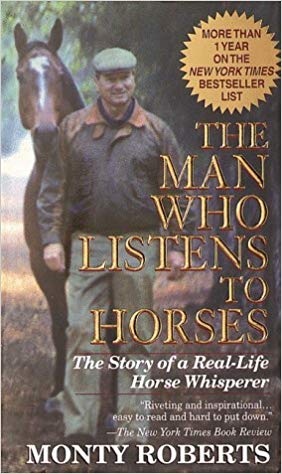
But while The Horse Whisperer is a work of fiction, what appeared on library shelves two years later, The Man Who Listens to Horses (1997), is the autobiography of Monty Roberts, a real-life horse whisperer. In his own book, Monty tells his remarkable journey with horses and how his horse training-methods have revolutionized horse training, from the violence and exercise of force and mastery previously used to the gentling methods of those today. Horses are not to be "broken" anymore but to be "gentled". 

Here is a postage-stamp version of the Monty Roberts story.
Source
Monty Roberts, born 14 May 1935, as a babe was held in the saddle in front of his mother as she trained neighborhood youngsters in the family riding school. By age 4 Monty was riding in shows and winning prizes. At age 7 he made a precocious and controversial discovery—the realization that horses have their own language, what he came to regard as “the language of Equus”, an extremely controversial thought at the time!

His father, a mean and violent horse trainer, also mean and violent with Monty, wouldn’t allow such a thought, and tried to beat (yes, physically) the thought out of Monty’s brain. Monty hated violence and despite the beatings, continued his observations on how horses communicate. By age 11 Monty was in the family rail car and riding across the country with typically 6 horses, a groom-trainer, and a school teacher. By this time he was known to be “professional” as his competitors were kids who actually attended school and merely rode on weekends, he swooped up the highest prizes rather consistently whenever and wherever he competed.

By age 13 he was taking summer trips to the Nevada desert to do mustang round-ups, and this was where he got the biggest epiphany on horse communication—from interactions at night between a young misbehaving stallion and the leading herd mare who was “punishing” the wayward youth! To be able to see these night interactions between the herd animals, Monty realized his rare achromatopic (complete colorblind) condition was actually a blessing, as it gave him ability to distinguish the textures of the night desert and not feel the loss of the colors!

On this earliest mustang roundup he observed a mare chasing a young rambunctious stallion 300 yards away from the herd and not allowing him to return. This ostracism is critical as it prevents group protection from the coyotes, wolves, mountain lions and other predators, and it is unnatural to be excluded as horses are herd animals and thrive in socializing family herds. The young stallion was chased out and the lead mare kept him ostracized by directly facing him, eyes riveted into him, with no letup on reprimanding stance or breaking of eye contact. After some minutes the young stallion started moving his mouth, and then sticking out his tongue a bit at times, actions that Monty later learned was his beginning to admit his submission to her authority. Following this, his head would drop to just inches off the ground while he continued with the mouth action. The mare was waiting for this submissive act and then would break eye contact and look a few inches in front of him. As he continued with his submissive movements and turning his body more and more laterally to her, an overt act of vulnerability and submission, her eyes would drift further in distance ahead of him, and she too would gradually turn laterally. The more she turned, the closer he approached. What was utterly astonishing to Monty, however, was how she showed her forgiveness to him after allowing him back into the herd, provided he continued expressing his submission and not misbehaving again. She would curry his mane, withers and around his tail gently with her lips and teeth and give him lots of attention as she welcomed him back, and forgave him. If he misbehaved, out he was chased again, and the process would be repeated.

For Monty, this was revolutionary! Horses had rules, meted out punishment, expressed forgiveness and caring love, and were in fact master trainers for raising “model” communities! Monty’s father used aggression, violent submission, force and cruelty in his horse-breaking methods, and Monty was quick to note the huge differences in both process and outcome. Monty developed training methods he gained from this mustang experience, and his horses were “broken” to saddle and bridle in an average of 30 minutes after meeting. His father’s violent method took 6 weeks, and the horse was forever damaged. Monty’s method was based on speaking the “language of Equus” with the horse and gaining its trust so that he could just quietly place the saddle on the horse, reassure the horse that it wasn’t a bad thing, and then slip the bridle on the horse with the same reassurance. Monty knew his father’s method of domination was inherently wrong, and Monty’s ultimate philosophy was that the horse is an honest soul and will tell you its story, if you but take the time to listen, as “the horse is always right”!

Monty’s Training Method

According to Monty, to break a horse in 30 minutes is not difficult if one speaks the “language of Equus”. The ideal method is to use a 50-foot arena, preferably without a lot of activity around it. The horse would be put in the arena for a time before Monty entered it in order for the horse to become familiar with the space rather than have too much unfamiliar stimuli at once during the initial gentling session. Then Monty would enter the arena with a rope, not to beat the horse at all, but to just flick the rope behind the horse to keep the horse circling at a nice pace. Monty, like the lead mare who was ostracizing the fractious youth, would squarely face the horse with eyes fixed on it and the horse would be running because he was realizing Monty spoke “Equus” and he, the horse, was being punished for something.

Once the horse started moving his mouth, and then lowering his head to just above ground level while moving his mouth and still making revolutions around Monty, Monty would adjust his eye focus to just in front of the horse. The horse would slow immediately, offer more submissive mouth movements with lowered head and the further Monty adjust his eye focus in front the horse, the slower the horse circled. Finally when Monty was no longer looking at the horse and his (Monty’s body) was turned laterally in the position of little awareness and in trusting vulnerability, the horse would gaze at Monty. Monty would then turn his back on the horse, being careful to never cut his eyes in any way to see how the horse was reacting, and just slowly walk away. The horse, the herd animal, would naturally approach Monty and with its muzzle over Monty’s shoulder, follow Monty trustingly around the arena.

After a couple minutes of “round-up”, Monty would turn and touch the spots of vulnerability—the spots where for example a mountain lion would grab if it attacked, many of the same spots that the mare had curried when she welcomed the fractious stallion back into the herd. Monty was saying with these touches, “You can trust me. I would never hurt you.” Monty would touch the vulnerability points, along the muzzle, the top of the head, along the mane, the throat, the flank, and as he developed his methods, he would even lift one hoof after another, an act that demanded ultimate trust as it denied the horse the ability to run when one of its hooves was lifted. With these acts allowed, the horse was acquiescent for allowing more acts of vulnerability, the adding of the saddle, and then the bridle. After each each piece of equipment was added, Monty would reassure the horse with appropriate touches, conveying his high regard and respect to the horse for the horse putting such trust in him. And so Monty could walk into an arena, and about 30 minutes later have a “green” horse introduced to a saddle and bridle and have a rider on his back for a few spins around the arena. Of course this was just the beginning of the training, but Monty did the initial horse “breaking”, a term that is actually a misnomer. The term in regard to Monty’s method should be more like “horse gentling”.

KNYSNA-PLETT HERALD
This book is the amazing journey of Monty from a small boy who never had a childhood or owned a toy to a grown man who, living and breathing with horses all of his life, learned a method of “horse breaking” that gained the horses trust and didn’t destroy its spirit. When Monty was into his 40s, Queen Elizabeth, quite the horsewoman herself, heard about Monty and invited him to Buckingham to see for herself his methods. She was amazed and she and Monty struck up quite the friendship which lasted for years, and developed further during many more visits. Until meeting Queen Elizabeth, Monty had learned to remain silent about his controversial gentling methods of training horses. After meeting such a renowned horse advocate, Monty started giving public demonstrations and instructions on his methods, and because of Queen Elizabeth’s keen passion for humanitarian treatment of horses and her passionate approval of Monty’s gentling methods, Monty’s ways became widely known … and even was the catalyst for this book!

Monty, beaten from ages 7 to 15, and often with a chain, refused to continue with the violence that he underwent growing up. His methods gentled the training methods of horses, and he and his wife with their big hearts and passion to help even youths at risk, over the years took in 47 foster kids (typically aged 12-14) who had a lot of baggage. They used the same methods of “herd mentality”, stern looks and welcoming touches as the mare had used. None of their kids were ever beaten, communication and love were the ingredients for a strong “family” tie. And Monty says that despite the heavy baggage that his 47 foster kids had, 40 of them were “successfully taught to fly”!

Definitely this book is a high recommend!

Thursday, August 29, 2019

Alex & Me: Anecdotes on Language Acquisition

Many people are aware of the 30-year long relationship Irene Pepperberg had with her African Grey Parrot, Alex (roughly May 1976 – 6 September 2007). 

Irene Pepperberg was trained at Harvard in chemistry, but while writing her chemistry dissertation she became fascinated with the biological aspects of language acquisition in animals. She finished her chemistry dissertation but never used the degree directly. That said, however, she had learned many research and other transferable skills to enter into the biological field of animal psychology. She studied constantly -- about child acquisition of language, about animal cognition which at the time was believed to be almost non-existent. For years she battled disinterest in her studies, and especially flack from the scientific world in general; animals were strictly believed to be governed by instinct and intelligence wasn't to be considered. Until this time, language acquisition had only been testing in some primates, gorillas, and corvids (crows, ravens). Irene thought that a grey parrot, an animal known to talk, would be the ideal subject to research animal cognition and intelligence with, and so went to an exotic pet store to get one. One was arbitrarily scooped up, and that parrot became the famous talking Alex! 

Source
A video on YouTube "Alex: One of the smartest birds ever" shows some of his training to demonstrate that animals, precisely African Grey Parrots, can not only "parrot" humans but actually understand and communicate with them intellectually, rationally, intentionally - all aspects of intelligence previously denied possible in the animal world. Humans just couldn't wrap their brains around the fact that humans aren't positioned as the only "animals" that acquire and communicate with meaningful language.


Some anecdotes I pulled from the "Alex and Me" book, which become clearer after seeing this YouTube clip.

In his early years of training:

In training, Alex "was less interested in colors than the objects, probably because all the colors tasted the same, while the different objects had different tastes and textures."

"He loved chewing clothespins. We called them 'peg wood', which he picked up quickly. I then gave him a green clothespin, something he'd never seen before, and asked, 'What's this?' He looked at it and cocked his head a couple of times, obviously intrigued, as he often was with novel objects. He then looked at me and said, 'Green wood peg wood,' all one phrase. We hadn't modeled it, so this was striking. Of course, a perfect response would have been 'Green peg wood'. 
[Pepperberg's early initial struggles with funding and getting published in a time when there was a growing controversy in the field of ape-human communication .... and therefore if apes weren't given legitimacy in communication, certainly no 'bird-brain' was going to get it! She writes:  
The chimpanzee known as Washoe, for instance, in the care of Roger Fouts, had apparently coined the phrase "water bird" the first time she saw a swan; Koko the gorilla, the subject of Penny Patterson's research, seemingly described a zebra as a "white tiger". These efforts were garnering a lot of public attention (NOVA programs were just part of that; magazine and newspaper articles proliferated too). Yet linguists were expressing a growing unease over the claim that these animals had demonstrated a rudimentary facility for language. 
In November 1979, Science published a long paper by Herbert Terrace and several colleagues: "Can an Ape Create a Sentence?" It was to become a classic in the growing controversy.]
Some language acquisition with Alex was unplanned, for instance, in December 1980 Alex was taken to a washroom on researcher Kathy Davidson's shoulder and he noticed his reflection in the mirror for the first time. He looked into it, cocked his head, and asked, "What's this?" Kathy answered, "That's you. You're a parrot." Alex looked some more and then asked, "What color?" Kathy said, "Gray. You're a gray parrot, Alex." And that was how Alex learned the word grey.

After several years of work with Alex:

Alex as as grey was very affectionate and loved to have his head lightly scratched. Lab workers called it tickling, so Alex when he wanted attention sometimes would lower his head and say, "You tickle", meaning "scratch my head". One day a stuffed gray was on the desk where Alex worked. After a bit he went over to it, gave it a good look, and then lowered his head to the stuffed bird and said, "You tickle." When nothing happened, he did it again. Again nothing happened, so in a huff, Alex said, "You turkey," and walked off. "You turkey" was a phrase the lab students sometimes said to Alex when he was uncooperative.

Another phrase he picked up inadvertently was "Pay attention!" He had aspergillus infection, a killer, and had to be taken to the vet and put into a nebulizer to help him breathe in drugs for treatment. Of course he didn't like it in the confining nebulizer. He knew he had to "wait" until the bell went off after the treatment, but one time there was an emergency and when no one came after his timer went off, he rapped on the glass and said not only his unhappy-with-this-environment phrase of "Wanna go back", he called out, "Pay attention! Wanna go back!" He had picked up "Pay attention" from students who were testing him in the lab.

At the vets, Alex was popular during the day, but at night he was basically alone. One night the accountant stayed late, and Alex tried to communicate with her. She was working so therefore quiet, so Alex asked, "You want a nut?" "No, Alex." He persisted, "You want corn?" "No, thank you, Alex, I don't want corn." This went on for quite a while with the accountant trying to ignore him in order to do work. Finally, Alex apparently in exasperation said in a petulant voice, "Well, what do you want?" The accountant cracked up laughing and gave Alex the attention he was demanding.

After recovery, Alex was taken back to the lab, but he didn't seem interested. In response to the question "How many wool?" based on the number of wool pieces on a tray, Alex answered, "One." The correct answer was two. When asked again, he said, "Four." Back and forth, one and four. Finally Irene said he would have to go into time-out and put him in his private room away from people. He immediately called out from behind the closed door, "Two ... come here ... two." Yep, Alex had fully recovered and was up to his old tricks!

Of course Alex wasn't the only bird in the lab. There were others like Griffin and Wart. Both were younger than Alex and both were obtained years after Irene had bonded with Alex, so Alex was king in the lab. He always had to have the higher perch, be closer to Irene's face in pictures and in communal work, and was therefore bossier. When Griffin was asked a question and didn't answer immediately, Alex would call out the answer (and sometimes the incorrect one to confuse Griffin). If Griffin's pronunciation wasn't clear enough, Alex would call out, "Say better" and Griffin better sound better on the next try. 

Did Alex understand language? Well, what do you think? 

Irene came storming into the lab one day angry to lose funding for her research ... yet again. Alex looked at her, and said, "Calm down!" 

He babbled and played with sound when alone, for instance, "green, cheen, bean, keen ..." So one day while Irene was testing him with a photographer on a limited schedule, she was asking Alex questions related to phoneme sounds, something she'd never worked with Alex on, but because the interviewer was on a tight schedule Irene skipped giving Alex a reward for every correct answer because Alex eating a nut after each answer would take too much time. Alex was getting frustrated and at not being appropriately rewarded for his efforts and would call out, "Want nut!" He continued to answer each phoneme question correctly, despite never being asked such questions before, and after each would demand more loudly, "Want nut!" Finally, in exasperation Alex called out, "Want nut! Nnn ... uh ... tuh!" Irene was stunned! His response was equivalent to, "Hey stupid, do I have to spell it out for you?" 

Could Alex put thoughts together to create new meaning? Well, one day someone brought a birthday cake into the lab and everyone shared it, including the birds. Community was very important for fostering communication and relationships. When Alex got his piece, he appreciatively said, "Yummy bread." He had known "yummy" and "bread" before, but putting them together was totally Alex's idea.

The night before Alex died, September 2007. 

Alex stayed in the lab with the other birds, and every night before Irene would leave, she and Alex would say their parting words. Wart and Griffin said nothing.
Alex: "You be good. I love you."
Irene: "I love you too."
Alex: "You'll be in tomorrow?"
Irene: "Yes. I'll be in tomorrow."
And those were the last words Alex spoke to her, "You be good. I love you!" Irene treasures them!


Tuesday, March 12, 2019

Ark Encounter, Amazing Architecture!

The Ark Encounter (Kentucky), built on Biblical proportions, is a massive construction meant to wake people to the reality of what building and living in the ark for a year really entailed. Bible scholars, Christians and non-Christians go to visit the monolithic construction built out of wood. I have to say that although I read my Bible and was practically weened on the story of Noah and the Ark, walking through this ark and visualizing a home on the water with thousands of animals and only eight people to feed and water them and muck out their crap, I was stunned! 


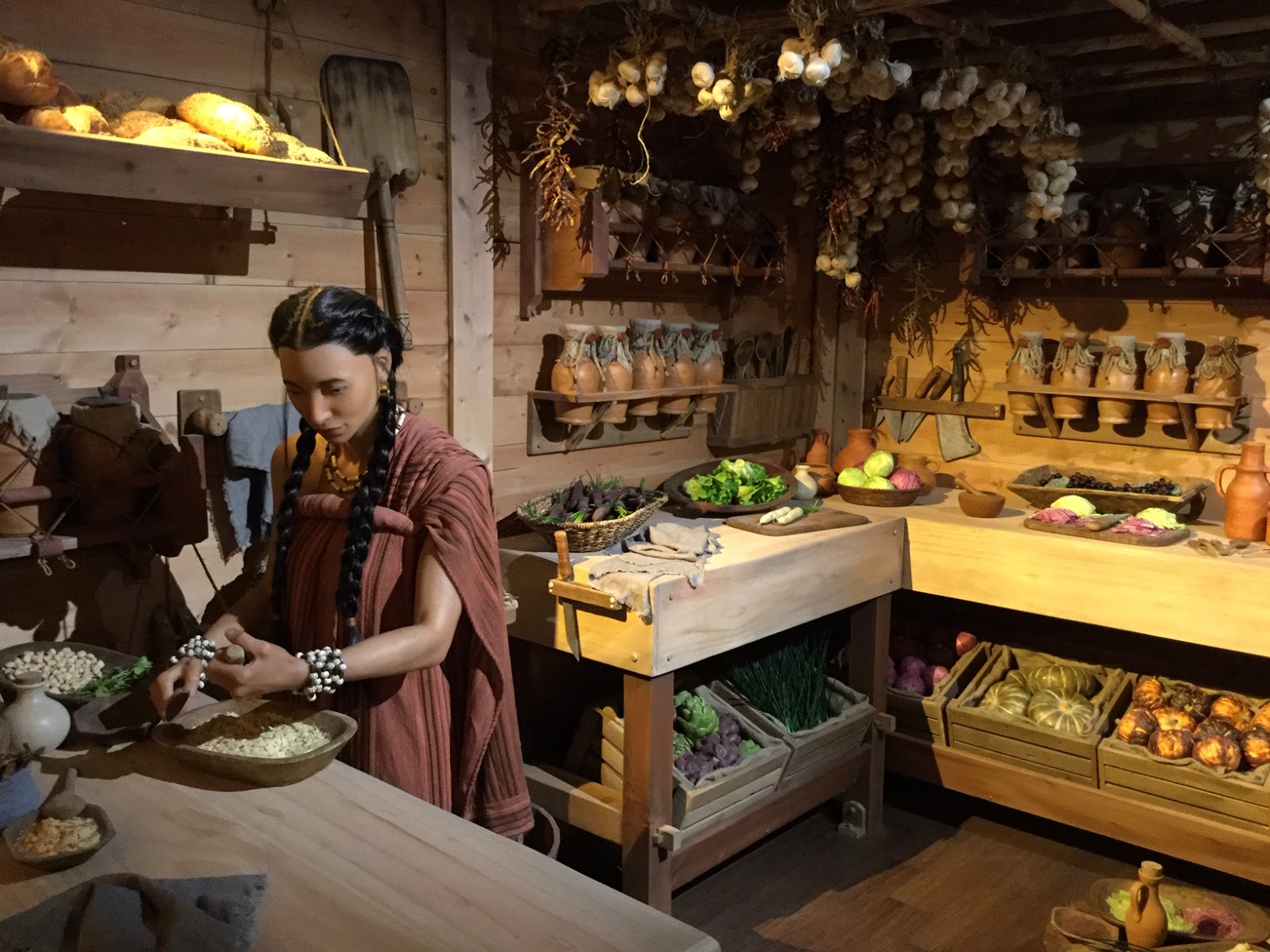
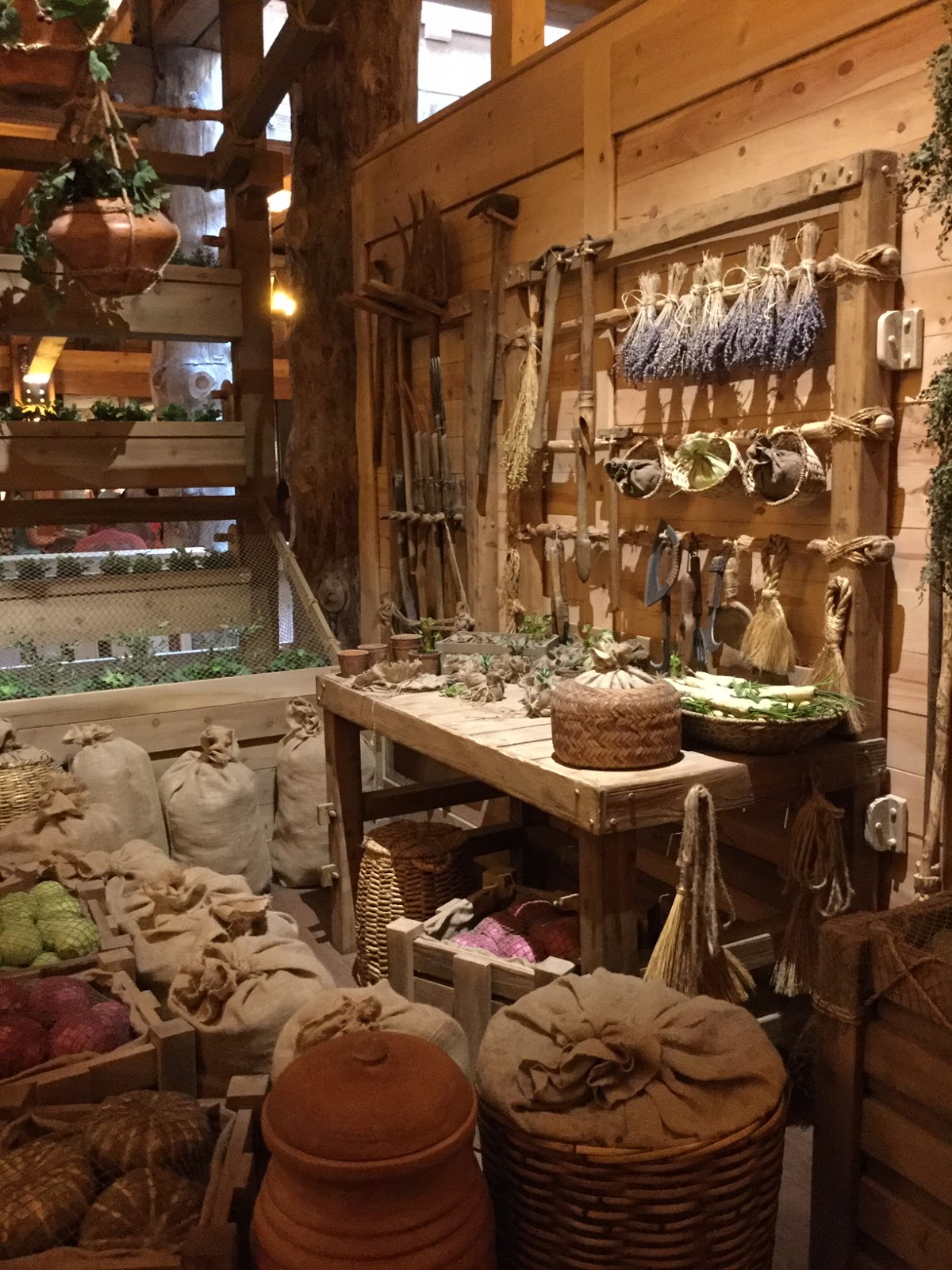
For years my questions have been how did people live a whole year without the vitamin D from the sun? How did they deal with the stench of so many animals? Indeed, how did so many animals fit into the tiny ark, esp when so many animals are quite large and they were taken into the ark in pairs for the unclean animals and for the clean animals in groups of seven (or was it 14, discussion on this number confusion discussed)? How could the eight people prepare food without refrigeration for themselves, and get fresh vegetables for maintaining health? How did massive amounts of food fit into the ark when I've know for years that just a single elephant in captivity eats about 6 bales of hay a day, and no way could there be enough space on the ark for food for even one elephant for a year, let along two elephants, let alone a whole host of animals! How could enough food along with the thousands of animals fit onto the ark????

Well, there are no definite answers, and what is possibility and what is actual fact is clearly distinguished when any information (and there is a lot) is presented. Facts are clearly given and, if poetic license is used, e.g. naming Noah's wife or assigning roles to specific family members, the information is stated as a choice for envisioning family functions or for creating individuality and character in an otherwise detail-less story enactment. Excellent creation of what is thought to be period scenes, based on other archaeological discoveries (these points are discussed too in the creation of the scenes). I thought the research done in the building of the ark scenes was astounding! 

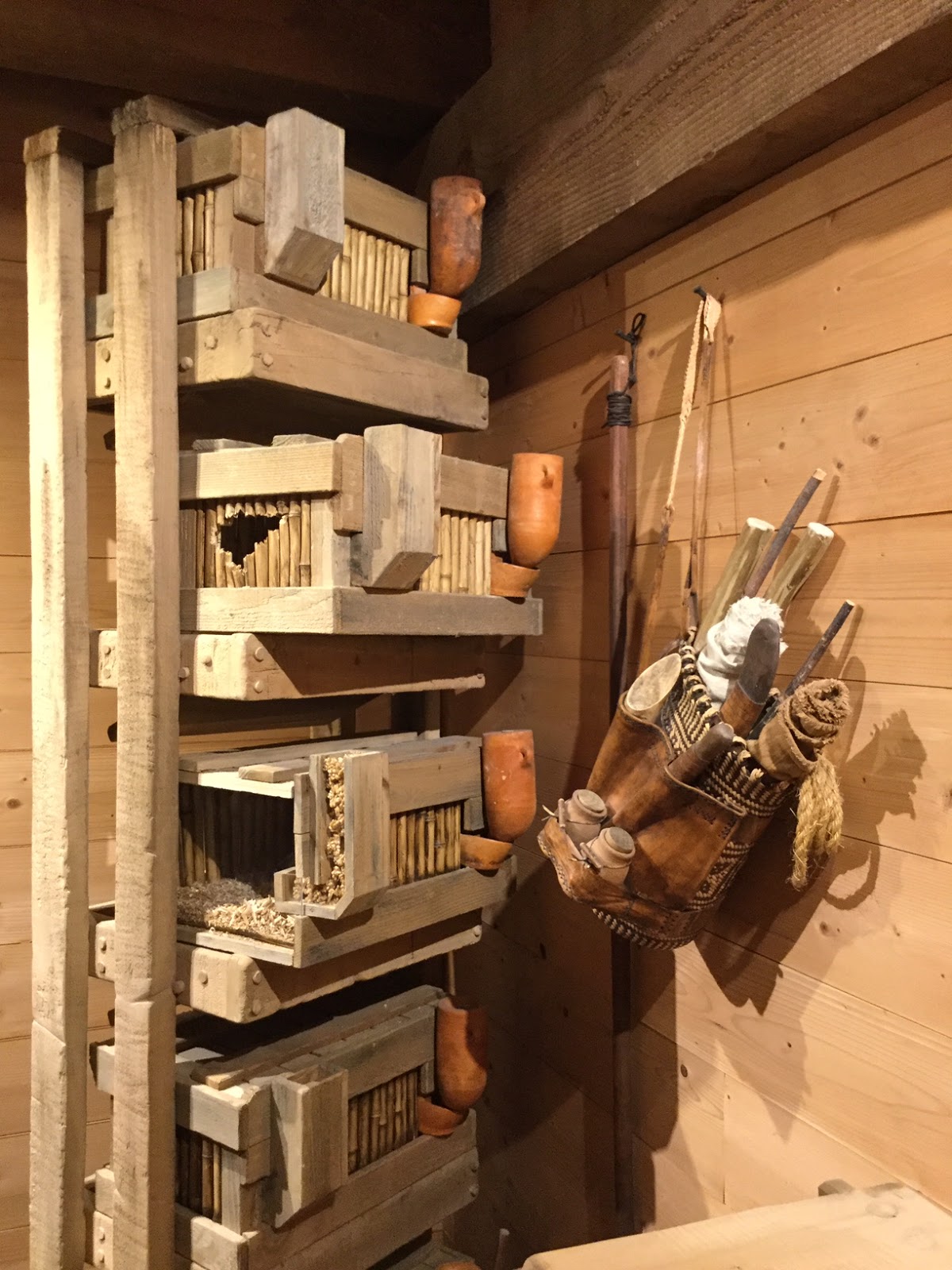
So here are some ideas about the layout of the ark ... these are SOME ideas. The ark was filled with innovative possible mechanisms and strategies for feeding, watering and maintaining the animals and the eight people who had faith that God would provide and care for them.

First and second floors dealt mainly with the logistics in constructing the ark, the research behind its construction, and the care and housing of the animals.


Amazing central architecture! This openness between the floors (poetic license) allowed for ventilation and air flow between the floors. It also allowed the lighting from the unfinished top area to filter lighting to even the lower level of the ark.


Wouldn't it make sense that only young animals would be taken on the ark? They wouldn't eat as much, they would be more resilient to the change of the earth afterwards, and have more time to reproduce and repopulate the earth after the cataclysmic destruction.


Parts of the second and third floors contained information regarding geology, Biblical interpretations, myths surrounding the Flood (over 200! collected throughout the world), and much much more.


The third floor was primarily dedicated to the living and working quarters of the family of eight. It held their kitchen and cooking and growing facilities, a blacksmith shop and woodworking shop (something is bound to always be breaking on a big boat in a violent sea!), it held a dedicated room for each of the four couples, and each room was decorated to show different personalities and different skills, what is thought to be a pretty display of the talents, arts and crafts of the time.


Impressive! Educational! Based on Biblical literature!
A very profound experience!

Tuesday, August 29, 2017

The Moon by Whale Light

The Moon by Whale Light … and Other Adventures among Bats,Penguins, Crocodilians, and Whales by Diane Ackerman. Diane Ackerman, one of my recent favorite authors, paints herself as a glorious animal-lover and –researcher. Her book The Moon by Whale Light is an insightful look at some of what I at first thought a most random selection of animals. Well, actually after reading the book I still think the animal selection is random but her deep zoological perspectives of the animals is not random but in fact astute, learned and is a wealth of behavioral comments gleaned from field research carried out with long-term professionals. Each of the four chapters dedicated to (1) bats (mammals), (2) crocodilians (reptiles), (3) whales (cetaceans), (4) penguins (aves) explores the animals’ use to man and man’s relationship with them. She also offers many intriguing and little known behaviors and knowledgeably creates the animals in their own highly structured and functional society, a perspective that few humans consider possible for “the lower species”.


So I have collected just a few thoughts on each of the animals, but this book is a jewel for animal-lovers. I so very highly recommend it!

On Bats

Merlin Tuttle, the world’s authority on bats, says, “Bats are among the gentlest of animals. They’re really shy and winsome creatures who have just had bad press.”

Bats are a natural pesticide. They eat 150 tons of insects every night. (Bracken Cave, San Antonio, TX) In fact, bats eat so much food in one evening of foraging that they weigh 50% heavier after one night of dining. An example of their insect gluttony, little brown bats of a common North American species catch as many as 600 insects in an hour.

Bats fly with their mouths open so they can echolocate, but which people mistakenly attribute to a snarling demeanor. They are not snarling, they are not mean, they’re just trying to not bump into anything.

Big brown bat
Picture taken from "The Why Files: The Science behind the News" in its feature "Stopping the Slaughter of Bats"
Bats are extremely tidy, comb themselves thoroughly, and do not gather a mess of nesting materials for their homes like birds. They provide excellent tender care of their young as well.

Cave walls are typically around 57F, but bat babies need to maintain body temperature of around 102F as they are born hairless (these cave conditions are the equivalent of a human lying naked on a cement floor). Therefore, caves chambers that have little moisture and shaped to retain heat become nurseries and babies cling from the ceiling packed with hundreds of other babies waiting for their mothers to return from their hunts and wrap their wings around the young. If bat nurseries are disturbed, the bats must move further back in the cave, where it is likely colder and many babies die. Only one young is raised per year so bats are at risk of not maintaining colony numbers if disturbed.

Even a person passing near a bat which is hibernating causes the bat to raise its body temperature in order to make a retreat if necessary, but this seemingly harmless elevation costs the bat 10-30 days of stored fat.

Bats are rapidly declining due to people not understanding them and killing them off. They have been victims of bat shoots, poison, attacked by flame throwers, napalm-bombed from the air, and dynamited. They have ultra-sensitive hearing and even the blast of a cherry bomb in a cave could kill their ultra-sensitive hearing and confuse a whole cavern of bats so that they can no longer use echolocation, and thus die.

Bats were once as numerous as the passenger pigeon. Old-timers remember when gray bats filled the night sky and now officially they are on the endangered list. The free-tailed bat has declined as much as 99.9% in some places. Its biggest colony went from 30 million to 30 thousand in just six years!

What people don’t realize is that bats are ESSENTIAL for maintaining the balance of nature! They fertilize bananas and maintain the wild strain which is disease-resistant. They plant the rain forest. Of the 3000 or so strains of peaches, which all started in China, bats were the seed dispensers and the pollinators. Bats pollinate many fruits, and bats and bees the the world’s greatest pollinators. Without them, earth would struggle to exist.

On Crocodilians

All crocodilians have a third transparent eyelid (or nictitating membrane), or goggles of a sort, so they can swim underwater. Their pupils are football-shaped and stay vertical to the horizon no matter what angle the head turns. Even if the gator tilts its head straight up, the pupil floats like a gyroscope, so vision isn’t distorted.

While mammals are extravagant with their energy, reptiles are extremely energy efficient and don’t expend energy unless they have to as they take their energy from external sources. Their inferno must be stoked carefully and kept at a precise temperature. If the temperature is incorrect, they cannot digest their food, but their efficiency is shown in their need for only three or four good meals a year.

Alligators have about 80 teeth (and crocodiles 70) and loose teeth throughout their lifespan. New teeth push up through the socket to replace old ones and an alligator, whose lifespan parallels a human’s, might have as many as 3,000 teeth. [Fun trivia: colonials used to fill up alligator’s teeth, which are hollow, with gun powder.]


A large gator, swinging its tail to counterweight the enormous head, stretches its head out of the water, gulps air then lowers itself in the water to make a sub-sonic boom when it bellows, making the water dance high around its body. Researchers note that alligators are responsive to the pitch of b-flat; when hearing b-flat tones, they go nuts with bellowing.

A mother alligator lays 35 or so porcelain eggs, which are incubated for about 65 days. Crocodilians do not have sex chromosomes; their gender is determined by the temperature at which they develop, and 2-3 weeks after the egg being laid, ambient air temperature determines the gender: 94+F produces males, 86-F produces females. Most often an entire nest is one gender, but in some cases, the top 2-3 eggs might be different based on their exposure to a different air temperature.

The first year is tough for an alligator. Yearlings are about 2 feet long and three-quarters of them die because they are eaten by fish, frogs, wading birds, to name a few. As they gain size, this risk is minimized, but then two- to three-year-olds are chased by adult alligators to protect territories and families, and a three-year-old which is about three and a half feet becomes a wanderer. In most reptiles, especially crocodilians, reproduction depends on size, not age, and some crocodilians might reproduce at 6 years of age while others at 15 for some males or 18 for females who develop later. By 30, a male alligator in the wild shows signs of senility, loses its teeth which aren’t replaced, becomes mottled and rough-skinned, and may even go blind. However, a male in captivity may grow as old as 90.

On Whales

If you ask someone to draw a picture of a whale, he/she will likely draw a sperm whale with its bulbous head made famous by Melville’s Moby Dick, but whales come in many shapes, sizes and colors … with 77 species of whales and dolphins inhabiting earth.


Whales are divided into two groups—toothed whales (Odontoceti from the Latin for “tooth” and “whale”) and baleen whales (Mysticeti, from Latinized Greek for “whale”). Toothed whales include sperm whales, dolphins, and orcas/killer whales. They have a single blowhole, echolocate like bats, have teeth for holding prey like fish, squid and shrimp but despite teeth, swallow their food whole. Baleen whales have paired blowholes—nostrils in fact. They graze with their mouths wide open, and the baleen with smooth outer edges and bristly inners catches the krill, plankton, and schools of fish while water passes on through. Other species with baleen have throat pleats and open their mouths even wider to swallow prey when the water is pressed to the top of the mouth and wrung out.

The Right whale, a Mysticeti, got its name from the age of whaling when a whaler would see a whale and ask if it were “the right one”. The Right whale floated when killed instead of sinking, didn’t struggle in battle, and was extremely valuable for its baleen. Now the Right whale is one of the rarest whale species (only 3,500 remaining) due to human greed. Never have humans caused an animal with widespread distribution across the globe to come to extinction, but they sure have come close in the case of the Right whale.

The Gray whale of the North Atlantic became extinct by the end of the 1700s because of Basque whalers, but the Grays in the North Pacific were “discovered” in the 19th C and called devilfish; they were furiously hunted and in self-defense killed several men and smashing boats in the hunt. Now they are known for “the friendly whale phenomenon” which started in 1977 when a friendly whale near Baja California allowed itself to be patted by passengers on a whale watching boat. Since then, friendly whales have sought out boats, and on occasion rammed them and then rolled over to beg for belly rubs.

Blue whales make loud, low-frequency “songs” that can travel up to 500 miles in deep sound channels before disappearing into background noise.

A Humpback has paddle-like flippers and a huge tail with markings as unique as fingerprints, but its most arresting feature is it sings complicated, beautiful songs and varies them as it continuously sings.

When a whale exercises in warm equatorial waters, it can die of overheating. A whale is like a house with a too-large furnace and too few radiators. If it races too much for its food, it can become hot and can virtually blow up. Even after a whale is killed in the Antarctic, it must quickly be hauled aboard and cut up, for if it takes too long to drag the whale back to the ship for evisceration or is left in the water too long, its bones will be charred by the heat of its internal decay.

Most sperm whales live close to the equator and so dive to unimaginable depths to get to freezing water to cool off. They feed on squid and large fish, sometimes swallowing a whole shark. In the depths of the ocean and swimming under extreme pressure among luminescent fish, no wonder the sperm whales seems magical.

A mother whale is virtually 97% water, lives in water, sounds in water which travel through water and ultimately to her unborn who hears her, but because there is no air in the womb, the baby cannot speak back until it is born one year later.

On Penguins, those feathered dinosaurs

Penguins have no land predators, so they do not fear people. Just the opposite, they are curious and alert and allow their babies to waddle around and freely explore.

Penguins do NOT live at the South Pole, which is about 800 miles from the closest body of water and an altitude of almost 10,000 feet. Nor do they live with Eskimos and polar bears in the Arctic.

There are 17 types of penguins on earth, and while all penguins are essentially black and white, their head markings are what make them most easily identifiable.
·      Adelie penguins (named after Adelie Land near the Antarctic coast of Australia that was named after the wife of a 19th C French explorer) have black heads with chalk-white eye rings—like little men in tuxedo suits.
·      Rock-hoppers have lively red eyes, long yellow and black head feathers resembling an outgrown crew cut, and thick yellow satanic eyebrows that slant upwards.
·      Chinstraps get their name from the thin black “strap” across their throats; their amber eyes are outlined in thick black and look Egyptian.
·      Emperors have black heads, a tawny stripe on their bill, and a bib of egg-yolk yellow around their necks and cheeks.
·      King penguins, the most flamboyant of all, display a large velvety-orange comma on each cheek, which melts to a radiant yellow, and on either side of their bills, a comet of apricot or lavender darts toward their mouth.
·      Fairy penguins are tiny and blue-headed.


Click to enlarge
Photos taken at Sea World just outside of Honolulu, Hawaii (a horrible place to visit -- the focus is on making money, e.g. $140 to kiss a dolphin and $18 a photo (and you can't take a camera in with you to get your own photo))
The black and white of penguins has very specific purposes. First, for protection—black backs make them less visible from above and white breasts make them appear like a reflection of water from below. For heat—if the penguin is cold, they turn the black towards the sun and warm up but turn white towards the sun if they are hot. An interesting study showed that when penguins were tagged with silver, they were quickly eaten by leopard seals which were attracted to the flash of the silver, so black tags were then used and the penguins were no longer at a disadvantage for becoming a targeted lunch.

Only 4 penguin types live in the Antarctic and only 2 live there exclusively. Most live in slightly balmier climates—on sub-Antarctic islands like South Georgia or the Falklands, along the coast of South America, South Africa, Australia, and New Zealand, and one species even lives in the Galapagos near the equator, but penguins do not and have never lived north of the equator. The ocean currents aren’t favorable for carrying them that far north.

Penguins come in a broad range of sizes. The Emperor penguin is the tallest and stands over five feet tall, weighing as much as 100 pounds while in contrast the smallest penguin, the fairy, weighs only 2 ½ pounds and stands a mere 12 inches tall.

Penguins waddle around and are believed by many to be flightless birds, but they do fly—they fly through water, and gracefully too, at speeds up to 15 miles per hour. They porpoise to breathe in just enough air to keep the lungs from collapsing and dive to great depths, with their pulse going from 100 beats per minute to only 20, and because they take only one shallow breath in their porpoise-move, they don't get the bends.

Penguins don’t have binocular vision like humans do, so they turn one eye to an object and then the other. Although they see well underwater, long vision on land isn’t necessary.

Monday, April 24, 2017

Unbowed: Wangari Maathai (1940 - 2011)

Wangari Muta Maathai, born in Nyeri, Kenya (1940) ultimately became the first woman in East and Central Africa to earn a PhD (1971). She also became the first woman in her region to be a chair of the Department of Veterinarian Anatomy and to be an associate professor (1976). Seeing a political deficit and unmet needs by politicians, she entered politics and became an active member of the National Council of Women of Africa (1976-1987), which was where her idea of empowering women while rehabbing the environment was conceived, the birthchild of The Green Belt Movement. Over the years, she assisted women in planting more than 20 million trees on farms and schools and church compounds, and by 1986 the Movement had become a Pan African Green Belt Network. 

She became internationally recognized for her persistent struggle for democracy, human rights and environmental conservation. On several occasions she addressed the UN on behalf of women. She authored articles, books, served on boards of several organizations, and in 2002 was elected to parliament with an overwhelming 98% of the vote. Subsequently she was appointed by the president as Assistant Minister for Environment, Natural Resources and Wildlife in Kenya's 9th parliament. 

In 2004 the Nobel Peace Prize was awarded to Wangari Maathai "for her contribution to sustainable development, democracy and peace."

Her book Unbowed: A Memoir (2006, 2007) documents some moments that gave her a solid foundation of family and nature and which were fundamental in raising her awareness of a large escalating environmental problem ripping across the environment that had been so untroubled in her youth.

As the story goes, the name of Kenya was named by the explorers Johan Ludwig Krapf and Johannes Rebmann, when they encountered the awe-inspiring 17,000-foot-high mountain known today as Mount Kenya. "What do you call that?" they asked of their guide, and thinking the two were asking about the gourds he had in his hand, the guide answered, "Kii-nyaa", and thus the name of the mountain and the country became known by the colonial name and not the Kikuyus indigenous name of Kirinyaga, or Place of Brightness. Today the country of Kenya still feels the tug of conflict in their development and concept of self caused by the colonial and the indigenous ideas.

Before Wangari went to school, in her area the colonial government decided to establish commercial plantations of non-native trees. She remembers huge bonfires as the native fig trees went up in smoke. By the mid-1940s the British had introduced many exotic tree species to Kenya—pine in the north and eucalyptus and black wattle in the south. These trees grew fast and strong and contributed to the newly emerging timber business, but they eliminated local plants and destroyed the natural ecosystem. While the old trees had pierced deeply into the earth and allowed other trees and shrubs to thrive in their shadows, the new trees eliminated local plants and didn't retain the rainwater. Eventually, rivers and streams either dried up or were greatly reduced.

The native fig trees were strong trees, burrowing deeply into the ground, breaking through rock and into depressions and ultimately hitting water. It was known that wherever a fig grew, water would be found. Communities had great reverence for these trees and they were never used for fire wood. These trees held the soil together, reduced erosion and landslides. These trees brought life-sustaining water. 

In the early 1970s Wangari realized that many ticks were affecting livestock. While gathering ticks from many places and going out in the rural areas, she noticed the people did not have good food but were eating the colonial flours and processed foods and because there was not enough firewood for cooking and preparing food, the crops were in drought because of loss of trees, the cattle were not well watered and certainly not the land. After looking at the people and the environment, she came up with the idea to give women jobs by planting trees, which would bind the soil, retain and collect water, be a home to birds and provided fruit and food for the people. Trees would heal the land and regenerate the vitality of the earth.

And thus began her journey of planting trees ... to foster a strong relationship between people and their land once again.

"I'm doing the best I can."

Wangari Maathai closed her book with a story she heart from a Professor Suji in Japan. One day a massive fire broke out in a forest and the animals, with flames coming closer, fled the forest, all of the animals except one, a tiny hummingbird who said, "I'm going to do something about the fire!" And she flew to the nearest stream and in her tiny beak scooped up a drop of water and flew to the conflagration, dropping her water droplet, and then flying back to the stream. The other animals watched in horror and dismay, "Why are you doing this? You cannot begin to put out the fire!" And the little hummingbird turned briefly to them and said, "I'm doing the best that I can!" 

Wangari Maathai encourages everyone to work towards a better and greener world. She encourages everyone to plant, even if it's just one tree, just one tree at a time.

Sunday, November 27, 2016

Mongolian Dzud

A group of my clever students not only put together a very well organized presentation on a current environmental issue, but they also introduced one that no one in the class had heard of before, including myself. Great job on all accounts! Requirements were to give a team presentation with each team member building on the previous person's data and each person using only 4-5 slides. All content was to have basic referencing and then after presenting, members were to have a Q&A on their presentation. Very impressive on all accounts. Thank you You Seung, Jae Min, Yu Jin and Eun Ji for allowing me to publish your work here. I love it!  ♥ ♥ ♥