Showing posts with label environment. Show all posts

Friday, August 16, 2019

Quanah Parker - Empire of the Summer Moon

"Empire of the Summer Moon: Quanah Parker and the Rise and Fall of the Comanches, the Most Powerful Indian Tribe in American History" was quite the historical read. Writer S. C. Gwynne gives background to why the Comanches were so little known -- basically, they were in the wild west further than other tribes, and they didn't trade, mingle or interact with the invading Whites. They kept to themselves, rarely took captives, were quick to strike, elusive to catch, and commanded thousands of miles so were almost impossible to pin down anywhere. They were the true "cowboys" of the west. 

Source
The Comanches measured wealth in horses and in the years after the Civil War, managed a herd of some fifteen thousand. They also owned "Texan cattle without number" and they roamed freely and fought passionately over the land that contained the country's largest buffalo herds. The Spanish knew a lot about them and were their marked enemy, as were many of the other tribes in the area:  Apaches, Utes, Osages, Pawnees, Tonkawa, Navajos, Cheyennes, and Arapahoes. They were a nation of military supremacy with a keen eye for horse flesh and adept with controlling their cattle and following the buffalo herds. One sign of their domination in their huge region was that their language, the Shoshone dialect, became the lingua franca of the southern plains. 

The Whites continued to pour into the West and the Comanches, unlike some Indians, refused to make treaties. Comanches fought, raided, burned, killed and disappeared back into their wild prairies and soldiers could not safely follow them and exact revenge despite their superior musket power. It was proven that a Comanche could loose 20 arrows in the time it took a soldier to load and fire one round, and this was even more deadly because the Indians knew about using the terrain in their warfare and didn't make themselves easily visible. 

Times were changing and firearms would quickly overpower the Indians skill: the Colt revolver with quicker loading action and power for up-close shots suitable for killing Indians on horseback appeared in 1835,  in 1860 the Spencer repeating carbine revolutionized how a few soldiers could hold off a mass of attacking Indians, and in 1873 the powerful Winchester created a complete imbalance in the "fairness" of warfare. Whites could kill at a great distance while Indians became powerless with their second-hand flintlocks, castoff muskets and short-range arrows. [In 1876, however, Custer was defeated by the combined forces of Lakotas, Northern Arapahoes and Cheyenne at the Little Big Horn despite his weapon advantage. Comanches as southern tribes didn't participate in the battle but the battle's effect caused a very hardline against ALL Indians, and White brutality against almost all Indians escalated with the clear message: the Indians must go because the Whites have come.]

Amongst all the raids of Comanches which usually resulted in taking captives, a band of Comanches swooped down on a northern Texan new settlement and killed the majority and took a few young prisoners. Cynthia Ann Parker (1827-1871), age 9 or 10 at the time, was one, along with a young aunt, younger brother and two cousins. Cynthia Ann disappeared for the next 24 years into the land of the Comanches. The others who were captured at the same time either were killed soon afterwards or in the case of her cousin Rachel Plummer Parker were brutalized and escaped many months later to tell, and document, the story. 

The story of Cynthia Ann Parker is unclear. What is clear is she became full Indian, and whenever Whites came to the camp she was in, she would disappear ... by choice. In her 24 years with the Comanches she completely lost her first language, married Peta Nocona and it was a love match, bore three children, and then with the invasions into Indian land increasing, her husband was killed in front of her and the "blue-eyed Indian" was recaptured and repatriated to her "own  people" ... which she could not understand and she rejected White life, which Whites could not understand. 

Many times she tried to escape, but always was returned to yet another distant relatives' who watched over her, often imprisoning her in a house. Cynthia had seen her two sons fleeing and would never meet them again. One soon died of injury or sickness, and the other Quanah Parker (1845-1911) grew to become the last of the Comanche chiefs. Cynthia Ann's daughter Prairie Flower died of influenza after a few months, and finally after 10 years in White captivity and not adjusting or understanding why she couldn't return to "her people", Cynthia Ann lost all interest in life and starved herself, dying herself of influenza. Years later Quanah Parker would hear the full story of his mother and sister's capture, and their deaths. He somehow obtained the single photograph made of them together and, though he built a great wooden mansion and entertained lavishly both politicians and his fellow Indians, that picture was his single-most treasured possession.

Cynthia Ann Parker with daughter Prairie Flower
That last sentence was a big jump in time. Quanah held out as a free-roaming Indian chief as long as he could. However, his dwindling nation, which was now taking in former enemy tribe members who equally rebelled against the Whites, was weak in number, lacked food in the harsh winter, particularly since the buffalo were gone, and Quanah the strategist realized that fighting the Whites was a losing battle. When he saw the north Texan range where the buffalo had roamed by the millions, wave upon distance wave moving against the yellow distance, when he saw the plain devoid of life, only yellow with no spot of dark fur, he knew he and all the Indians were defeated. At that time, his single remaining option was to cooperate with the Whites. With the killing of the buffalo, they had won. 

Quanah Parker, only survive child of Cynthia Ann Parker, last chief of the Comanches
So being a highly intelligent strategist, he taught himself the White laws, eventually went to Washington DC, became a passionate spokesperson and was the representative powerful and charismatic voice for all the Indian nations. He made some difference, but the Whites were determined to take everything. The lands that were first awarded his Indian tribe were soon stripped from the Indians with White cunning. Quanah spoke out for the Indians who came to him, counseled them, and though they lost almost everything, without his voice, his Indian nation would not have fared even as well or for as long as they did.

Despite wearing White man's clothes, particularly on his visits to Washington, Quanah never cut his hair.
That was the one aspect of "being Indian" he retained, and he retained it with pride.
Source
In any regard, Quanah as a spokesperson and of very charismatic personality, became wealthy. He entertained lavishly with a massive table, china, cutlery and tablecloths. His home was equally open to all Indians who passed through for advice, talk, food. He fed everyone indiscriminately and teepees surrounded his wooden mansion. Over the years his 10 wives either died or divorced him, and  he died in near bankruptcy at the age of 66. But Quanah Parker, despite what Whites said about the lack of morals in Indians, was a man who lived with principle. Life might have attacked him, but he stood up and made a difference for both "his people" and was respected by Whites for his uprightness.  

Tuesday, March 12, 2019

Ark Encounter, Amazing Architecture!

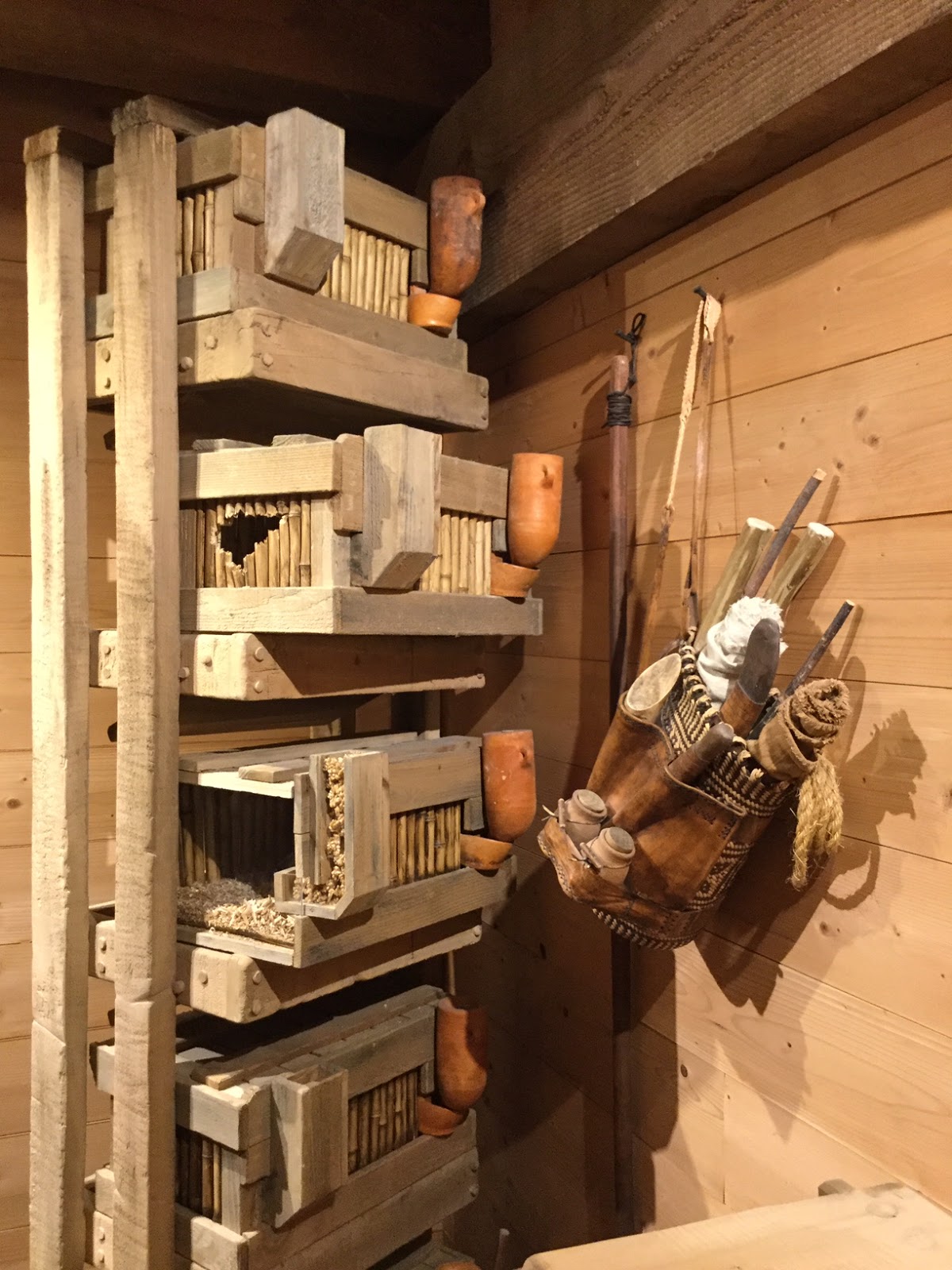
The Ark Encounter (Kentucky), built on Biblical proportions, is a massive construction meant to wake people to the reality of what building and living in the ark for a year really entailed. Bible scholars, Christians and non-Christians go to visit the monolithic construction built out of wood. I have to say that although I read my Bible and was practically weened on the story of Noah and the Ark, walking through this ark and visualizing a home on the water with thousands of animals and only eight people to feed and water them and muck out their crap, I was stunned! 


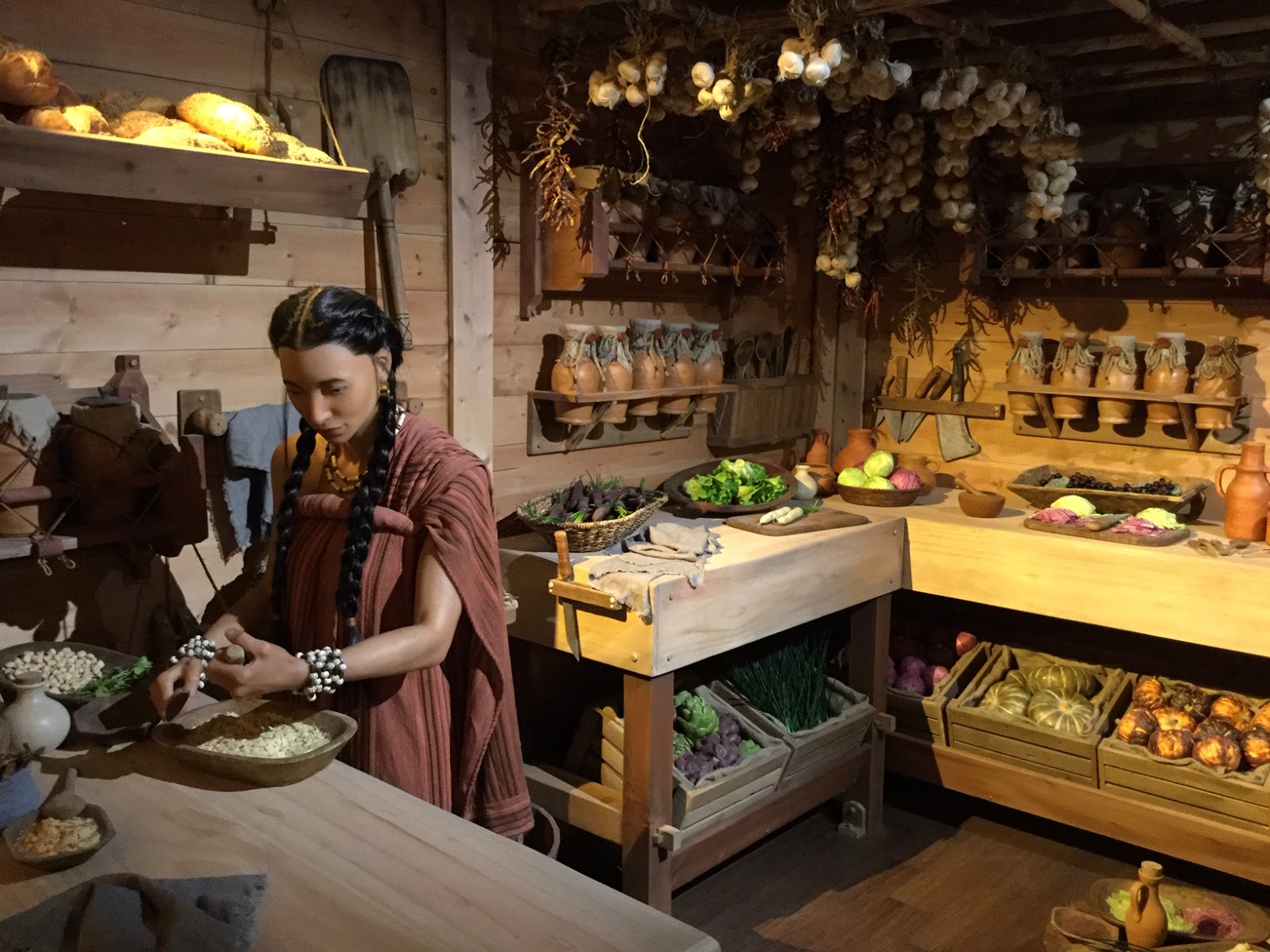
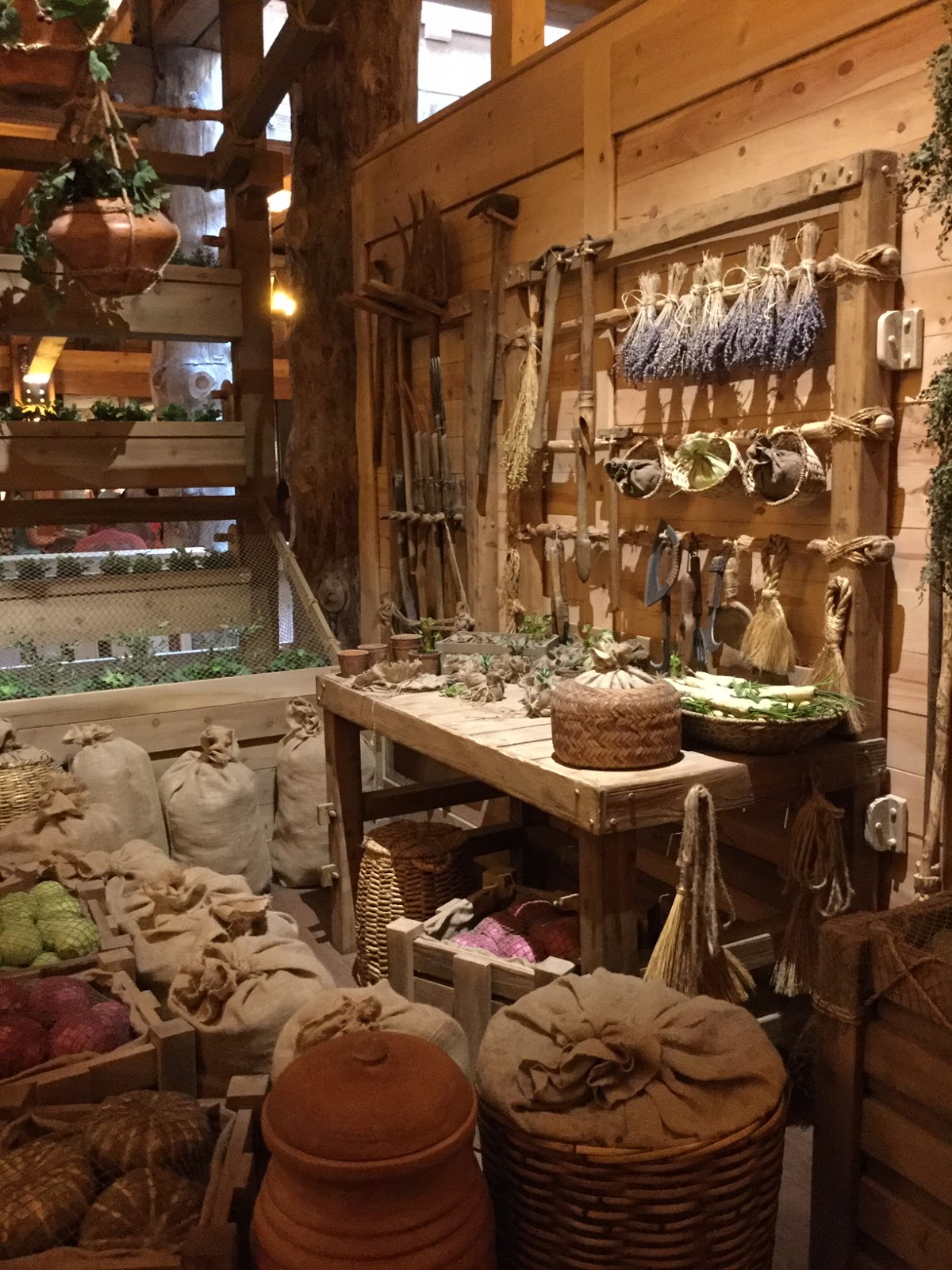
For years my questions have been how did people live a whole year without the vitamin D from the sun? How did they deal with the stench of so many animals? Indeed, how did so many animals fit into the tiny ark, esp when so many animals are quite large and they were taken into the ark in pairs for the unclean animals and for the clean animals in groups of seven (or was it 14, discussion on this number confusion discussed)? How could the eight people prepare food without refrigeration for themselves, and get fresh vegetables for maintaining health? How did massive amounts of food fit into the ark when I've know for years that just a single elephant in captivity eats about 6 bales of hay a day, and no way could there be enough space on the ark for food for even one elephant for a year, let along two elephants, let alone a whole host of animals! How could enough food along with the thousands of animals fit onto the ark????

Well, there are no definite answers, and what is possibility and what is actual fact is clearly distinguished when any information (and there is a lot) is presented. Facts are clearly given and, if poetic license is used, e.g. naming Noah's wife or assigning roles to specific family members, the information is stated as a choice for envisioning family functions or for creating individuality and character in an otherwise detail-less story enactment. Excellent creation of what is thought to be period scenes, based on other archaeological discoveries (these points are discussed too in the creation of the scenes). I thought the research done in the building of the ark scenes was astounding! 

So here are some ideas about the layout of the ark ... these are SOME ideas. The ark was filled with innovative possible mechanisms and strategies for feeding, watering and maintaining the animals and the eight people who had faith that God would provide and care for them.

First and second floors dealt mainly with the logistics in constructing the ark, the research behind its construction, and the care and housing of the animals.


Amazing central architecture! This openness between the floors (poetic license) allowed for ventilation and air flow between the floors. It also allowed the lighting from the unfinished top area to filter lighting to even the lower level of the ark.


Wouldn't it make sense that only young animals would be taken on the ark? They wouldn't eat as much, they would be more resilient to the change of the earth afterwards, and have more time to reproduce and repopulate the earth after the cataclysmic destruction.


Parts of the second and third floors contained information regarding geology, Biblical interpretations, myths surrounding the Flood (over 200! collected throughout the world), and much much more.


The third floor was primarily dedicated to the living and working quarters of the family of eight. It held their kitchen and cooking and growing facilities, a blacksmith shop and woodworking shop (something is bound to always be breaking on a big boat in a violent sea!), it held a dedicated room for each of the four couples, and each room was decorated to show different personalities and different skills, what is thought to be a pretty display of the talents, arts and crafts of the time.


Impressive! Educational! Based on Biblical literature!
A very profound experience!

Friday, July 13, 2018

Talking Hands: Signing in an Israeli Village

Margalit Fox, a New York Times reporter trained as a linguist, is the only Western journalist to have set foot in the remarkable Bedouin community in Israel where there is an unusually high rate of deafness. Margalit’s book Talking Hands: What Sign Language Reveals about the Mind (2007) is the outcome of her three-day immersion visit to the village with expert sign linguists. To be allowed into the village as an observer, Margalit had some background in American Sign Language but was under no circumstances to “speak” to anyone during the three days. She was allowed to document but not allowed to contaminate the pure sign language that had evolved in the previous 70 years into a third-generation language. Margalit explored the visit with an analysis of the unique syntactic sign language which was very different from the Israeli Sign Language (ISL), the sign language of the country.


Of Al-Sayyid’s 3,500 residents, about one in 25 is deaf—4% of the population! In Israel and the United States, the incidence of deafness in the general population is about 0.1 percent or one in a 1,000! Unlike in those areas, in Al-Sayyid there is no stigma against being deaf, and because of the high rate of deafness, and because of the remoteness of the village, the rest of the village sees deafness as normal and the majority of hearing villagers are bilingual, signing their local sign language while also speaking Hebrew.

Seventy years ago the first deaf child was born to the community and soon followed by nine more. In this first cohort of deaf children sprouted the pidgin sign which blossomed into the highly communicative local sign language three generations later. However, in the present generation the young deaf children are bussed to a neighboring village to be educated with Israeli Sign Language and linguists are madly trying to document the local sign language that is now  being infiltrated with more and more ISL. Thus, Margalit’s visit with linguists to Al-Sayyid.

Speakers and signers work side by side with almost no job being exclusive for either a speaker or a signer. In fact, the whole village has evolved into a speaking-signing village, but this is not new. From the early 1700s to mid-1900s Martha’s Vineyard had two up-island towns (West Tisbury and Chilmark) where the villagers had so intermarried that their incidences of deafness was one in 49 in Tisbury and one in 25 in Chilmark, just as it is in Al-Sayyid. Also like in Al-Sayyid, signing among all of the townspeople had evolved but was very difficult if not impossible for signing outsiders to understand. Apparently and unique to signing in the United States, Martha’s Vineyard sign language evolved from British Sign Language as 40% of the signs were found to have British cognates while only 22% had overlap with ASL. Martha’s Vineyard sign language was active for about 250 years until islanders started marrying off-islanders, diluting the recessive deaf gene. No deaf signers from Martha’s Vineyard are alive today. Similarly, the demise of the local sign language at Al-Sayyid is expected to rapidly decline, also to marriages outside of the village and with the more globalized education of bussing the young to broader educational opportunities outside of the Al-Sayyid community.

Interesting Points Related to Signing Noted by Margarit Fox
  • Al-Sayyid sign language has not evolved differently because of differences related to gender. However, sign language for Dublin’s deaf children was introduced in the mid 1800s by two Dominican nuns but taught in two gender isolated institutions—St. Mary’s School for Deaf Girls and St. Joseph’s School for Deaf Boys. The schools rarely mixed and thus their language evolved radically differently. However, the deaf girls frequently married the deaf boys with the girls learning the dialect of their husbands, making them bilingual Irish Sign Language users. Husbands rarely deigned to learn the dialect of the women as it was viewed as an inferior dialect. With children using the “male” dialect for schooling and interactions, the women’s dialect gradually disappeared.
  • In 1917 Thomas Gallaudet and Laurent Clerc opened the Connecticut Asylum for teaching the French version of sign language (the British refused to teach Gallaudet).
  • Nicaragua had no widespread education for the deaf until the 1970s. In 1977 a small 50-pupil school was opened and this cohort brought their many home-signs which started a more universal Nicaraguan sign language. The first cohort of students never really attained fluency but they did establish a mean of communication, much like a pidgin language. The second cohort came in 1983 and attached grammar, fluency and syntax to the pidgin, creating a Creole. In the space of just a few years the full-blown Nicaraguan Sign Language had evolved.
  • American Sign Language (and perhaps Al-Sayyid Sign Language) evolved into signs for complex words on seemingly an infinite rage and nuance, from compounds to constellations of inflections. As one researchers states, “The existence of such elaborate formal inflectional devices clearly establishes ASL as one of the inflecting languages of the world, like Latin, Russian, and Navajo.”
  • Spoonerisms are the reversal of two speech sounds, often with a humorous effect, and were made famous by the Oxford don, Reverend William A. Spooner (1844-1930). Examples:
    “the queer old dean”
    “noble tons of soil”
    “You have hissed all my mystery lecture. I saw you fight a liar in the back quad; in fact, you have tasted the whole worm.” (said to reprimand a student)

    Or others not attributed to Spooner:

    “Don’t throw your cigarette down, there’s a hire fazard.”
    “Who am I to sneeze at a flee runch?”
    “We’re having a rot post for dinner.”
    “fash and tickle”
    “Wing’s babliography”
  • Linguists study slips of the tongue to reveal info about language—language structure, language acquisition and historical language change. For signers, slips of the hand can similarly reveal the structure and organization of language.
  • Sign language is of “vertical” construction. People can speak faster than they can sign, with the ASL signers producing about two signs per second to typical speakers of English saying about four words per second. However, sign language has “vertical” construction which allows words to be pluralized by a shift in the hand or questions asked by the tilt of the head. In fact, these subtle sign cues make signing easier comparable to spoken English.
  • The most commonly word order for spoken languages in the world is SOV, e.g. Japanese and Korean. The local languages of Al-Sayyid are Arabic, a SVO (Standard Arabic is VSO) and Hebrew, also SVO. Israeli Sign Language, however, is relatively free, but the most common orders are SVO and OSV. The local sign language wasn’t specified, but it is modality-driven, has WH-questions tagged on the end, and is clearly a structure consistent language. Imagine that--a language evolving in a mere 70 years!

Tuesday, August 29, 2017

The Moon by Whale Light

The Moon by Whale Light … and Other Adventures among Bats,Penguins, Crocodilians, and Whales by Diane Ackerman. Diane Ackerman, one of my recent favorite authors, paints herself as a glorious animal-lover and –researcher. Her book The Moon by Whale Light is an insightful look at some of what I at first thought a most random selection of animals. Well, actually after reading the book I still think the animal selection is random but her deep zoological perspectives of the animals is not random but in fact astute, learned and is a wealth of behavioral comments gleaned from field research carried out with long-term professionals. Each of the four chapters dedicated to (1) bats (mammals), (2) crocodilians (reptiles), (3) whales (cetaceans), (4) penguins (aves) explores the animals’ use to man and man’s relationship with them. She also offers many intriguing and little known behaviors and knowledgeably creates the animals in their own highly structured and functional society, a perspective that few humans consider possible for “the lower species”.


So I have collected just a few thoughts on each of the animals, but this book is a jewel for animal-lovers. I so very highly recommend it!

On Bats

Merlin Tuttle, the world’s authority on bats, says, “Bats are among the gentlest of animals. They’re really shy and winsome creatures who have just had bad press.”

Bats are a natural pesticide. They eat 150 tons of insects every night. (Bracken Cave, San Antonio, TX) In fact, bats eat so much food in one evening of foraging that they weigh 50% heavier after one night of dining. An example of their insect gluttony, little brown bats of a common North American species catch as many as 600 insects in an hour.

Bats fly with their mouths open so they can echolocate, but which people mistakenly attribute to a snarling demeanor. They are not snarling, they are not mean, they’re just trying to not bump into anything.

Big brown bat
Picture taken from "The Why Files: The Science behind the News" in its feature "Stopping the Slaughter of Bats"
Bats are extremely tidy, comb themselves thoroughly, and do not gather a mess of nesting materials for their homes like birds. They provide excellent tender care of their young as well.

Cave walls are typically around 57F, but bat babies need to maintain body temperature of around 102F as they are born hairless (these cave conditions are the equivalent of a human lying naked on a cement floor). Therefore, caves chambers that have little moisture and shaped to retain heat become nurseries and babies cling from the ceiling packed with hundreds of other babies waiting for their mothers to return from their hunts and wrap their wings around the young. If bat nurseries are disturbed, the bats must move further back in the cave, where it is likely colder and many babies die. Only one young is raised per year so bats are at risk of not maintaining colony numbers if disturbed.

Even a person passing near a bat which is hibernating causes the bat to raise its body temperature in order to make a retreat if necessary, but this seemingly harmless elevation costs the bat 10-30 days of stored fat.

Bats are rapidly declining due to people not understanding them and killing them off. They have been victims of bat shoots, poison, attacked by flame throwers, napalm-bombed from the air, and dynamited. They have ultra-sensitive hearing and even the blast of a cherry bomb in a cave could kill their ultra-sensitive hearing and confuse a whole cavern of bats so that they can no longer use echolocation, and thus die.

Bats were once as numerous as the passenger pigeon. Old-timers remember when gray bats filled the night sky and now officially they are on the endangered list. The free-tailed bat has declined as much as 99.9% in some places. Its biggest colony went from 30 million to 30 thousand in just six years!

What people don’t realize is that bats are ESSENTIAL for maintaining the balance of nature! They fertilize bananas and maintain the wild strain which is disease-resistant. They plant the rain forest. Of the 3000 or so strains of peaches, which all started in China, bats were the seed dispensers and the pollinators. Bats pollinate many fruits, and bats and bees the the world’s greatest pollinators. Without them, earth would struggle to exist.

On Crocodilians

All crocodilians have a third transparent eyelid (or nictitating membrane), or goggles of a sort, so they can swim underwater. Their pupils are football-shaped and stay vertical to the horizon no matter what angle the head turns. Even if the gator tilts its head straight up, the pupil floats like a gyroscope, so vision isn’t distorted.

While mammals are extravagant with their energy, reptiles are extremely energy efficient and don’t expend energy unless they have to as they take their energy from external sources. Their inferno must be stoked carefully and kept at a precise temperature. If the temperature is incorrect, they cannot digest their food, but their efficiency is shown in their need for only three or four good meals a year.

Alligators have about 80 teeth (and crocodiles 70) and loose teeth throughout their lifespan. New teeth push up through the socket to replace old ones and an alligator, whose lifespan parallels a human’s, might have as many as 3,000 teeth. [Fun trivia: colonials used to fill up alligator’s teeth, which are hollow, with gun powder.]


A large gator, swinging its tail to counterweight the enormous head, stretches its head out of the water, gulps air then lowers itself in the water to make a sub-sonic boom when it bellows, making the water dance high around its body. Researchers note that alligators are responsive to the pitch of b-flat; when hearing b-flat tones, they go nuts with bellowing.

A mother alligator lays 35 or so porcelain eggs, which are incubated for about 65 days. Crocodilians do not have sex chromosomes; their gender is determined by the temperature at which they develop, and 2-3 weeks after the egg being laid, ambient air temperature determines the gender: 94+F produces males, 86-F produces females. Most often an entire nest is one gender, but in some cases, the top 2-3 eggs might be different based on their exposure to a different air temperature.

The first year is tough for an alligator. Yearlings are about 2 feet long and three-quarters of them die because they are eaten by fish, frogs, wading birds, to name a few. As they gain size, this risk is minimized, but then two- to three-year-olds are chased by adult alligators to protect territories and families, and a three-year-old which is about three and a half feet becomes a wanderer. In most reptiles, especially crocodilians, reproduction depends on size, not age, and some crocodilians might reproduce at 6 years of age while others at 15 for some males or 18 for females who develop later. By 30, a male alligator in the wild shows signs of senility, loses its teeth which aren’t replaced, becomes mottled and rough-skinned, and may even go blind. However, a male in captivity may grow as old as 90.

On Whales

If you ask someone to draw a picture of a whale, he/she will likely draw a sperm whale with its bulbous head made famous by Melville’s Moby Dick, but whales come in many shapes, sizes and colors … with 77 species of whales and dolphins inhabiting earth.


Whales are divided into two groups—toothed whales (Odontoceti from the Latin for “tooth” and “whale”) and baleen whales (Mysticeti, from Latinized Greek for “whale”). Toothed whales include sperm whales, dolphins, and orcas/killer whales. They have a single blowhole, echolocate like bats, have teeth for holding prey like fish, squid and shrimp but despite teeth, swallow their food whole. Baleen whales have paired blowholes—nostrils in fact. They graze with their mouths wide open, and the baleen with smooth outer edges and bristly inners catches the krill, plankton, and schools of fish while water passes on through. Other species with baleen have throat pleats and open their mouths even wider to swallow prey when the water is pressed to the top of the mouth and wrung out.

The Right whale, a Mysticeti, got its name from the age of whaling when a whaler would see a whale and ask if it were “the right one”. The Right whale floated when killed instead of sinking, didn’t struggle in battle, and was extremely valuable for its baleen. Now the Right whale is one of the rarest whale species (only 3,500 remaining) due to human greed. Never have humans caused an animal with widespread distribution across the globe to come to extinction, but they sure have come close in the case of the Right whale.

The Gray whale of the North Atlantic became extinct by the end of the 1700s because of Basque whalers, but the Grays in the North Pacific were “discovered” in the 19th C and called devilfish; they were furiously hunted and in self-defense killed several men and smashing boats in the hunt. Now they are known for “the friendly whale phenomenon” which started in 1977 when a friendly whale near Baja California allowed itself to be patted by passengers on a whale watching boat. Since then, friendly whales have sought out boats, and on occasion rammed them and then rolled over to beg for belly rubs.

Blue whales make loud, low-frequency “songs” that can travel up to 500 miles in deep sound channels before disappearing into background noise.

A Humpback has paddle-like flippers and a huge tail with markings as unique as fingerprints, but its most arresting feature is it sings complicated, beautiful songs and varies them as it continuously sings.

When a whale exercises in warm equatorial waters, it can die of overheating. A whale is like a house with a too-large furnace and too few radiators. If it races too much for its food, it can become hot and can virtually blow up. Even after a whale is killed in the Antarctic, it must quickly be hauled aboard and cut up, for if it takes too long to drag the whale back to the ship for evisceration or is left in the water too long, its bones will be charred by the heat of its internal decay.

Most sperm whales live close to the equator and so dive to unimaginable depths to get to freezing water to cool off. They feed on squid and large fish, sometimes swallowing a whole shark. In the depths of the ocean and swimming under extreme pressure among luminescent fish, no wonder the sperm whales seems magical.

A mother whale is virtually 97% water, lives in water, sounds in water which travel through water and ultimately to her unborn who hears her, but because there is no air in the womb, the baby cannot speak back until it is born one year later.

On Penguins, those feathered dinosaurs

Penguins have no land predators, so they do not fear people. Just the opposite, they are curious and alert and allow their babies to waddle around and freely explore.

Penguins do NOT live at the South Pole, which is about 800 miles from the closest body of water and an altitude of almost 10,000 feet. Nor do they live with Eskimos and polar bears in the Arctic.

There are 17 types of penguins on earth, and while all penguins are essentially black and white, their head markings are what make them most easily identifiable.
·      Adelie penguins (named after Adelie Land near the Antarctic coast of Australia that was named after the wife of a 19th C French explorer) have black heads with chalk-white eye rings—like little men in tuxedo suits.
·      Rock-hoppers have lively red eyes, long yellow and black head feathers resembling an outgrown crew cut, and thick yellow satanic eyebrows that slant upwards.
·      Chinstraps get their name from the thin black “strap” across their throats; their amber eyes are outlined in thick black and look Egyptian.
·      Emperors have black heads, a tawny stripe on their bill, and a bib of egg-yolk yellow around their necks and cheeks.
·      King penguins, the most flamboyant of all, display a large velvety-orange comma on each cheek, which melts to a radiant yellow, and on either side of their bills, a comet of apricot or lavender darts toward their mouth.
·      Fairy penguins are tiny and blue-headed.


Click to enlarge
Photos taken at Sea World just outside of Honolulu, Hawaii (a horrible place to visit -- the focus is on making money, e.g. $140 to kiss a dolphin and $18 a photo (and you can't take a camera in with you to get your own photo))
The black and white of penguins has very specific purposes. First, for protection—black backs make them less visible from above and white breasts make them appear like a reflection of water from below. For heat—if the penguin is cold, they turn the black towards the sun and warm up but turn white towards the sun if they are hot. An interesting study showed that when penguins were tagged with silver, they were quickly eaten by leopard seals which were attracted to the flash of the silver, so black tags were then used and the penguins were no longer at a disadvantage for becoming a targeted lunch.

Only 4 penguin types live in the Antarctic and only 2 live there exclusively. Most live in slightly balmier climates—on sub-Antarctic islands like South Georgia or the Falklands, along the coast of South America, South Africa, Australia, and New Zealand, and one species even lives in the Galapagos near the equator, but penguins do not and have never lived north of the equator. The ocean currents aren’t favorable for carrying them that far north.

Penguins come in a broad range of sizes. The Emperor penguin is the tallest and stands over five feet tall, weighing as much as 100 pounds while in contrast the smallest penguin, the fairy, weighs only 2 ½ pounds and stands a mere 12 inches tall.

Penguins waddle around and are believed by many to be flightless birds, but they do fly—they fly through water, and gracefully too, at speeds up to 15 miles per hour. They porpoise to breathe in just enough air to keep the lungs from collapsing and dive to great depths, with their pulse going from 100 beats per minute to only 20, and because they take only one shallow breath in their porpoise-move, they don't get the bends.

Penguins don’t have binocular vision like humans do, so they turn one eye to an object and then the other. Although they see well underwater, long vision on land isn’t necessary.

Sunday, November 27, 2016

Mongolian Dzud

A group of my clever students not only put together a very well organized presentation on a current environmental issue, but they also introduced one that no one in the class had heard of before, including myself. Great job on all accounts! Requirements were to give a team presentation with each team member building on the previous person's data and each person using only 4-5 slides. All content was to have basic referencing and then after presenting, members were to have a Q&A on their presentation. Very impressive on all accounts. Thank you You Seung, Jae Min, Yu Jin and Eun Ji for allowing me to publish your work here. I love it!  ♥ ♥ ♥