Sunday, September 9, 2018

Finding Gobi: The Bond between a Man and a Dog

Dion Leonard, age 42 and seasoned ultra-marathon runner, is adopted by a stray dog in his 155-mile race through the Gobi Desert. The multi-day race starts at 8am on the first four days, a run each day of about a marathon distance, and the final and fifth day of the race, the run is a 50-mile endurance race to the finish. On ultra-marathon races, the runner must carry his own gear and food for the entire distance. Only water and a tent is provided, the most basic of elements to facilitate in the run. So to pare down the excess ounces of weight, Dion was carrying only 2,000 calories of food per day—mostly in power hydrating gels—even though he would be burning about 5,000 calories a day.


At the end of day 1, the leg of the race through high elevation in the Tian Shen Mountains, Dion was placing third in the race. He chugged into camp and moved to his tent space, passing a small dog that was charming people for food. Getting people to give it food so early in the race was no mean feat, and Dion’s thoughts, “Clever dog. There’s no way I’d feed it.”

Day 2 of the race the cute dog was out at the starting line, fascinated with the line up of runners. Dion took his place near the front to get in position for a tight squeeze he knew would be coming up in the trail early on. The dog fastened its attention on Dion’s yellow gaiters and started playing with the shoe strings, and once Dion burst into motion, the flashing yellow gaiters became even more fascinating to the little dog, and thus became the race for Day 2 … Dion running and being paced by a small dog with legs no longer than Dion’s hands. At the end of Day 2 Dion sacrificed a morsel of calorie-giving food to the dog, which happily curled up beside Dion and claimed its spot for the night.

Day 3 kicked off with the dog adamantly attached to Dion’s side and they sped off through an increasingly hot desert. Running for Dion is not pleasure like it is for his wife, a running trainer. In fact, he hates running; he just likes competing. Frustrations bother him, his scarred childhood affects his performance, and running without his wife Lucja to emotionally support him is hell. But the dog running beside him soothes him and his mind reaches out … and he starts to care. The dog is determined but when culverts appear, the short-legged dog struggles to keep up, and when a knee-deep river appears and the dog whines and barks behind him, Dion finally does something he’s never done before, the competition takes second place and he turns around … giving the dog priority. Losing race-breaking minutes, he wades back, scoops up the dog, and crosses the river. From then on he carries the dog over other culverts, and stops every hour or two to give the dog water out of his own bottle and in his own hand.

At the end of the race, a race that Dion placed second in and could have been first if he had sacrificed the life of another runner who collapsed and would have died without Dion’s attention and all of his water, Dion triumphed over some of the evil demons that had haunted him from his childhood. He was content placing second, saying second felt good because he was a trail player who recognized that priorities affect life and one’s ultimate satisfaction in it.

Source
The cover of the book says “A man, a dog, and the love that changed both their lives forever” is not an understatement. About two-thirds of the book is about the bonding relationship of Dion and the dog he named Gobi as he went through the process of immunizations and immigration to the UK. He sacrificed another ultra-marathon he was scheduled to run in Chile in order to eliminate the stress to Gobi a four-month quarantine time period in the UK would create. Priorities were priorities, and by this time the story of Gobi and her bonding with an ultra-marathon runner had become one of the international heart-throb stories of 2016.

From Jonathan Brown’s write-up in the Daily Mirror which brought the story of Gobi and Dion to the press (July 2016), Dion interviewed with BBC Radio Live, BBC UK and World Services, CNN, Washington Post, ESPN, ABC, Fox News, USA Today, Huffington Post, Reuters, the New York Times, Inside Edition, Times, Canadian Post, Channel 7 Australia, Good Morning Britain, Eric Zane Show podcast, and more. The story went even more viral with crowd funding with contributions from all over the world—Australia, India, Venezuela, Brazil, Thailand, South Africa, Ghana, Cambodia, and even North Korea. The book Finding Gobi: The Amazing True Story (2017) ends with Gobi at home in the UK with Dion, Lucja, and Lara the cat. But does the story end or … will Dion take Gobi out on subsequent ultra-marathons as the dog is clearly a runner?!

Sunday, August 26, 2018

Stones Turned to Animal Art

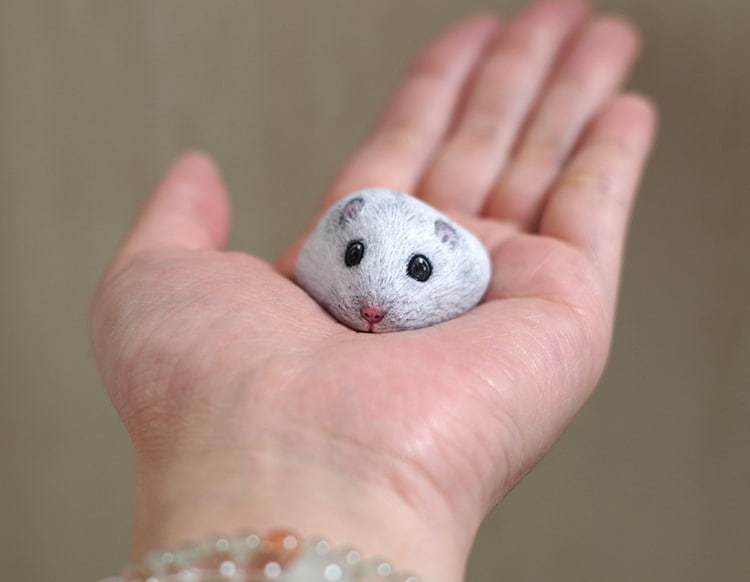
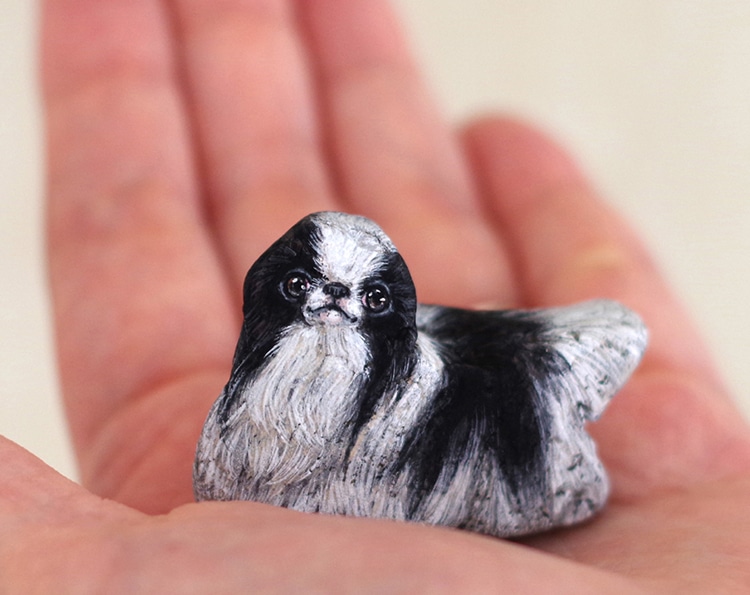
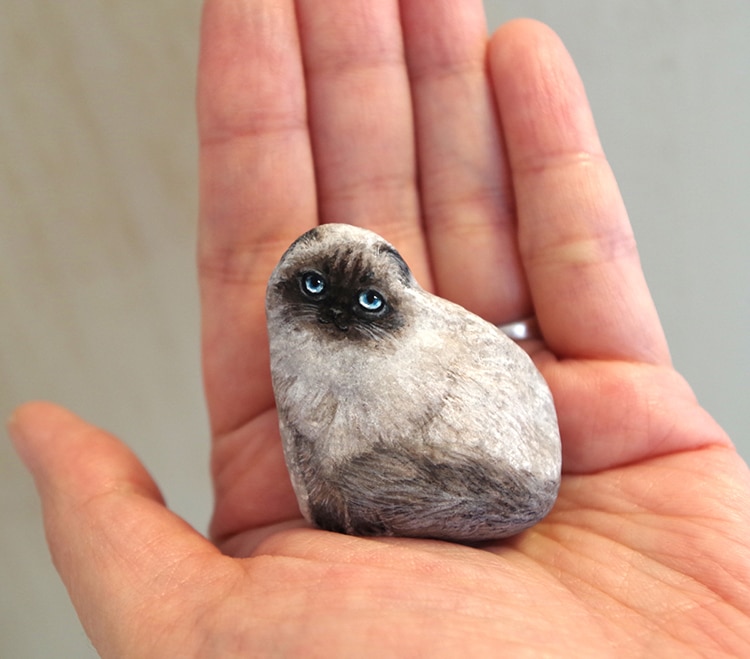
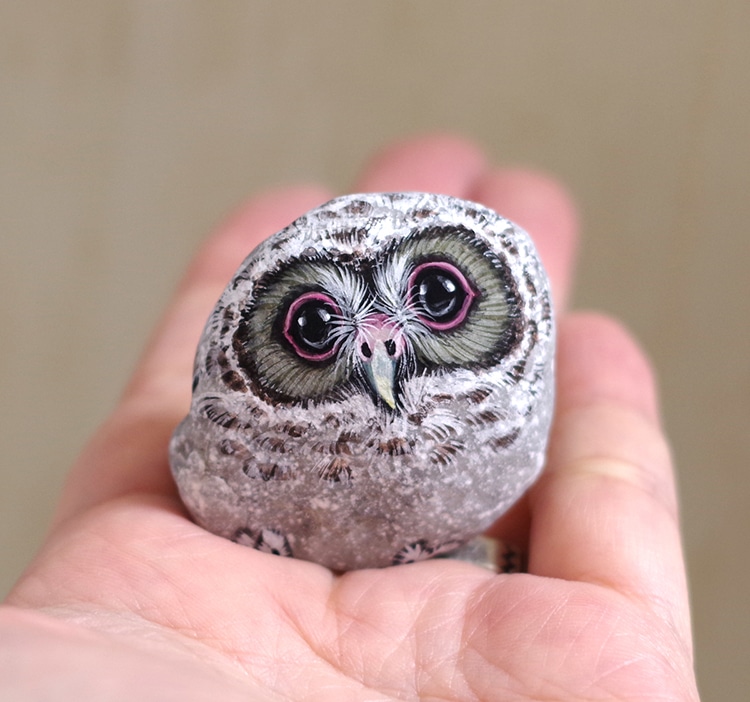
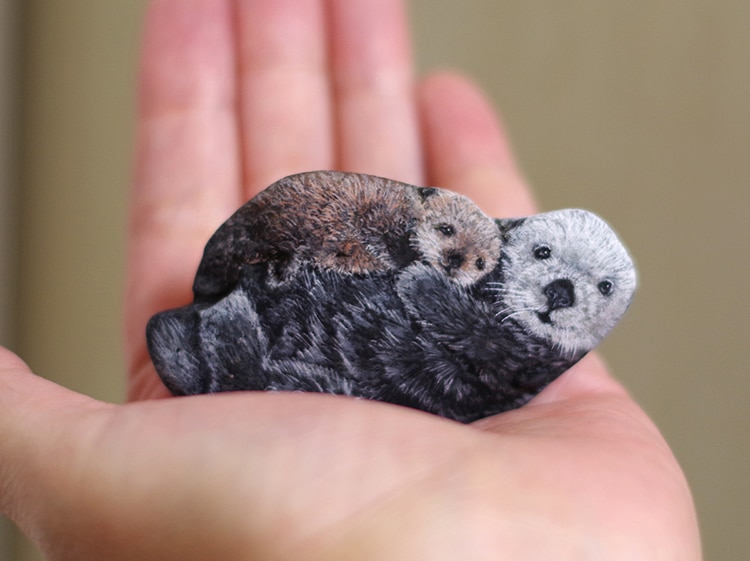
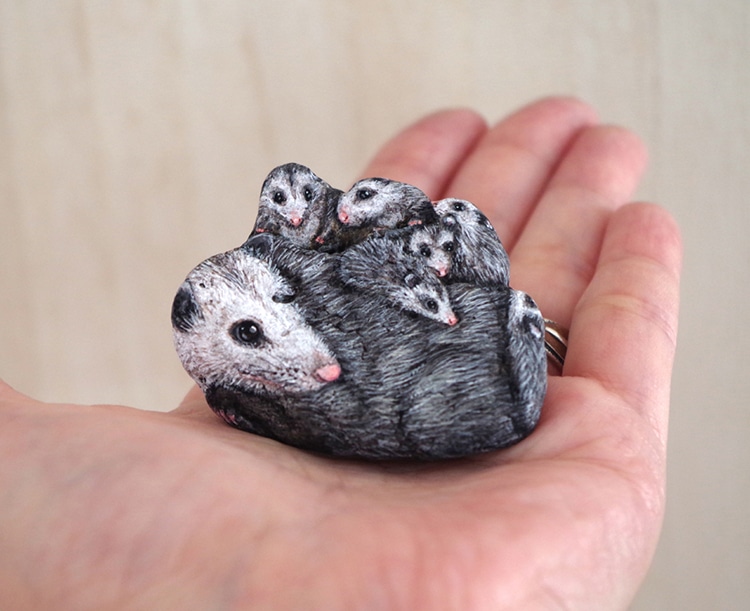
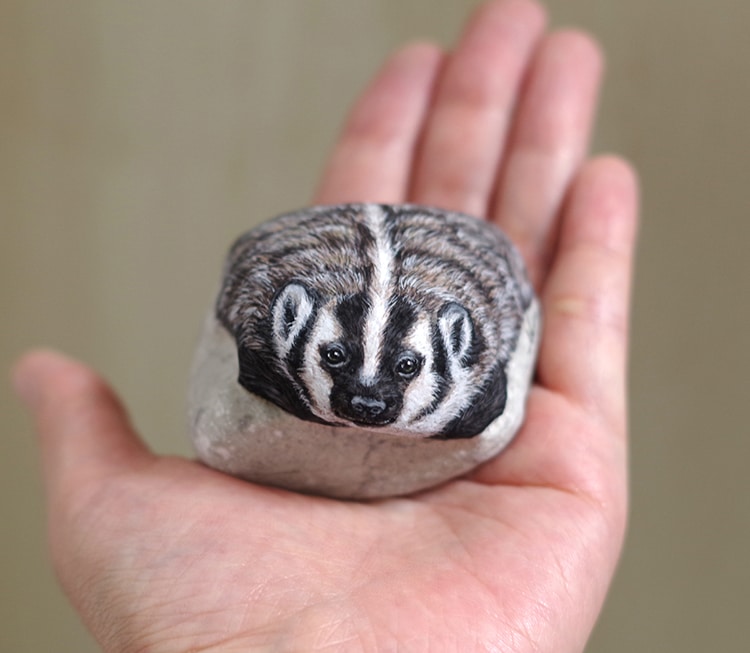
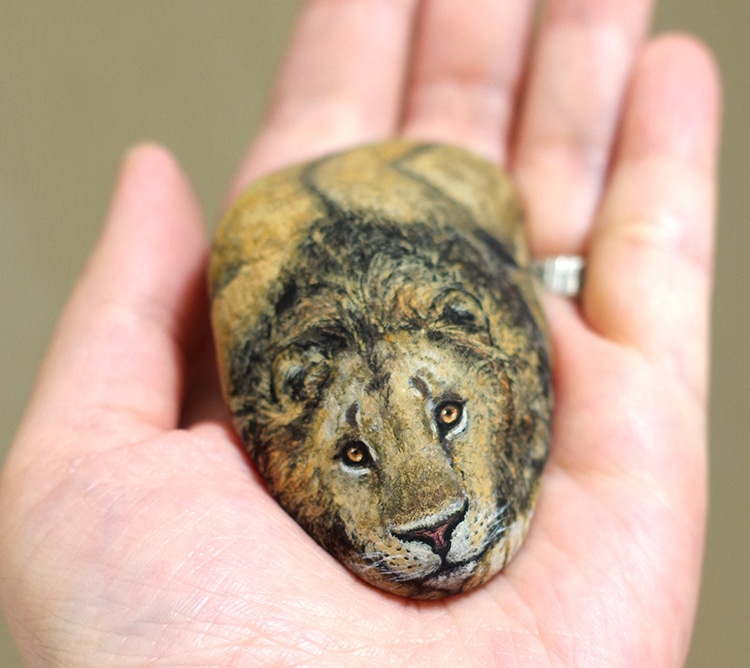
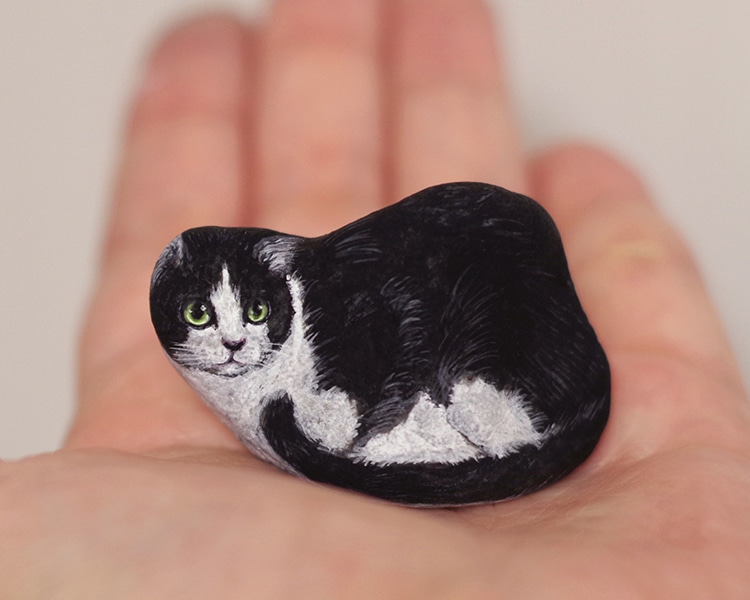
Japanese artist Akie Nakata (known simply as Akie) turns found stones and rocks into adorable animal paintings you can hold in the palm of your hand. Inspired by the natural shapes of each stone she comes across, Akie chooses the ones she believes already have their own destined characters. Ever since she was a child, the self-taught artist has loved collecting stones. She began her stone paintings in 2011 when, while taking a walk along a river bank, she encountered a particular pebble that looked like a rabbit. The artist tells My Modern Met in an email, “Stones have their own intentions, and I consider my encounters with them as cues […] to go ahead and paint what I see on them.”

After sourcing the animal-shaped stones, Akie considers each character carefully. She asks herself, “Am I positioning the backbone in the right place? Does it feel right? Am I forcing something that disagrees with the natural shape of the stone?” She then carefully paints the stone’s surfaces with acrylic paint. From cats and dogs to owls, mice, and even an entire opossum family, each of Akie’s stone animals look remarkably lifelike. Painting the eyes last, Akie considers her work complete when she sees “the eyes are now alive and looking back [at her.]” She tells us, “To me, completing a piece of work is not about how much detail I draw, but whether I feel the life in the stone.”

While some might contest that a stone is not a living organism, when Akie holds one in her hand, she feels everything it has “silently witnessed over the millennia.” Believing each rock has a story to tell, the artist decides to breathe life into each one with her paintings. She reveals, “Sometimes I paint while I talk to the stone as I hold it in my hand.” Akie hopes that her stone animals will be treasured by those who hold them, as they treasure their own lives “because we all stand on the same earth, and we come from the same earth.”

You can find more of Akie’s incredible artwork on Instagram, and if you're lucky enough, you may get the chance to own one of her unique pieces when she announces their availability on Facebook. Japanese artist Akie Nakata turns found stones and rocks into adorable animal paintings you can hold in the palm of your hand.


Inspired by the natural shapes of each stone, Akie uses acrylic paint to bring their creature characters to life.


Each stone animal looks remarkably lifelike.

Animal Stone Paintings by Akie Nakata

Friday, July 13, 2018

Talking Hands: Signing in an Israeli Village

Margalit Fox, a New York Times reporter trained as a linguist, is the only Western journalist to have set foot in the remarkable Bedouin community in Israel where there is an unusually high rate of deafness. Margalit’s book Talking Hands: What Sign Language Reveals about the Mind (2007) is the outcome of her three-day immersion visit to the village with expert sign linguists. To be allowed into the village as an observer, Margalit had some background in American Sign Language but was under no circumstances to “speak” to anyone during the three days. She was allowed to document but not allowed to contaminate the pure sign language that had evolved in the previous 70 years into a third-generation language. Margalit explored the visit with an analysis of the unique syntactic sign language which was very different from the Israeli Sign Language (ISL), the sign language of the country.


Of Al-Sayyid’s 3,500 residents, about one in 25 is deaf—4% of the population! In Israel and the United States, the incidence of deafness in the general population is about 0.1 percent or one in a 1,000! Unlike in those areas, in Al-Sayyid there is no stigma against being deaf, and because of the high rate of deafness, and because of the remoteness of the village, the rest of the village sees deafness as normal and the majority of hearing villagers are bilingual, signing their local sign language while also speaking Hebrew.

Seventy years ago the first deaf child was born to the community and soon followed by nine more. In this first cohort of deaf children sprouted the pidgin sign which blossomed into the highly communicative local sign language three generations later. However, in the present generation the young deaf children are bussed to a neighboring village to be educated with Israeli Sign Language and linguists are madly trying to document the local sign language that is now  being infiltrated with more and more ISL. Thus, Margalit’s visit with linguists to Al-Sayyid.

Speakers and signers work side by side with almost no job being exclusive for either a speaker or a signer. In fact, the whole village has evolved into a speaking-signing village, but this is not new. From the early 1700s to mid-1900s Martha’s Vineyard had two up-island towns (West Tisbury and Chilmark) where the villagers had so intermarried that their incidences of deafness was one in 49 in Tisbury and one in 25 in Chilmark, just as it is in Al-Sayyid. Also like in Al-Sayyid, signing among all of the townspeople had evolved but was very difficult if not impossible for signing outsiders to understand. Apparently and unique to signing in the United States, Martha’s Vineyard sign language evolved from British Sign Language as 40% of the signs were found to have British cognates while only 22% had overlap with ASL. Martha’s Vineyard sign language was active for about 250 years until islanders started marrying off-islanders, diluting the recessive deaf gene. No deaf signers from Martha’s Vineyard are alive today. Similarly, the demise of the local sign language at Al-Sayyid is expected to rapidly decline, also to marriages outside of the village and with the more globalized education of bussing the young to broader educational opportunities outside of the Al-Sayyid community.

Interesting Points Related to Signing Noted by Margarit Fox
  • Al-Sayyid sign language has not evolved differently because of differences related to gender. However, sign language for Dublin’s deaf children was introduced in the mid 1800s by two Dominican nuns but taught in two gender isolated institutions—St. Mary’s School for Deaf Girls and St. Joseph’s School for Deaf Boys. The schools rarely mixed and thus their language evolved radically differently. However, the deaf girls frequently married the deaf boys with the girls learning the dialect of their husbands, making them bilingual Irish Sign Language users. Husbands rarely deigned to learn the dialect of the women as it was viewed as an inferior dialect. With children using the “male” dialect for schooling and interactions, the women’s dialect gradually disappeared.
  • In 1917 Thomas Gallaudet and Laurent Clerc opened the Connecticut Asylum for teaching the French version of sign language (the British refused to teach Gallaudet).
  • Nicaragua had no widespread education for the deaf until the 1970s. In 1977 a small 50-pupil school was opened and this cohort brought their many home-signs which started a more universal Nicaraguan sign language. The first cohort of students never really attained fluency but they did establish a mean of communication, much like a pidgin language. The second cohort came in 1983 and attached grammar, fluency and syntax to the pidgin, creating a Creole. In the space of just a few years the full-blown Nicaraguan Sign Language had evolved.
  • American Sign Language (and perhaps Al-Sayyid Sign Language) evolved into signs for complex words on seemingly an infinite rage and nuance, from compounds to constellations of inflections. As one researchers states, “The existence of such elaborate formal inflectional devices clearly establishes ASL as one of the inflecting languages of the world, like Latin, Russian, and Navajo.”
  • Spoonerisms are the reversal of two speech sounds, often with a humorous effect, and were made famous by the Oxford don, Reverend William A. Spooner (1844-1930). Examples:
    “the queer old dean”
    “noble tons of soil”
    “You have hissed all my mystery lecture. I saw you fight a liar in the back quad; in fact, you have tasted the whole worm.” (said to reprimand a student)

    Or others not attributed to Spooner:

    “Don’t throw your cigarette down, there’s a hire fazard.”
    “Who am I to sneeze at a flee runch?”
    “We’re having a rot post for dinner.”
    “fash and tickle”
    “Wing’s babliography”
  • Linguists study slips of the tongue to reveal info about language—language structure, language acquisition and historical language change. For signers, slips of the hand can similarly reveal the structure and organization of language.
  • Sign language is of “vertical” construction. People can speak faster than they can sign, with the ASL signers producing about two signs per second to typical speakers of English saying about four words per second. However, sign language has “vertical” construction which allows words to be pluralized by a shift in the hand or questions asked by the tilt of the head. In fact, these subtle sign cues make signing easier comparable to spoken English.
  • The most commonly word order for spoken languages in the world is SOV, e.g. Japanese and Korean. The local languages of Al-Sayyid are Arabic, a SVO (Standard Arabic is VSO) and Hebrew, also SVO. Israeli Sign Language, however, is relatively free, but the most common orders are SVO and OSV. The local sign language wasn’t specified, but it is modality-driven, has WH-questions tagged on the end, and is clearly a structure consistent language. Imagine that--a language evolving in a mere 70 years!

Thursday, June 7, 2018

29 "Difficult" Women Who Wrote Their Own Rules


Amelia Earhart is greeted by her husband George Palmer Putnam on her return to Newark Airport, New Jersey, after a transcontinental flight on June 22, 1931. When Earhart and Putnam married, she told him that she wasn’t going to be a “traditional” wife.
PHOTOGRAPH BY CSU ARCHIVES, EVERETT COLLECTION/ALAMY
Journalist Martha Gellhorn and Ernest Hemingway traveling together shortly after their 1940 marriage. Gellhorn was a noted writer and war journalist in her own right.
PHOTOGRAPH BY EVERETT COLLECTION HISTORICAL, ALAMY
Martha Gellhorn, the writer and journalist, is best known for being the partner of Hemingway. But she was much more than that, wasn’t she?
When I give shorter interviews, Martha is always Hemingway’s third wife. I know she is spinning in her grave, because she was a writer and intrepid journalist in her own right. In fact, she wound up leaving the marriage to Hemingway, the only wife who did leave, because she couldn’t bear the insular life they had. She wanted to be where the world was being made or unmade, as the case may be. 
She was extraordinarily courageous. She made it to the front in WWII by hook or by crook. She was forever sneaking aboard a ship, or flying under false pretenses, or pretending to be a nurse, in order to get to the front lines. Throughout her life, she was concerned with injustice—particularly economic injustice—for people all over the world who were not getting a good deal. She was smart, very difficult, and also glamorous! She was blonde, long-legged, and would wear these great hunting outfits.
Artist Frida Kahlo stands by her painting, entitled Me Twice, on October 24, 1939. Kahlo, like many “difficult women,” was gender-fluid, refusing to be limited in any area of her life, says author Karen Karbo.
PHOTOGRAPH BY BETTMAN/GETTY

Friday, May 18, 2018

Gilgamesh

[DUSTCOVER] Gilgamesh is considered one of the masterpieces of world literature, and although previously there have been competent scholarly translations of it, until now there has not been a version that is a superlative literary text in its own right. Acclaimed translator Stephen Mitchell's lithe, muscular rendering allows us to enter an ancient masterpieces as if for the first time, to see how startlingly beautiful, intelligent, and alive it is. His insightful introduction provides a historical, spiritual, and cultural context for this ancient epic, showing that Gilgamesh is more potent and fascinating than ever.

Gilgamesh dates from as early as 1700 BCE  a thousand years before the Iliad. Lost for almost two millennia, the eleven clay tablets on which the epic was inscribed were discovered in 1953 in the ruins of Nineveh, and the text was not deciphered and fully translated until the end of the century. When the great Poet Rainer Maria Rilke first read Gilgamesh in 1916, he was awestruck. "Gilgamesh is stupendous," he wrote. "I consider it to be among the greatest things that can happen to a person."

The epic is the story of literature's first hero   the king of Uruk in what is present-day Iraq  and his journey of self-discovery. Along the way, Gilgamesh discovers that friendship can bring peace to a whole city that a preemptive attack on a monster can have dire consequences, and that wisdom can be found only when the quest for it is abandoned. In giving voice to grief and the fear of death perhaps more powerfully than any book written after it   in portraying love and vulnerability and the ego's hopeless striving for immortality, the epic has become a personal testimony for millions of readers in dozens of languages.


AUTHOR STEPHEN MITCHELL, widely known for his ability to made ancient masterpieces thrillingly new, has also written Tae Te Ching, The Book of Job, The Gospel According to Jesus, The selected Poetry of Rainer Maria Rilke, Bhagavad Gita, and Loving What Is (written with his wife Byron Katie).

About this version of Gilgamesh, Mitchell calls it a translation for many reasons. He doesn't read cuneiform and has no knowledge of Akkadian for judging textual meaning. Therefore, he depended on A. R. George's meticulous two-volume edition of the original text as well as profiting from the readings of other translations. 

Wikipedia - the first is the tablet containing the story of the GREAT FLOOD,
the second and third are the front and back and tablet V of 11 tablets relating the story of Gilgamesh
In writing Gilgamesh, he grasped the story and then transformed his notes on the story to English verse, using a loose, non-iambic, non-alliterative tetrameter which is rare in English. Two examples of this meter in English verse that Mitchell is aware of are Eliot's Four Quartets and Elizabeth Bishop's "Sestina". Mitchell endeavored to keep the rhythm from sounding too regular, varying lines so no two consecutive lines maintained the same rhythm.
BOOK 1 (opening stanza)
Surpassing all kings, powerful and tall
beyond all others, violent, splendid,
a wild bull of a man, unvanquished leader,
hero in the front lines, beloved by his soldiers     
fortress they called him, protector of the people,
raging flood that destroys all defenses     
two-thirds divine and one-third human,
son of King Lugalbanda, who became
a god, and of the goddess Ninsun,
he opened the mountain passes, dug wells
on the slopes, crossed the vast ocean, sailed
to the rising sun, journeyed to the edge
of the world, in search of eternal life,
and once he found Utnapishtim   the man
who survived the Great Flood and was made immortal     
he brought back the ancient forgotten rites,
restoring the temples that the Flood had destroyed,
renewing the welfare of the people and the sacred land.
Who is like Gilgamesh? What other king
has inspired such awe? Who else can say,
"I alone rule, supreme among mankind"?
The goddess Aruru, mother of creation,
had designed his body, had made him the strongest
of men  huge, handsome, radiant, perfect.
Gilgamesh in a nutshell

The story is of King Gilgamesh who meets a man nearly as perfect as himself, a counter-self who balances out Gilgamesh's rapacious tendencies (despite being called perfect which he clearly wasn't), and the two great powerful men become the best of friends. Gilgamesh is tempered, but in his docility to his kingdom he still sought to conquer and still felt omnipotent. He convinces his powerful friend Enkidu to go on a journey to vanquish Humbaba, watcher of the Cedar Forest. They succeed but the price is Enkidu's slow and draining death of which Gilgamesh mourns violently, and then realizes his own mortality. So how his journey is to seek immortality, and his burning journey takes him onward. 

Ultimately, he meets Utnapishtim, the man who along with his wife survived the Great Flood and was given immortality afterwards. Gilgamesh failed Utnapishtim's first test of finding immortality but he heard of another way, to dive deep into the ocean and procure a plant which would be "the antidote to the fear of death". But Gilgamesh, after nearly dying in procuring the plant, became timorous and decided to return to his kingdom and test the plant on one of his old men first, so he journeyed homeward. On the way he stopped to bathe at a pool and leaving the plant on the ground beside the pool where he bathed, the fragrance of the plant allured a snake to take it and "throw off its skin" (gain immortality). The plant was gone, Gilgamesh wept, and ... obviously died for the story ends with him returning and describing the timeless description of his glorious, magnificent and ancient city Uruk.