Monday, June 17, 2019

Animalia: Why Wild Dolphins Walked on Their Tails, Then Stopped

Most people think of dolphins as entertaining, some know them to be intelligent, but sometimes it's neat to look at a more scientific explanation of behavior that we humans anthropomorphize in animals, that is, view their behavior through our own human cultural eyes. An email from the Washington Post touched on some insights of recently developed dolphin behavior and how that behavior might not be just as "fun" behavior but might also include mourning:

By Karin Brulliard 
Tullula, a wild dolphin, tail-walking in Adelaide, Australia. (Whale and Dolphin Conservation) 
Anyone who's visited an aquarium — or seen photos from SeaWorld — knows dolphins at such facilities are good at learning tricks. But so are wild dolphins, and they can learn from each other. 

Researchers working in Adelaide, Australia, have known this for decades, thanks to the bottlenose dolphins that swim the busy, urban waters of the Port River. Starting in the late 80's, they watched as the marine mammals delighted boaters with the aquarium-standard skill of tail-walking. That's when a dolphin rises vertically out of the water and uses its tail to scoot along the surface, forward or backward. 

There was a reason these dolphins were doing this: They had a good teacher. It started with a female dolphin nicknamed Billie, who in early 1998 was rescued from a polluted creek off the river and spent a few weeks rehabilitating in a local dolphinarium. When she was released into the river, she started occasionally tail-walking — just like she'd seen the captive dolphins that were briefly her roommates do. Within a few years, she'd caught the attention of a conservationist named Mike Bossley, who told the Atlantic this week that the sight was "spectacular."

Read "A Once-Captive Dolphin Has Introduced Her Friends to a Silly Trend" (5 Sept 2018)
But more stunning, according to a recent news release from Bossley's organization, the Whale and Dolphin Conservation Center, was that other dolphins picked it up from Billie. By 2011, nine had been observed performing the behavior, WDC said it had become an example not just of a learned cultural behavior, but of a cultural fad

What made it a fad, Bossley and other researchers who documented the tail-walking wrote this week in Biology Letters, was that it eventually started to fade. Since the 2014 death of a dolphin dubbed Wave, whom Adelaide Now referred to as "the most prolific tail-walker Port Adelaide has ever seen," just two have been spotted doing this watery moonwalk. (Adelaide Now, however, also reported that Wave's son, Tullula, is the "new star" of this show.) 

The mystery is why the wild dolphins adopted tail-walking. It doesn't help them eat or mate, so what's the point? Fun, maybe — but then again, Wave was seen doing it next to the corpse of one of her offspring, the researchers reported. 

“My wife, Claire, thinks they did it simply because it felt good,” Bossley told the Atlantic. “It might have been a form of artistic or aesthetic performance, like someone dancing — a behavior that has its own intrinsic value to the dolphin, rather than any functional significance.” 

Thursday, May 9, 2019

Human Trafficking (presentation)

Every semester I get outstanding presentations from my students, and some of those presentations touch on matters of global importance. Human Trafficking is such a presentation! Many people hear about human trafficking as an issue, typically as being in Southeast Asia and Africa, but few really realize that it is not a third world problem, but one that powerfully exists in first world countries as well! With great appreciation on the organization and research to my Public Speaking students (Roxanne Barth, Hyun Ji Choi, Min Park and Junil Lee of France, Guatemala, Guatemala, and Fiji respectively), I am able to publish this to hopefully raise wider awareness of the huge endemic social problem. Thank you my wonderful students for allowing me to share your important research!


Opening points were questions, not facts:

Are smuggling and trafficking synonymous? Definitely no! Smuggling is transportation based while trafficking is exploitation based.

Is the average age of entry into prostitution 12 - 14? No, that is a myth. No one really knows the average age. Many in the U.S. report entry into prostitution as 17 or younger, but the average age for prostitution in the U.S. (must stress that every country is markedly different) is thought to be 19.
_______________________________________________________________________

What is human trafficking?

SEX TRAFFICKING
LABOR TRAFFICKING
CHILD TRAFFICKING
DOMESTIC SERVITUDE


_____________________________________________________________

For more sites on human trafficking:

Human Trafficking Foundation (UK)
United Against Human Trafficking (Texas, USA)

And a series of 3 articles published by The Muse in one of Obama's January National Human Trafficking Awareness Months, seven worldwide organizations combating human trafficking were highlighted

Trafficking Policy and Advocacy: Polaris Project

One of the most influential groups working on the issue in the United States, the Polaris Project takes a comprehensive approach to ending modern-day slavery. The organization advocates for stronger federal and state laws, operates the National Human Trafficking Resource Center hotline, provides services and support for trafficking victims, and works with survivors to develop long-term strategies to ending human trafficking.

Second-Generation Trafficking: Prajwala

In India, children who grow up in brothels with their parents often meet the same fate. In order to counteract this dangerous legacy, social activist Dr. Sunitha Krishnan co-founded Prajwala (which means "eternal flame”). Based in Hyderbad, India, the organization rescues women from brothels and then provides them with education, mental health care, and job programs. (Check out Dr. Krishnan’s powerful talk at the 2009 TedIndia Conference.)

Statelessness and Child Trafficking: COSA

Most Hill tribes in Thailand are “stateless,” or not governed by the laws of the country—which makes their women and girls particularly vulnerable to trafficking. After recognizing this, photojournalist Mickey Choothesa and social worker Anna Choothesa created the Children’s Organization of Southeast Asia to provide education, intervention, and support in Hill tribe communities. COSA works directly within trafficking communities to provide trafficked girls with healthcare, social services, and housing in the Baan Yuu Suk Shelter—as well as to bring awareness and education to the traffickers themselves.

Trafficking of Men and Young Boys: Urban Light

A number of organizations help girls in the sex industry, but very few work to aid young men. After a service trip during which she observed the industry in Thailand firsthand, Alezandra Russel realized that boys are often excluded from the human trafficking conversation. So she created Urban Light, an organization that works to help young men break free from child prostitution and sexual exploitation. By providing food, shelter, healthcare, and support services, the group helps restore and rebuild the lives of male victims.

International Sporting Events: Student World Assembly’s Red Card Project

When a large sporting event, such as the World Cup, takes place, fears often arise that trafficking will increase to meet demand from the influx of tourists. Student World Assembly’s Red Card Project mobilizes students from around the world to stage powerful and striking condemnations of human trafficking at these events, bringing large-scale and needed public awareness to the practice.

Child Labor: GoodWeave

The handmade rug industry has one of the highest child labor rates in the world. When GoodWeave began its work in 1994, there were nearly one million children—many kidnapped or trafficked—working on the looms in South Asia, often for up to 18 hours a day. Through its efforts, the organization has not only helped bring child labor in the rug industry down 75%, it has built affiliations with retail outlets all over the U.S. to ensure that all carpets sold are free from child labor.

The Issue of Choice: The Empower Foundation

Not all who work in the sex industry do so against their will—some do so by choice. While the resources of most organizations aim to assist those exploited and hidden in the shadows, The Empower Foundation grew from a movement of sex workers and entertainers who fight for fair and sustainable standards and equal rights in the professions they have chosen. The group runs the Can Do Bar, which offers just, safe, and fair conditions for its workers.

Monday, April 22, 2019

2018 Hambone Award Nominees

The annual Hambone Award is given out each year by Nationwide, a company that offers pet insurance. The prize goes to the pet with the weirdest insurance claim -- as decided in an online vote open to the public -- and it includes a bronze statue and a “huge basket of their favorite toys and treats,” the firm says. The veterinary hospital that treated the animal reaps an even bigger award: $10,000.

So here are some of the finalists for 2018:

Sugar Cookie in January 2018 [my personal favorite]:

Sugar Cookie, a Siberian cat, somehow got mixed up in the laundry that was already dry. The owner, not having time to finish the folding, put the remaining laundry back in the dryer for a quick fluffing, and then walked away. She soon heard meowing, and went in search of the sound. Lo and behold, the sound was coming from the dryer. Quickly stopping the dryer, she pulled the cat out and called emergency care, who advised her to take her cat to the local vet and treat it for dehydration. She did, and the cat being a cat, obviously has at least one life left, as it pulled through quite well.


Bentley (Golden Retriever) in May 2018, most unusual claim of the month: 

Bentley's owner runs a florist shop and while making arrangements, a hot glue gun is used. Usually the glue gun in kept on a high shelf, and usually the dog doesn't go near the owner while she is working. However, one day the owner noticed the dog working and working, trying to get his eye opened. He had somehow gotten near the hot glue gun and successfully glued his eye shut. After trying desperately to work the glue off, the owner ended up taking Bentley to the vet who carefully shaved the glue off with a knife. No damage done, but the owner was thankful for the pet insurance to cover the cost of the vet bill.


Ziva and Zeus in April 2018: 

Ziva and Zeus, two German Shepherds, wandered in an abandoned missile silo 200 yards behind their owner's house, and got trapped. For the next 21 days the search was on for them, but no one thought to look for them there, so close to home. Finally in an act of desperation, the owner wandered through the silo and heard the dogs, which were in a long deep hole and standing in 6 inches of water. 9-1-1 came to the rescue to pull them out, and vet services were needed to treat and monitor them for a few weeks. Ziva the female lost 25 pounds, had a gash on her leg and needed anxiety medication. Zeus lost 30 pounds, had several hot spots, giardia and liver issues. Both pulled through quite well considering they were trapped and without care or shelter for three weeks.


To read up on other Hambone winners and nominees, read the Hambone Award page sponsored by the insurance company Nationwide. Their collection of stories goes back to 2009, so there are loads of crazy stories to laugh over! and vote on for your own favorite!

Tuesday, March 12, 2019

Ark Encounter, Amazing Architecture!

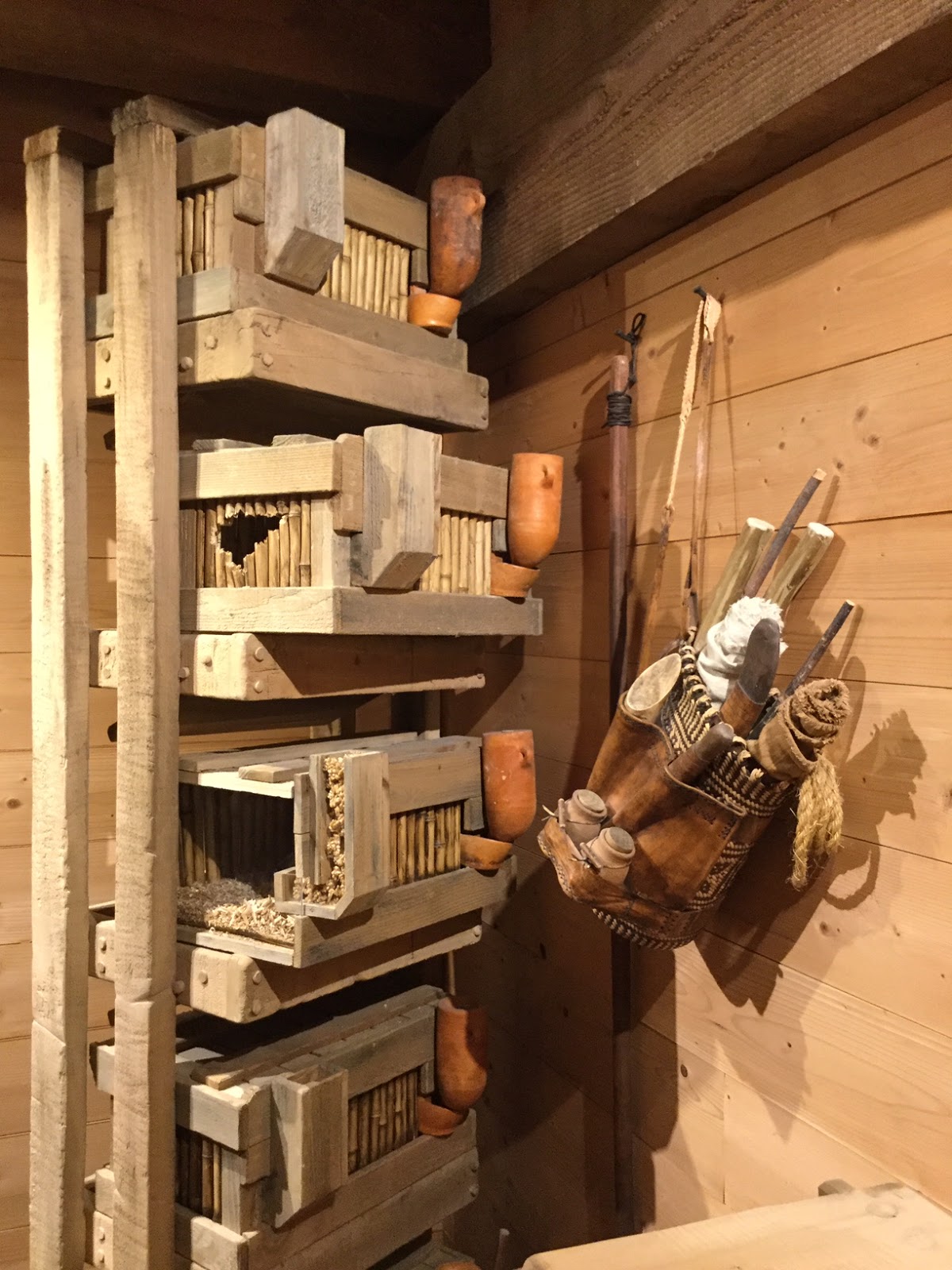
The Ark Encounter (Kentucky), built on Biblical proportions, is a massive construction meant to wake people to the reality of what building and living in the ark for a year really entailed. Bible scholars, Christians and non-Christians go to visit the monolithic construction built out of wood. I have to say that although I read my Bible and was practically weened on the story of Noah and the Ark, walking through this ark and visualizing a home on the water with thousands of animals and only eight people to feed and water them and muck out their crap, I was stunned! 


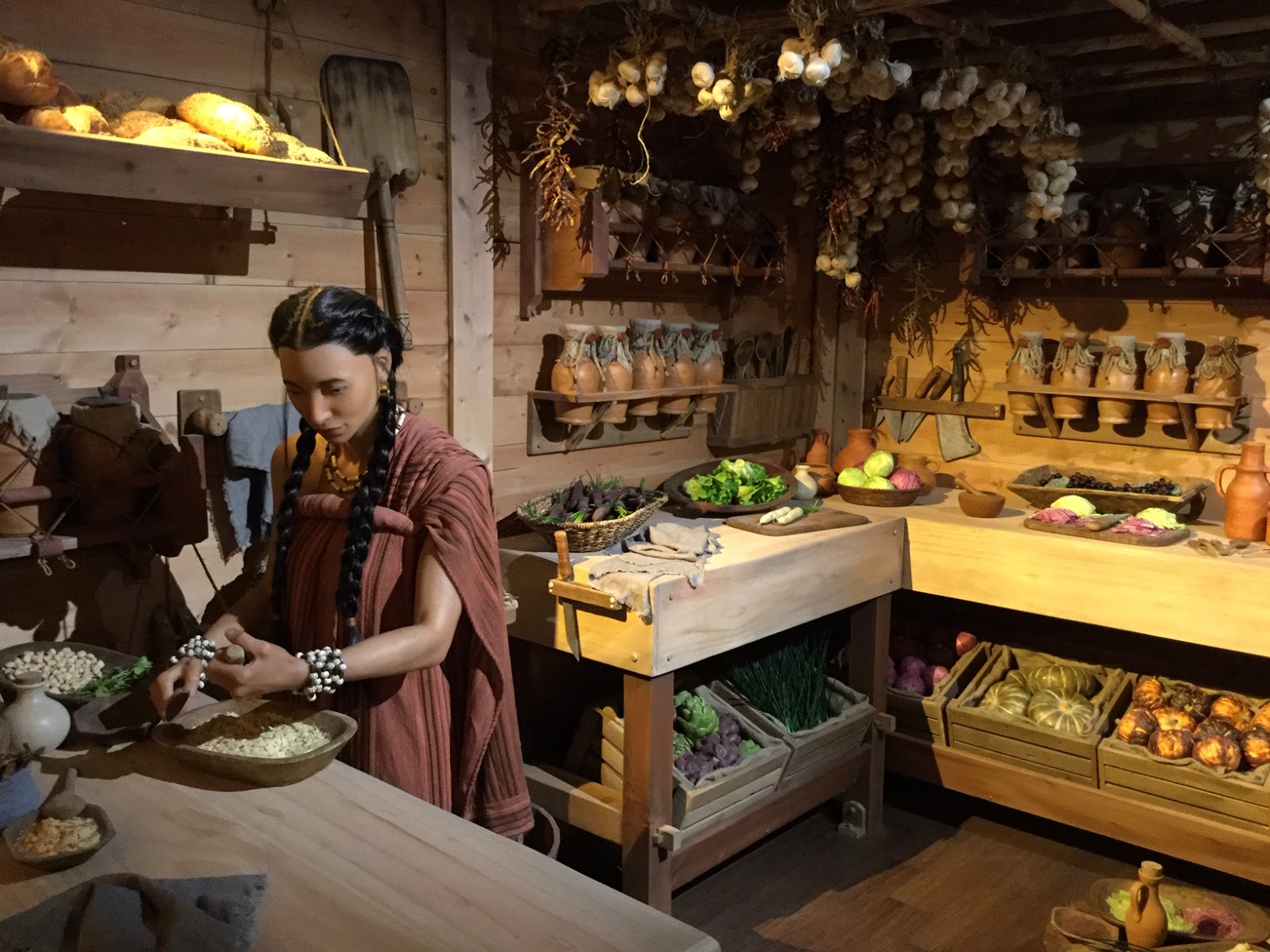
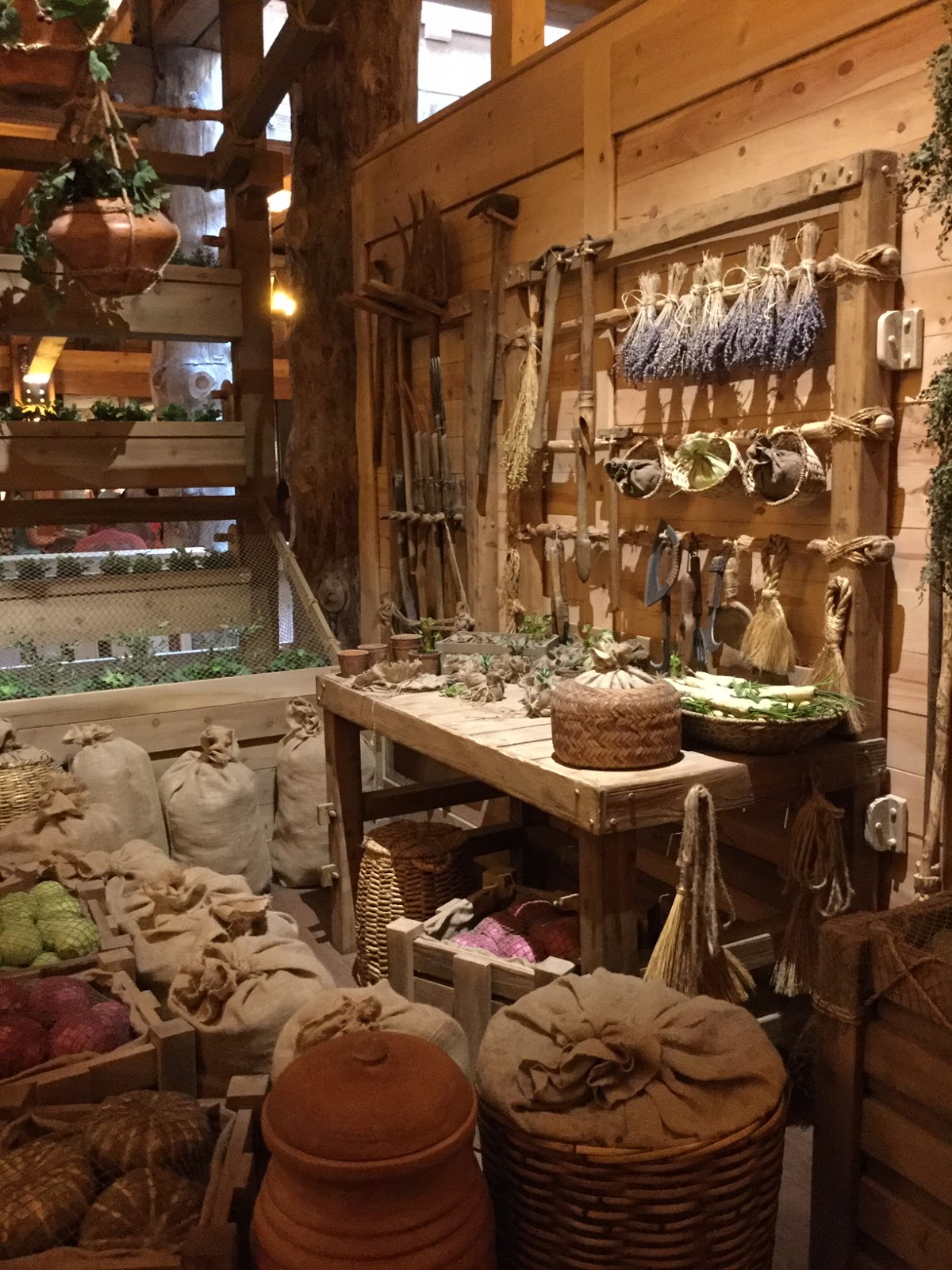
For years my questions have been how did people live a whole year without the vitamin D from the sun? How did they deal with the stench of so many animals? Indeed, how did so many animals fit into the tiny ark, esp when so many animals are quite large and they were taken into the ark in pairs for the unclean animals and for the clean animals in groups of seven (or was it 14, discussion on this number confusion discussed)? How could the eight people prepare food without refrigeration for themselves, and get fresh vegetables for maintaining health? How did massive amounts of food fit into the ark when I've know for years that just a single elephant in captivity eats about 6 bales of hay a day, and no way could there be enough space on the ark for food for even one elephant for a year, let along two elephants, let alone a whole host of animals! How could enough food along with the thousands of animals fit onto the ark????

Well, there are no definite answers, and what is possibility and what is actual fact is clearly distinguished when any information (and there is a lot) is presented. Facts are clearly given and, if poetic license is used, e.g. naming Noah's wife or assigning roles to specific family members, the information is stated as a choice for envisioning family functions or for creating individuality and character in an otherwise detail-less story enactment. Excellent creation of what is thought to be period scenes, based on other archaeological discoveries (these points are discussed too in the creation of the scenes). I thought the research done in the building of the ark scenes was astounding! 

So here are some ideas about the layout of the ark ... these are SOME ideas. The ark was filled with innovative possible mechanisms and strategies for feeding, watering and maintaining the animals and the eight people who had faith that God would provide and care for them.

First and second floors dealt mainly with the logistics in constructing the ark, the research behind its construction, and the care and housing of the animals.


Amazing central architecture! This openness between the floors (poetic license) allowed for ventilation and air flow between the floors. It also allowed the lighting from the unfinished top area to filter lighting to even the lower level of the ark.


Wouldn't it make sense that only young animals would be taken on the ark? They wouldn't eat as much, they would be more resilient to the change of the earth afterwards, and have more time to reproduce and repopulate the earth after the cataclysmic destruction.


Parts of the second and third floors contained information regarding geology, Biblical interpretations, myths surrounding the Flood (over 200! collected throughout the world), and much much more.


The third floor was primarily dedicated to the living and working quarters of the family of eight. It held their kitchen and cooking and growing facilities, a blacksmith shop and woodworking shop (something is bound to always be breaking on a big boat in a violent sea!), it held a dedicated room for each of the four couples, and each room was decorated to show different personalities and different skills, what is thought to be a pretty display of the talents, arts and crafts of the time.


Impressive! Educational! Based on Biblical literature!
A very profound experience!

Thursday, February 14, 2019

Lost and Forgotten Languages of Shanghai

Ruiyan Xu, a Chinese, born and raised in Shanghai for the first ten years of her life and then transported to the US where she was immersed in English but knew not a word, wrote her first novel, a novel in part biographical, a novel on aphasia. Aphasia is typically an impairment of language, either of reception or production, but which does not affect intelligence. When Ruiyan later learned about aphasia in one of her university classes, she felt a connection because as a child, she felt lost in her abrupt move to the US when she was suddenly stripped of her language and her familiar social cues which replace language. Struggling with identity and language, Ruiyan identifies and creates a character similarly stripped of language and presented with a new life, one he would have to come to terms with as she as a child came to terms with English. 


The central character Li Jing had been raised in the US until 10 where he had acquired English, his first language. However, at the age of 10 his architect father had returned with young Li Jing to Shanghai and Li Jing had forgotten his English as he replaced it with Chinese. Years later as president of his own investment company, he charismatically meets, greets, manipulates and assures people and huge businesses of his savvy ability to invest their money. He is articulate. He is in control. And he is very good at what he does. However, his drive, his ability, his confidence is all blown up when an explosion in a building he and his father are in causes the building to collapse. His father, Professor Li, has a heart attack and soon dies, but Li Jing's damage goes much deeper. Physically Li Jing was scratched and bruised but mentally he was wounded, permanently, by a spray of exploding glass that struck his forehead and damaged the unique area in his brain where language is produced, Broca's area.

Source
The brain is complex, interwired, but also compartmentalized. Broca's area is the area which centralizes language production, meaning if that area is damaged, the person can still understand and receive language but just not be able to produce it. Wernicke's area, an area of the brain also on the left side of the brain but positioned further behind but not adjacent to Broca's is its counterpart and it is responsible for language reception. Damage to Wernicke's would have been much more serious as without understanding language, no language but only fluent sounds that are like language, could be produced. Li Jing woke from the accident to ... not no language, but limited English, the language of his childhood. His Chinese has been completely wiped from his mind.

Over night Li Jing loses his voice, therefore his ability to run his own company, his confidence, and most sadly his connection to his wife. She speaks Chinese. He speaks limited English. How do you speak of love, patience, offer encouragement, express sorrow or share remembrances without the language that linked you? The loss of both languages, Chinese and the language of love, are his inheritance from the explosion. The book takes them both on a journey of only having the past holding them together. The journey is long and remains long even as the book closes with Li Jing and son Pang Pang suddenly meeting wife/mother Meiling in a public park with glistening stretches of Chinese calligraphy being painted between them by a street artist. They carefully step around the rich and beautiful strokes of language on the ground as they slip from the public area to their private home ... as a family, leaving the Chinese behind them and possibilities of other language in front.

________________________________________________________________________

Do I recommend this book? Well, it wasn't what I thought it would be. From the cover I had assumed it would be more of a study on language and identity with some deeper insights into Broca's area and more on the medical journey aspect, perhaps like the Still Alice on Alzheimers and The Spirit Catches You and You Fall Down: A Hmong Child, Her Doctors, and a Collision of Two Cultures on epilepsy. The first half of the book promised that too, but the last half seemed to twist away from anything medical and the story oozed into a love triangle story, albeit the theme was still on language and identity. So while the first half was very enjoyable and I felt transported to Shanghai in the reading, the last half lost its rhythm and I didn't gain anything through the read. If you have my expectations for learning something from reading, then I don't recommend it. However, if you do want a book on language and identity with romance thrown in, then here is a good recommend.