Tuesday, March 12, 2019

Ark Encounter, Amazing Architecture!

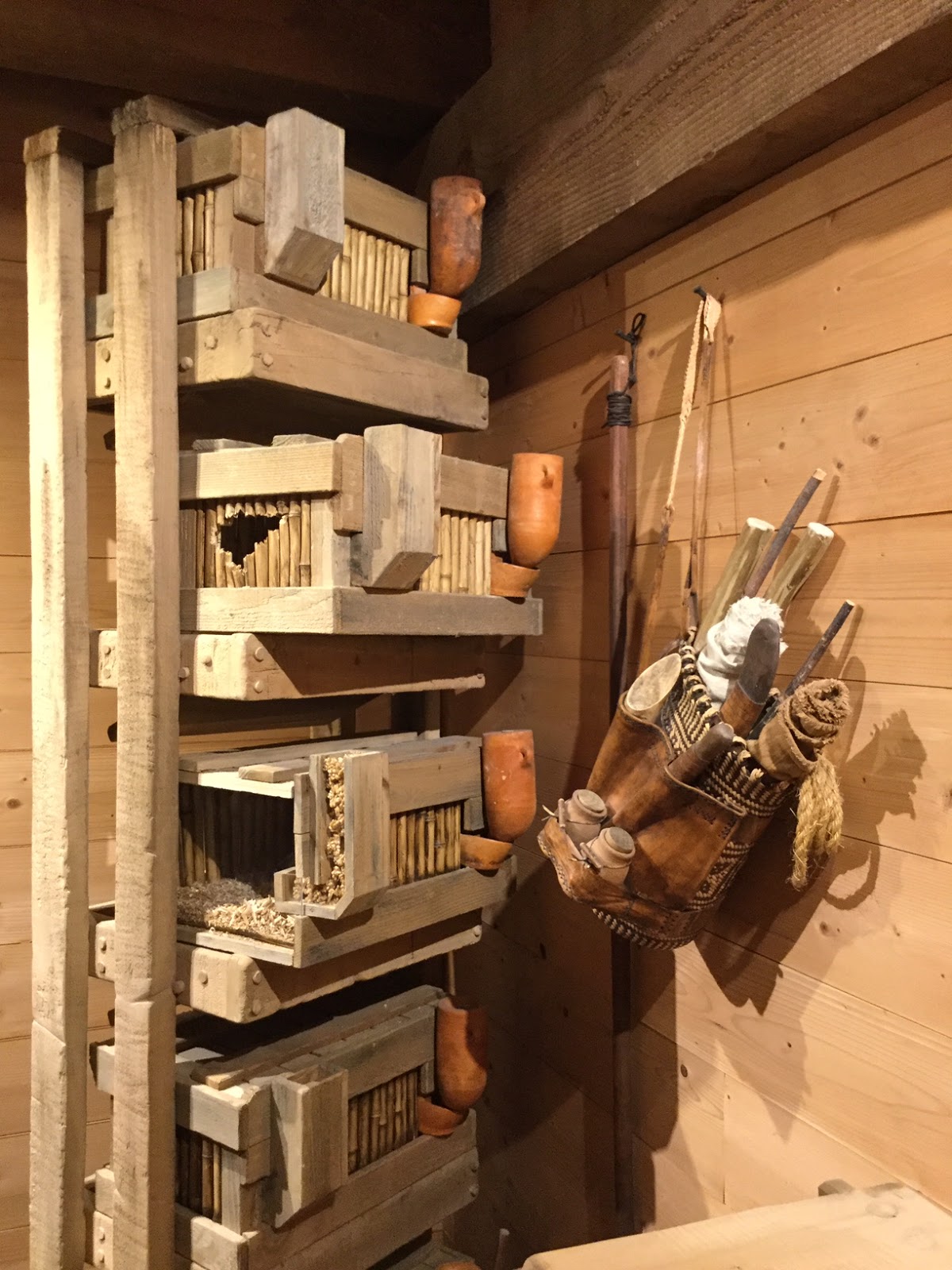
The Ark Encounter (Kentucky), built on Biblical proportions, is a massive construction meant to wake people to the reality of what building and living in the ark for a year really entailed. Bible scholars, Christians and non-Christians go to visit the monolithic construction built out of wood. I have to say that although I read my Bible and was practically weened on the story of Noah and the Ark, walking through this ark and visualizing a home on the water with thousands of animals and only eight people to feed and water them and muck out their crap, I was stunned! 


For years my questions have been how did people live a whole year without the vitamin D from the sun? How did they deal with the stench of so many animals? Indeed, how did so many animals fit into the tiny ark, esp when so many animals are quite large and they were taken into the ark in pairs for the unclean animals and for the clean animals in groups of seven (or was it 14, discussion on this number confusion discussed)? How could the eight people prepare food without refrigeration for themselves, and get fresh vegetables for maintaining health? How did massive amounts of food fit into the ark when I've know for years that just a single elephant in captivity eats about 6 bales of hay a day, and no way could there be enough space on the ark for food for even one elephant for a year, let along two elephants, let alone a whole host of animals! How could enough food along with the thousands of animals fit onto the ark????

Well, there are no definite answers, and what is possibility and what is actual fact is clearly distinguished when any information (and there is a lot) is presented. Facts are clearly given and, if poetic license is used, e.g. naming Noah's wife or assigning roles to specific family members, the information is stated as a choice for envisioning family functions or for creating individuality and character in an otherwise detail-less story enactment. Excellent creation of what is thought to be period scenes, based on other archaeological discoveries (these points are discussed too in the creation of the scenes). I thought the research done in the building of the ark scenes was astounding! 

So here are some ideas about the layout of the ark ... these are SOME ideas. The ark was filled with innovative possible mechanisms and strategies for feeding, watering and maintaining the animals and the eight people who had faith that God would provide and care for them.

First and second floors dealt mainly with the logistics in constructing the ark, the research behind its construction, and the care and housing of the animals.


Amazing central architecture! This openness between the floors (poetic license) allowed for ventilation and air flow between the floors. It also allowed the lighting from the unfinished top area to filter lighting to even the lower level of the ark.


Wouldn't it make sense that only young animals would be taken on the ark? They wouldn't eat as much, they would be more resilient to the change of the earth afterwards, and have more time to reproduce and repopulate the earth after the cataclysmic destruction.


Parts of the second and third floors contained information regarding geology, Biblical interpretations, myths surrounding the Flood (over 200! collected throughout the world), and much much more.


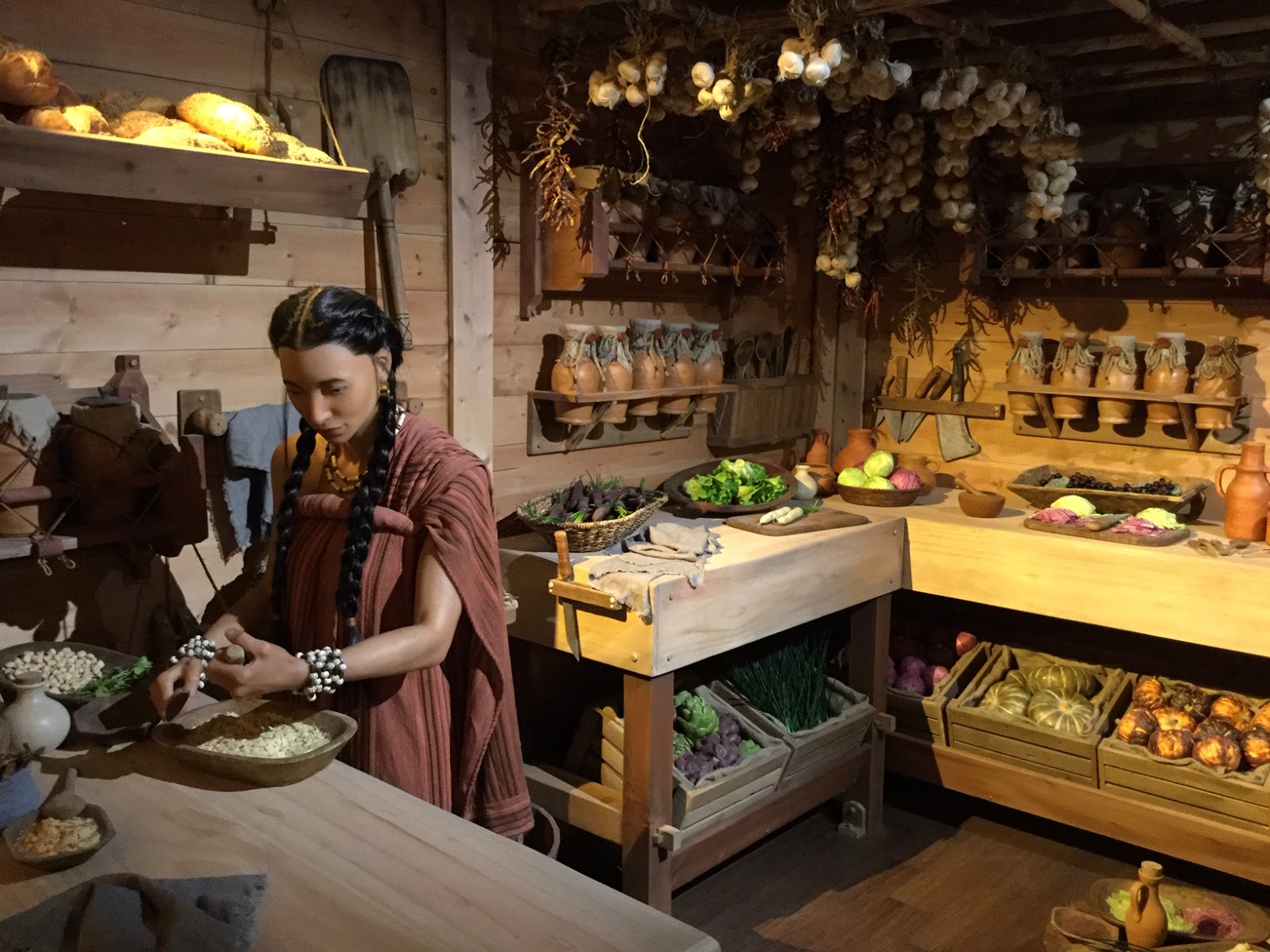
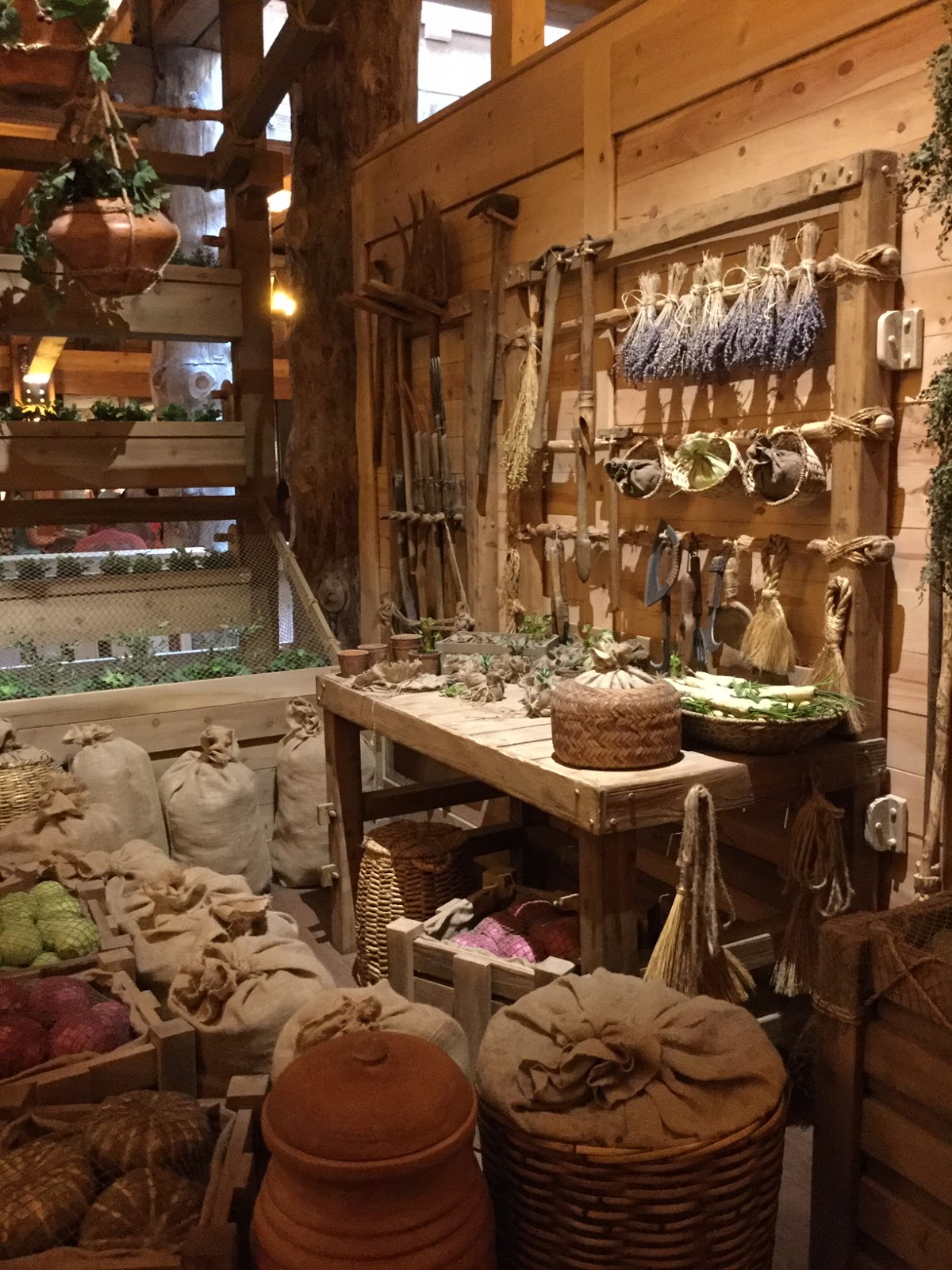
The third floor was primarily dedicated to the living and working quarters of the family of eight. It held their kitchen and cooking and growing facilities, a blacksmith shop and woodworking shop (something is bound to always be breaking on a big boat in a violent sea!), it held a dedicated room for each of the four couples, and each room was decorated to show different personalities and different skills, what is thought to be a pretty display of the talents, arts and crafts of the time.


Impressive! Educational! Based on Biblical literature!
A very profound experience!

Thursday, February 14, 2019

Lost and Forgotten Languages of Shanghai

Ruiyan Xu, a Chinese, born and raised in Shanghai for the first ten years of her life and then transported to the US where she was immersed in English but knew not a word, wrote her first novel, a novel in part biographical, a novel on aphasia. Aphasia is typically an impairment of language, either of reception or production, but which does not affect intelligence. When Ruiyan later learned about aphasia in one of her university classes, she felt a connection because as a child, she felt lost in her abrupt move to the US when she was suddenly stripped of her language and her familiar social cues which replace language. Struggling with identity and language, Ruiyan identifies and creates a character similarly stripped of language and presented with a new life, one he would have to come to terms with as she as a child came to terms with English. 


The central character Li Jing had been raised in the US until 10 where he had acquired English, his first language. However, at the age of 10 his architect father had returned with young Li Jing to Shanghai and Li Jing had forgotten his English as he replaced it with Chinese. Years later as president of his own investment company, he charismatically meets, greets, manipulates and assures people and huge businesses of his savvy ability to invest their money. He is articulate. He is in control. And he is very good at what he does. However, his drive, his ability, his confidence is all blown up when an explosion in a building he and his father are in causes the building to collapse. His father, Professor Li, has a heart attack and soon dies, but Li Jing's damage goes much deeper. Physically Li Jing was scratched and bruised but mentally he was wounded, permanently, by a spray of exploding glass that struck his forehead and damaged the unique area in his brain where language is produced, Broca's area.

Source
The brain is complex, interwired, but also compartmentalized. Broca's area is the area which centralizes language production, meaning if that area is damaged, the person can still understand and receive language but just not be able to produce it. Wernicke's area, an area of the brain also on the left side of the brain but positioned further behind but not adjacent to Broca's is its counterpart and it is responsible for language reception. Damage to Wernicke's would have been much more serious as without understanding language, no language but only fluent sounds that are like language, could be produced. Li Jing woke from the accident to ... not no language, but limited English, the language of his childhood. His Chinese has been completely wiped from his mind.

Over night Li Jing loses his voice, therefore his ability to run his own company, his confidence, and most sadly his connection to his wife. She speaks Chinese. He speaks limited English. How do you speak of love, patience, offer encouragement, express sorrow or share remembrances without the language that linked you? The loss of both languages, Chinese and the language of love, are his inheritance from the explosion. The book takes them both on a journey of only having the past holding them together. The journey is long and remains long even as the book closes with Li Jing and son Pang Pang suddenly meeting wife/mother Meiling in a public park with glistening stretches of Chinese calligraphy being painted between them by a street artist. They carefully step around the rich and beautiful strokes of language on the ground as they slip from the public area to their private home ... as a family, leaving the Chinese behind them and possibilities of other language in front.

________________________________________________________________________

Do I recommend this book? Well, it wasn't what I thought it would be. From the cover I had assumed it would be more of a study on language and identity with some deeper insights into Broca's area and more on the medical journey aspect, perhaps like the Still Alice on Alzheimers and The Spirit Catches You and You Fall Down: A Hmong Child, Her Doctors, and a Collision of Two Cultures on epilepsy. The first half of the book promised that too, but the last half seemed to twist away from anything medical and the story oozed into a love triangle story, albeit the theme was still on language and identity. So while the first half was very enjoyable and I felt transported to Shanghai in the reading, the last half lost its rhythm and I didn't gain anything through the read. If you have my expectations for learning something from reading, then I don't recommend it. However, if you do want a book on language and identity with romance thrown in, then here is a good recommend.

Sunday, January 6, 2019

Best Pedometer Apps (Dec 2018)

My loyalties to Accupedo have seriously been challenged the last two or three months, namely because I walk extensively throughout the day and access my pedometer rather frequently, but the last couple of months the app hasn't worked for me. The app sensor didn't clock my steps unless I held my cellphone in my hand! How irritating since the pedometer app is my second most used app, and for years I've made a game of getting at minimum 10,000 steps a day!

Several years ago when choosing a pedometer app, I carefully read through numerous online pedometer app reviews and decided that Accupedo, which was repeatedly featured as one of the best, had the qualities I thought to be most useful: nice appearance, quick visual access to the number of steps taken, a step widget so I wouldn't have to open the app itself, a history log of steps taken, and the bonus of seeing the average steps by day, week, month and year. Nice little package! I downloaded it and have happily used it for years ... until about two months ago. Hmmph! [I do think some of my problems were coming from the slow death of my five-year-old Note 4, and then complicated by the app not automatically updating (which I wasn't aware of) when I bought a new phone and switched the data over to it.]

So I went searching for a new pedometer app, and one that would work. Here's what I found:


So I tested these 6 pedometer apps for 2 consecutive days to draw my conclusions (commenting on them in order from left to right). Info included from the Google Play Store is the name of the app, the creator, the rating based on the 5 point scale, number of people rating the app, and the number of downloads:


PEDOMETER (blue)
ITO Technologies, Inc
4.4 (447,939) 10 million downloads

Comments:

This app didn't start counting till I actually pushed the "start" button. But until I push the "stop" button, it will keep counting, day after day. This is the only app among this group like this, and I don't like this feature. 

However, hello! This is probably going to be my new pedometer app! Why? It counts the steps well, a little more of a hyper counter than the others, which I don't like, but what I really really like about this is -- everything important is on the face screen -- the number of steps and what time during the day the most activity took place! I don't have to flip to another screen to find out what my day's activity was like! Another great point is this app had some of fewest advertisements, and the advertisements stayed at the bottom of the page, not obscuring the quick access when opening or closing the app. 


PEDOMETER STEP COUNTER (pink)
Leap Fitness Group
4.7 (169,403) 10 million downloads

Comments:

Nice appearance but right away I was put off by the pop up advertising to get in and to exit from the app. This totally destroyed my interest in the app, because, as I said earlier, I access this app several times a day and therefore I would be irritated not just in this testing mode, but several times a day. No thanks! That said, it does have a lot of nice features, counts pretty accurately I would say, and has a lot of extra features on other screens, but since it doesn't package the number of steps AND show the activity throughout the day on the face screen while other apps do, this app doesn't "shine" for me. 


PEDOMETER STEP COUNTER (blue)
Simple Design Ltd.
4.7 (86,722) 5 million downloads

Comments:

This app is almost identical to the Pedometer Step Counter (pink) although it is made by Simple Design. It has some extra calorie features, something I don't give a care about but which I turned off for the testing. However, the very very big downside is this app has even more pop-ups than the other Pedometer Step Counter. A lot more! As soon as I downloaded this one, I knew that despite it's pleasant appearance I was going to nix it. I did use it, however, as a kind of control group to test out how evenly the steps would be measured across the six apps. This one seemed to measure quite nicely. If the company would minimize the ads, I'm sure this app would become a popular ped counter. It really has a lot of bonus offerings and isn't limited to just being a pedometer.


DAILY PEDOMETER (dark blue)
ZJB Group
4.5 (17!) 500 downloads

Comments:

Erg. This app loads slowly, and then has a full page advertisement before getting into the app, and then a full page ad exiting. Erg! However, I love the face of this app - not cutesy like many apps are heading nowadays. Simple, somewhat elegant and very clean layout. No, the activity does not show on the face screen, but it does have a bar at the bottom that points toward awards earned. I actually like this feature, namely because I'm a big walker and want to have the challenge of some interesting goals beyond the 10,000 steps a day. I'm already motivated but the awards are unique and would make great competitive goals with a few of my big-time walking friends as well! Awards come in three categories: steps per day, combo, and total distance. 

The total distance category is what I'd like to earn towards:
Everest - 8848m
Marathon - 42km
Canals of Amsterdam - 100km
F1 Circuit - 305km
Thousand Miles - 500km [sic]
A Fuel Tank - 700km
Million Meters - 1,000km
2018 Challenge - 2,018km
Circle the Earth - 40,076km

PEDOMETER STEP COUNTER (blue)
Pacer Health
4.6 (593,802) 10 million downloads

Comments:

This app does have the two key points I'm most interested in: the total number of steps per day and the walking activity measurement, although that activity is not particularly easy to read. This app has a nice appearance, isn't cutesy, puts a lot of focus on calories (something I don't care about), BUT the counter seems to be rather inaccurately low. Notice the totals on all of the apps in this blog entry and you'll see what I mean -- this app has clocked 1,000 - 2,000 less steps than the other 5 apps, so for that reason, if someone is wanting something with a bit more accuracy, this app would NOT be an option. This app has a clean uncluttered appearance (big criteria for me) and is pretty good for my purposes because of the step counter and activity log on the face screen, but it does have some full screen ads, which are annoying and it's very inaccurate in the step count. So, no, this app, while nice, still needs a bit of development.


ACCUPEDO
Corusen LLC
4.0 (50,452) 5 million downloads

Wow, surprised at these statistics because 6-7 years ago when I was choosing a pedometer app, this app along with Noom, which also isn't so popular anymore, were in the top rankings! Since updating this app for this test, the Accupedo works just fine, but it's a little high in the step count, although I think that can be explained as I kept adjusting the step sensitivity so that it would count ... so it now counts in hyper-sensitivity. Anyway, it works and apparently I just had to get a more reliable phone and update the app! However, because Accupedo didn't work during a 2 month period and I've actively embarked on finding the best pedometer app for my purposes, I realize that there are now better apps (for my purposes) on the market and so I'll be saying goodbye to Accupedo. That said, after I updated it, it now has a map to be used with GPS that logs the daily walking trail. This would suck battery and I wouldn't use much at all, but it is a very nice feature and one which was not included in any of the above apps tested.

So, in outcome, the best app for me based on pleasant and not cutesy appearance, the face screen having both step count and activity log, and minimal advertising is ........ Pedometer by ITO Technologies. I have to say, though, that there are now a huge number of great apps to choose from, and this particular one is just my favorite among the tiny number of 6 tested here.

Friday, December 14, 2018

The Great Starvation Experiment


Historian Todd Tucker uncovered a story of 36 conscientious objectors during World War II who volunteered to undergo a year-long experiment—an experiment to systematically analyze starvation for six months and then systematically analyze the rehabilitation process. He wrote about his findings in the book The Great Starvation Experiment: The Heroic men Who Starved So That Millions Could Live (2006).


During and prior to World War II conscientious objectors were given jail sentences for their lack of “patriotism”, but by World War II they were allowed to participate in Civilian Public Service (CPS) which was the first way to deal with the “troublesome pacifist draftees”. The conscientious objectors under the auspices of the CPS did work in mental asylums, work in forestry camps, and volunteered as human guinea pigs. There weren’t too many other options for them.

Evidently being used as human guinea pigs was a big, and not yet controversial “job” that conscientious objectors filled. With the help of the army and the CPS and their human guinea pigs, Dr. Ancel Keys conducted an array of studies on the effects of various vitamins (some of which had only recently been “discovered”, and his experiments on CPS volunteers were primarily with diets lacking thiamine, riboflavin, and the B complex as a whole), the effects of severe cold and severe heat, excessive moisture, thirst, and the effects of a full month of bed-rest.

As the World War II progressed, Keys became interested in the effects of starvation and how a starved body could be rehabilitated, and so conceived the idea of carefully controlling the process of starvation as well as how to best restore the body. Before the actual experiment, Keys compiled a list of 372 “Notable Famines in History” that documented the brute prevalence of starvation, and the list was broken down “Outside India” and “Inside India” since the frequency of famines raged in that country. Examples follow in chronological order (but it is interesting to note the long list of Biblical famines since Keys was an avowed atheist):
Genesis 12:10
11 Kings 6:26-29
Acts 11:28-30
520 Venice, relief sent by Theodoric the Great
1116 Ireland, cannibalism
1574 Gujarat, plague
The experiment was to be of one-year in duration—a three-month control phase of good eating to establish that everyone had a well-balanced and uniformed diet for his ideal weight, then the six-month starvation diet in which each member would lose 25% of his weight (an amount believed by Keys to conduct the study but not cause serious health risks), and then the three-month rehabilitation. Throughout the study the test subjects would have their biological and psychological health measured … for as the advertisement read when recruiting volunteers: “WILL YOU STARVE SO THAT THEY WILL BE BETTER FED?” referring to staving off starvation or rehabilitating the starved in case of future scenarios of starvation.

As World War II began, 34,506,923 American men were registered for the draft out of a population of 134,000,000. Of these registrants, 72,354 applied for conscientious objector (CO) status, about one-fifth of one percent, but 27,000 of these failed the basic medical exam saving the government the “trouble” of figuring out what to do with them. About 25,000 of the COs who passed agreed to noncombatant service—the 1-A-Os, many of these army medics (Desmond Doss, a devout Seventh-day Adventist and 1-A-O army medic, won the Congressional Medal of Honor for his heroism at Okinawa). Slightly more than 6,000 of the COs refused to perform any kind of national service—most were Jehovah’s Witness who claimed that every JW was entitled ministerial exemption, which the government disagreed, thus imprisonment. What remained were 11,966 men, who opposed any kind of uniformed military service but who were open to perform some kind of alternative work … these were the men for the CPS.

The CPS, as historian Todd Tucker puts it, represented the complete, diverse, befuddling rainbows of American religions—58% represented by the Historic Peace Churches (4,665 Mennonite, 1,353 Brethren, and 951 Friends) but in total over 200 denominations with 673 Methodists, the largest group outside the HPC. There were also 149 Catholics, 17 Seventh-day Adventists, 108 Lutherans, 192 Presbyterians, for example.

THE 36 VOLUNTEERS

Dr Ancel Keys wanted 40 volunteers for the study, but once all volunteers had been evaluated and screened, there were only 36 … 32 completed the year-long study. Among the 32 who completed the study, all said that they would volunteer for such a study again as it gave them a since of accomplishment beyond their service to their country, but a sense of accomplishment for the world. Surprising to Keys at first was that the majority of volunteers were intellectuals, those aimed at bettering the world or with altruistic leanings. These were the men who volunteered to starve so that through the study future medical workers could better know how to administer to the healing of the starved.

Of the four who didn’t complete the study were:

Watkins, a 24-yr-old man who early in the starvation period took to stealing and shoplifting to get food. He unsurprisingly reported dreams of cannibalism, but what he got removed from the study for was this threats to Keys of “I’m going to kill you” and beyond worse “I’m going to kill myself”. After five days in a mental ward with large recuperating meals, he was stabilized and sent home.

Weygandt, a man who worked in a grocery store but took to uncontrolled binging so quit the job. He became morbidly neurotic but when blood appeared in his urine, he had to be dropped from the experiment. Weygandt did stay and help in the kitchen for the remainder of the experiment—kudos to him and his sense of teamwork and continuing to the end in what capacity he could play!

Willoughby and Plaugher, the two jocks in the experiment. To cope with hunger, they were chewing 40 packs of gum a day, which was acceptable, however Plaugher took to snitching sandwiches and routinely raiding the garbage. He was “caught” when his weight numbers failed to decline, and so admitted to his history of cheating. Willoughby, his close friend and fellow jock also didn’t show the decline of numbers that the others showed so was accused of cheating also. He was appalled (1) that he was so accused, and (2) that his friend would lie to him and cheat while telling him all was well. Willoughby finished the experiment but Keys, not wanting to risk Willoughby’s questionable data, didn’t include Willoughby’s data in the final conclusions.

Sam Legg was almost scrapped from the study as well. During the starvation period, Sam suffered the most weight loss and was undergoing painful aberrations of behavior—making weird noises over his food, mangling his finger by dropping a jacked up car on it (originally he tried to mangle his hand but pulled his hand away just in time to only catch a finger … all because of his distorted almost hallucinating concept of a plan to get removed from the study), and then the week following the car incident actually axing three fingers off while chopping wood. He begged to remain in the study, and surprisingly was allowed.

STARVATION STUDY CONCLUSIONS

Of the 32 men who made it to and through the rehabilitation phase—they had dropped on average from 152.7 pounds to 115.6 pounds, an average weight loss of 24.29%. They had lost on average 1/3 of centimeter in height. Their total blood volume had been reduced by almost 500 cubic centimeters. The heart that pumped that blood had shrunk by 17%. They were always cold and body temperatures had dropped from 98.6°F to on average 95.8°F, with the original average heart rate dropping from 55 beats per minute in control to just 35 beats per minute, barely one beat per two seconds. Keys did, surprising himself, corroborate rumors from other starving individuals that hearing ability intensified in starvation, which he concluded might be to the wasting of fat in the ear canal which widened the canal. The starved men all said their hearing was sharpened with hunger, and they could hear the scraping of plates and the clink of silverware as they passed houses in the community or listened to food preparation in the research kitchen.

More significantly and more difficult to measure, the volunteers’ world shrank—the men had come to Minnesota to be a part of a global mission to help all of humanity. Now they didn’t care about starving refugees, or VE day, or self-government inside of CPS Unit 115 (their unit). None had continued dating as the experiment progressed. TV and News was paid little attention. Now their world consisted only of the food line, and they didn’t like dawdling in it at all!

Tips, compiled by Keys, to be offered to future care workers in starvation centers:

Don’t play with food or make individuals stand in long lines to get food. Food is serious business and when offered, should be readily given!

Don’t exhibit unnecessary displays of strength or vitality, or take two stairs at a time—this is annoying behavior to those suffering from hunger weakness.

Dr Ancel Keys - Source
Other data collected by Keys:

In terms of starvation, women consistently across the globe seem more durable than men. In German-occupied Greece, males above the age of 20 died at much higher rates than females of the same age. In the Netherlands, during the famine of 1944-45, the mortality rate of females rose by 73% while the rates for males rose 169%. In internment camps run by Japanese, men made up 89.5% of all deaths deemed “natural” by the captors. Strikingly, 100% of suicides in one Japanese camp were men. Listed as logical reasons for women thriving better under starvation circumstances—men need more food than females, men work longer after onset of starvation, women seek assistance sooner, and Keys speculated that the “traditional woman’s attitude of self-sacrifice and resignation” might be helpful.

ULTIMATE CONCLUSIONS

Despite popular thought at the time that medical aid given to starving populations required IVs to initiate nutrition on rehab, Keys believed that the feeding of men, women and children who had reached a high-level of starvation could in fact take food and that the deterioration of their digestive tract could sustain normal eating and digestion (p193). IVs given to such people would not be well-received anyway as the starved people (as in those in Bergen Belsen and other concentration camps in Europe that were becoming known about) would view such IV and oral feeding measures as further experiments on themselves.

Finally, only high levels of calories could rehabilitate the starved. For the three months of rehabilitation, the 32 volunteers had been divided into four groups—an additional 400, 800, 1200 and 1600 calories per day. This was in addition to their basic 1500 calories per day that induced starvation. Weight hardly changed and so Keys realized that only large infusions of calories could actually and completely rehabilitate starved victims. Once the study was over and the volunteers had access to food, it was quite normal for them at first to seek out as many as 5,000 calories per day, and one individual even ate a whopping 11,000 calories in one meal without negative consequences.

MY REACTION

Rather a bizarre study to make when there were actually so many individuals in the world who had and were starving at the time, so I felt that creating starved humans for this study wasn’t actually necessary. Rehabilitating them should have been the greater focus, which unfortunately wasn’t. Nowadays such a study could never be approved, what with ethics to humanity. The Hippocratic Oath did exist at the time, strange to say, but I guess the study was accepted because the men volunteered, and were unpaid volunteers at that.

It seemed to me, however, that the biggest drawback of this study was the lack of consequences such a diet had on the 36 volunteers—what kind of health struggles occurred, loss of vision (although vitamin A was managed to some degree), how long it took for them to recover their lost weight and did they feel like they lost some of their former vitality? The consequences of the study were in the write-up to get volunteers but I feel like little time was given to long-term effects of the starvation experiment … probably because the experiment actually concluded a few months after World War II was over, and everyone just wanted to forget the war and take up life where life had left off!

Friday, November 9, 2018

Animal X-rays at the Oregon Zoo

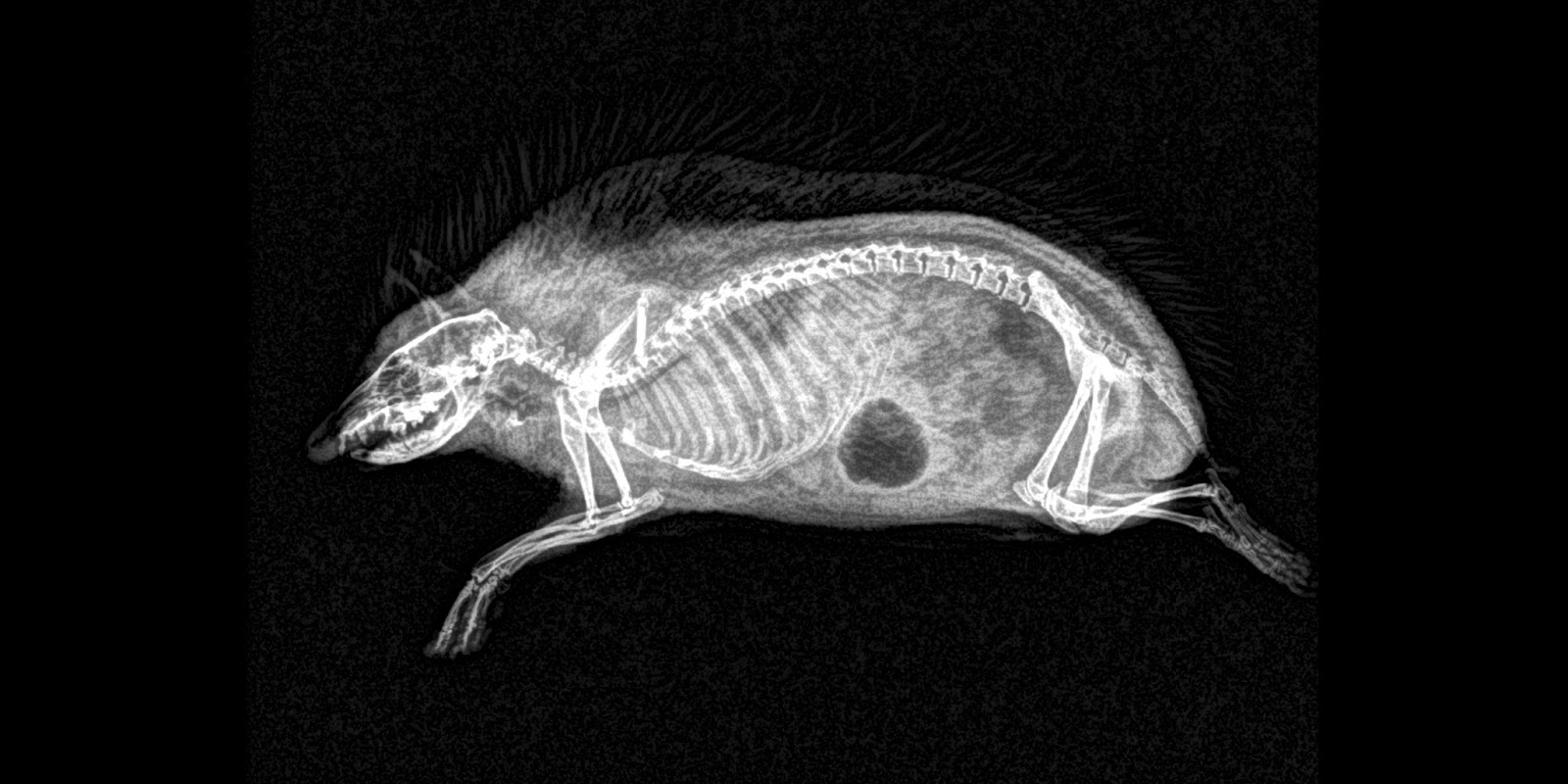
Even animals need health care and, just like humans, animals under zoo care get preventative treatments to ensure a longer and more physically stable life. On October 17 and 18, the Oregon Zoo posted on Twitter some of the "rad radiography from health checks at [their] veterinary center". The "rad radiographs" were labeled as "amazing and gothy animal x-rays taken during health check-ups". Initially, the unnamed iguana got the most tweets with the undulating twists of the python the second. Many artists responded that they would appreciate these pictures being uploaded in high definition for artistic purposes to Creative Commons. Another suggested selling these types of picts as a way to generate money to support the many expensive eating needs of the zoo animals. But seriously, wouldn't these be fabulous in art?!?! I could definitely see a future in these types of "photography" entering mainstream art!

unnamed iguana
nature displaying the mathematical perfection of the Fibonacci Spiral

Rodriguez flying fox
ball python
beaver's tail
Toco toucan
three-banded armadillo
hedgehog (apparently gas in the stomach shows up as a dark spot)
wolf eel
flamingo legs
tiger's paw
screech owl
dwarf mongoose
fat-tailed gecko
unnamed turtle

Thursday, November 1, 2018

The Bear Wojtek: Beer-drinking World War II Hero

Every semester in my Academic English class I have a speaking contest of some kind. One semester it might be "for 4 minutes talk about your favorite book", and the students are put in 4-5 student groups to battle out the "most interesting book" of the class. They start at small group level and then verbally battle it out in a second finalist round. This semester I thought we would have the speaking contest on "weirdest of the weird" news item, and again students had to "market their story" as the "weirdest of the weird" to win the prize. Much like the major leagues, the contest isn't just one-round of story-telling, but involves two before the students can choose the class pick for the weirdest story told to them. We had some amazing stories, but the most memorable story from the class was not the weirdest-of-the-weird, "The Ear That Was Made with Van Gogh DNA", but the beer-drinking bear Wojtek of World War II who was a war hero! My history-buff student loves war stories so he scrounged for a stunner, and indeed, he won "most jaw-dropping" story in the class! Total consensus!


How an orphaned Syrian bear named Wojtek became a Polish army hero 
Wikimedia Commons
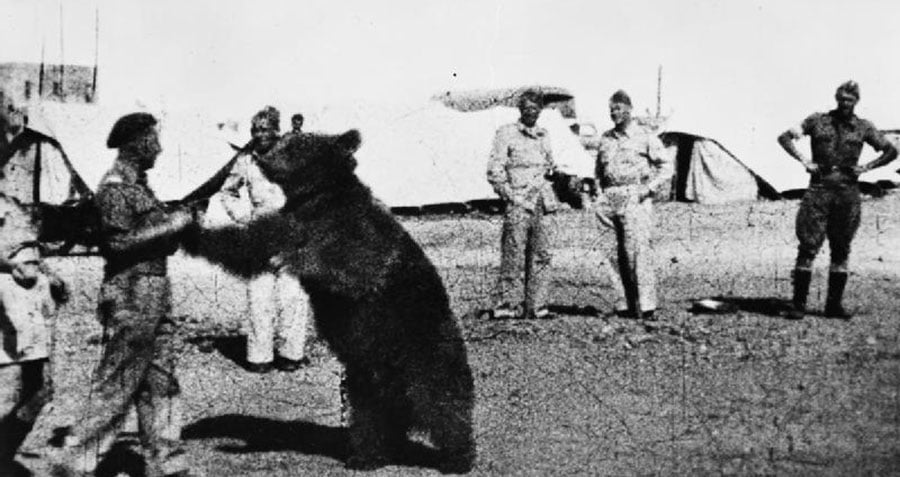
Troops of the Polish 22 Transport Artillery Company watch as one of their comrades play wrestles with Wojtek their mascot bear during the Middle Eastern campaign of World War Two, circa 1942-1943. 
Amid a long journey to join forces with the British Army in World War Two, one unit of the Polish II Corps stumbled upon an unlikely, and invaluable, comrade: A Syrian brown bear. 
A New Army And A New Mascot 

Poland bore a bulk of World War Two-related traumas. After the Nazis invaded Poland on September 1, 1939 — only to be followed by the subsequent Soviet invasion on the 17th — the country had only experienced a couple of decades of independence before it found itself under occupation once again. 
Following the invasions, Stalin and Hitler agreed to a nonaggression treaty, which effectively divided Poland in two. Hitler broke that pact on June 22, 1941, when he ordered an invasion of the USSR. 
In what came to be known as the Sikorski-Mayski Agreement, Stalin declared all previous pacts between the USSR and Poland to be null and void. Among other things, this allowed Poles to create their own army, despite technically being on Soviet soil. That they did, and the army became the Polish II Corps led by Lieutenant General Władysław Anders. 
In the spring of 1942, the newly-formed army left the USSR for Iran, along with the thousands of Polish civilians released from Soviet gulags. On the way to Tehran, the traveling Poles encountered an Iranian boy in the town of Hamadan who had found an orphaned bear cub. Irena Bokiewicz, one of the civilians, was so enamored with the cub that one of the lieutenants purchased him in exchange for a few tins of food. 
The cub became a part of the 22nd Artillery Supply Company, and soon received its own Polish name, Wojtek (pronounced voy-tek), which translates to “joyous soldier.” Wojtek traveled with the company through the Middle East, as the unit made its way to join forces with the 3rd Carpathian Division of the British Army in Palestine. 
Wojtek the Bear 
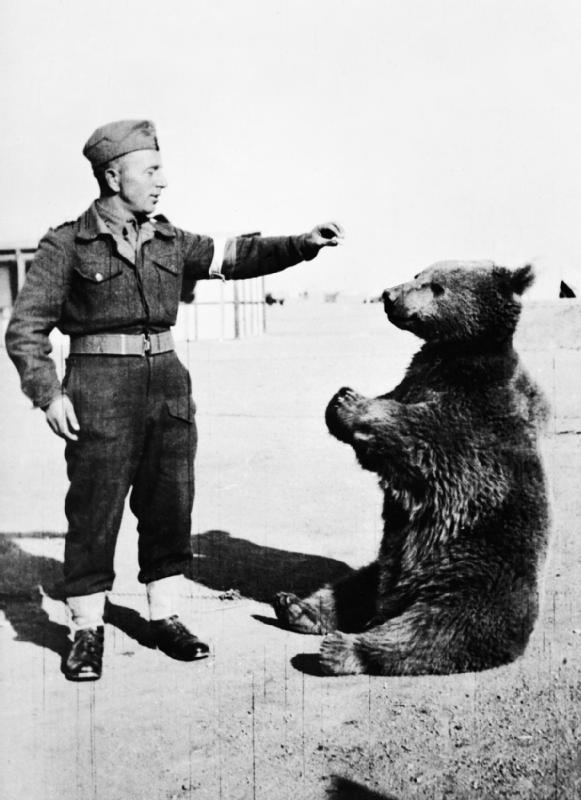
Wikimedia Commons Wojtek sits with a Polish soldier, 1942
Growing up with soldiers, Wojtek adopted some rather curious habits. Indeed, reports say that the bear would drink milk from an old vodka bottle, imbibe beer and wine, and smoke (and eat) cigarettes with his army buddies, just as any soldier would. 
Wojtek quickly became a source of light in the midst of war. He would often wrestle with his fellow fighters, and even learned to salute when greeted by his company men. 
Wojtek’s fate with the company fell on uncertain times in 1943, when the unit prepared to board a ship and join the Allied campaign against Italy in Naples. Officials at the Alexandria, Egypt port refused to let the bear on as he was not officially part of the army.
In a quick, if not bizarre, workaround, soldiers made Wojtek a private of the Polish II Corps, and gave him a rank, service number, and pay book to legitimate his status. It worked, and Wojtek joined his comrades onto the Italy-bound vessel, this time as a legal member of the army. 
By the time the unit arrived in Italy, Wojtek had grown significantly from cub to a 6 ft tall, 485 lb. adult Syrian brown bear. Making good use of his size and strength, the company taught Wojtek how to carry crates of mortar rounds, which he reportedly did without fail during the bloody battle of Monte Cassino. 
Wojtek not only survived the conflict — soon after, he achieved legendary status. Indeed, following Wojtek’s valiant performance, Polish high command made Wojtek the official emblem of the 22nd Artillery Supply Company. 
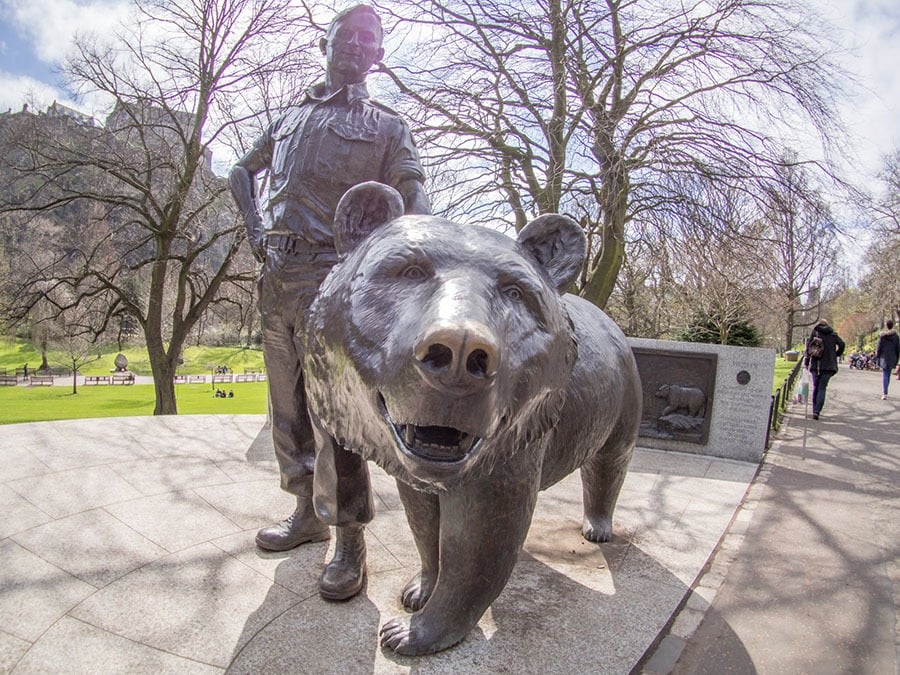
When the war came to a close in 1945, Wojtek retired from army life and traveled to Scotland with his fellow soldiers. Unlike his fellow veterans, Wojtek retired to the Edinburgh Zoo. 
Wikimedia Commons
While 21-year-old Wojtek would die at the zoo on December 2, 1963, his memories of army life would stay with him for the rest of his days. Reports say that the bear would perk up when he heard visitors speak Polish.
__________________________________________________________________

My student did further studies on the bear for relating his story. Once curious story he found was that initially the bear, as he was sitting up with his arms out, was given ammunition for a moment. When the bear didn't drop it but accepted holding the ammunition, the soldier or officer thought of getting the bear to actually carry ammunition to the front. Wojtek willingly did it! As Wojtek became even more loved in his company, the emblem patch on the uniforms of the Twenty-Second Artillery Supply in which Wojtek belonged came to be that of a bear ... carrying ammunition!

       Wojtek, the Bear of Monte Cassino

The "wartime memoirs of Stanislaw Kroczak, an officer with the Twenty-Second Artillery Supply Company of the Polish II Corps ... [puts a lot of human-attributed behavior stories like carrying ammunition in his forepaws to the front] to rest but does note the bear’s role in helping maintain the troops’ high morale during the bloody campaign up the mountainous Italian peninsula, culminating in the capture of Monte Cassino by the Poles on May 18, 1944. After the war, Wojtek shared the lot of most of his Polish friends who chose not to return to their Soviet-dominated homeland. Many of them settled in Scotland, and Wojtek was placed in the Edinburgh Zoo, frequently visited by his old army buddies, journalists, and crowds of admiring fans. Wojtek died in Edinburgh in 1963, but his fame lives on in several Polish and English children’s books, a BBC film documentary, and commemorative plaques in the Edinburgh Zoo, Imperial War Museum in London, and the Canadian War Museum in Ottawa. His story is now also documented in the Hoover Archives." -- Hoover Institution, 21 March 2012