Tuesday, September 17, 2013

Coyote Medicine

Lewis Mehl-Madrona, MD, Phd, is a half-breed Native American who took years becoming a medical doctor. In his early attempts at residency he voiced his idealistic views about how medicine is institutionalized but has little to do with the patients' mental or emotional sufferings while their physical symptoms are measured by numbers on medical tests and treatments correspond to the test-documented area of illness, not considering the human under treatment at all. Lewis as an intern was startled into the awareness of the human when four formerly healthy men were suddenly dying of kidney failure because doctors felt the men, because of slightly high counts of proteinura, were given biopsies ... and all four healthy men from the biopsies had kidney failure. And thus Lewis began to question allopathic medicine. For several years Lewis postponed his internship and explored various aspects of  Native American cultural health heritage in his search for complimentary holistic medicine that considers the whole person — the physical, mental and spiritual.


Below are some of his astute comments on the allopathic-complimentary medicine spectrum that he made in his book Coyote Medicine (1997):

"The academic world had met my thirst for knowledge but it had proven to be as spiritually barren as it was as intellectually bracing." (p. 33) 
"Native American religion was illegal at that time [1970s, until 1975], having been outlawed by an act of Congress in 1895. Although school children learn that the Constitution protects freedom of religion, Native Americans were long denied the right to practice theirs." (p. 36) 
"Eddie continued to explain the [Kiowa] sweat lodge to me, how it was built, what would happen. 'It's supposed to symbolize the whole world,' he said. 'Also the womb of Mother Earth. Even though it's a half sphere above ground, you're supposed to think of it as a whole sphere going doing into the earth as far as it stand above the earth. The pit in the middle of the lodge is where you put the stones. Think of those as your placenta. You're returning to the womb of Mother Earth. The placenta is then to doctor you and to take away the wastes and the toxins that you no longer need. You're going to sweat them out. The stones get filled up with the energy of the sun when the wood is burned. Then they give that energy back to you. That is the medicine.'" (p. 40) 
"The song 'Amazing Grace' is the national anthem of the Cherokee people. It was made famous from being sung on the Trail of Tears, from Tennessee to Oklahoma." (p. 67) 
"Medicine for the most part is generated numbers and statistics, t-tests and chi-squares, distributors and product moments — objective results that can be disputed and defended ... quantitative studies. Qualitative studies by recording stasis such as the method Lewis Mehl-Madrona used had its own merits, and the use of the deconstructionists view of reality, which has become mainstream thinking in behavioral medicine." (p. 145-6)

On psychiatric medicine:
"'We prescribe Thorazine of Haldol or lithium for bizarre behavior as casually as we prescribe antibiotics for bacterial infections,' Luke, chief of the psychiatric ward, would say. "Isn't chaining yourself to City Hall and reciting passages of Howl a more complicated problem than strep throat?" (p. 151) 
"The psychiatrists' tool kit includes four major categories of drugs — anti-anxiety drugs called benezodiazepines, antidepressants, antipsychotics, and mood stabilizers," e.g. Klonopin, Valium, Xanax, Librium, Antivan, Loxapine, Haldol, Mellaril, Pamelor, Lithium, valproic acid, Tegretol, Elavil, Zoloft, Parnate, and Nardil. (p. 163).

Other books similar to Coyote Medicine are located at Native American Healing.

Friday, August 2, 2013

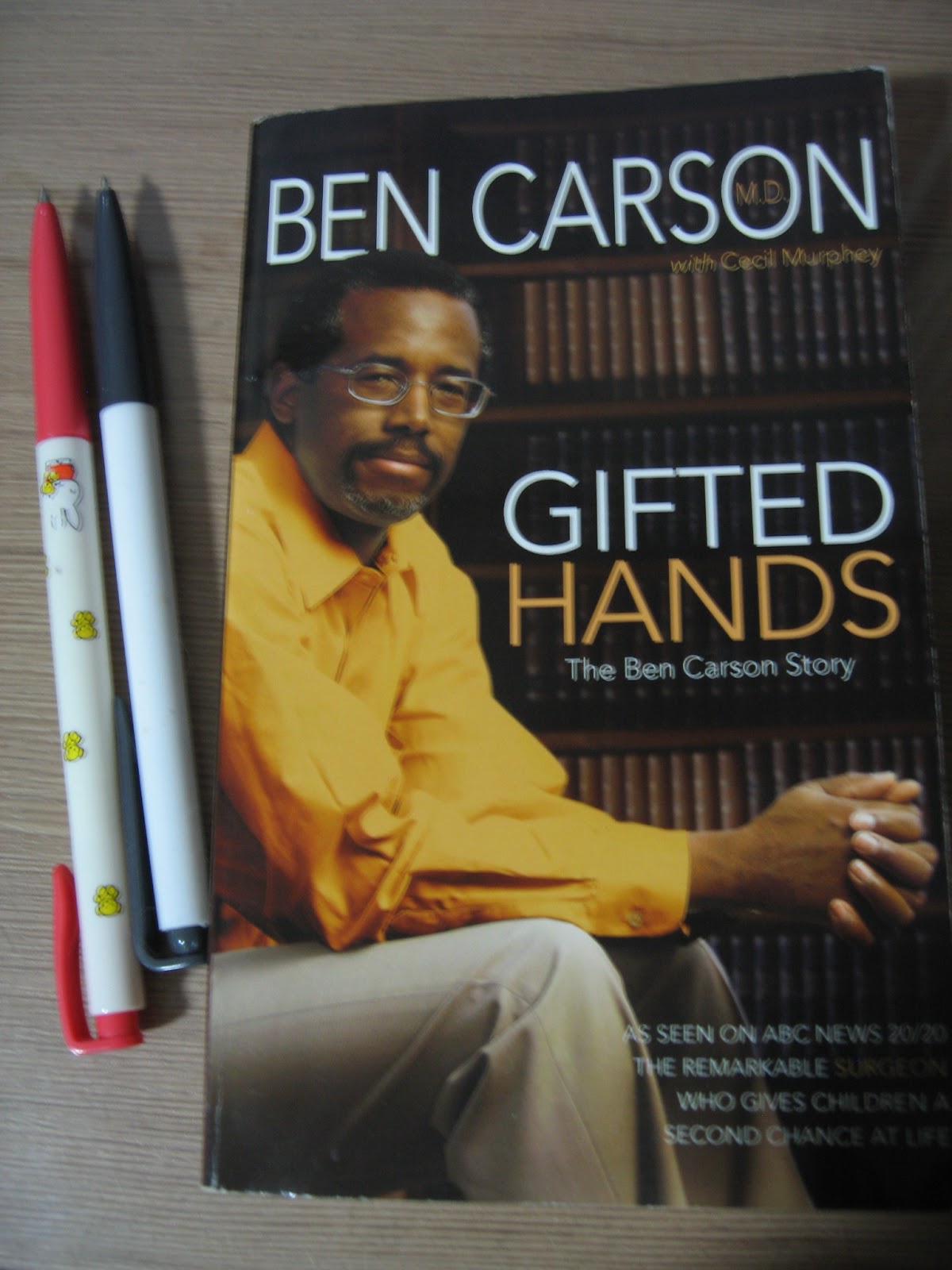
Ben Carson, "THINK BIG!"

The biography of Ben Carson is very impressive, but when a person has a glimpse at some of his motivation to help others, one can understand why he is so successful--in the modern terms of being famous, well-known, a big contributor to society--but he is also successful to himself. He has dreams that are as yet unfulfilled, one being to create a scholarship program that recognizes pure talent in any field, and to give those individuals who deserve a chance of success the necessary tuition funding to help them achieve their dreams.
 
For Ben to be a high achiever, he has put a THINK BIG policy into his own life. When people ask him what made him so successful, he says, "Think big." He wants to share his THINK BIG concept with others so they can dream large and be large at life. The following THINK BIG excerpt is lifted from Chapter 22, pages 216-218 in Gifted Hands by Ben Carson.
 

THINK BIG

T = TALENT
Learn to recognize and accept your God-given talents (and we all have them). Develop those talents and use them in the career you choose. Remembering T for talent puts you far ahead of the game if you take advantage of what God gives you.
 
T also = TIME
Learn the importance of time. When you are always on time, people can depend on you. You prove your trustworthiness. Learn not to waste time, because time is money and time is effort. Time usage is also a talent. God gives some people the ability to manage them. The rest of us have to learn how. And we can!
 
H = HOPE
Dont' go around with a long face,expecting something bad to happen. Anticipate good things; watch for them.
 
H also = HONESTY
When you do anything dishonest, you must do something else dishonest to cover up, and your life becomes hopelessly complex. The same with telling lies. If you're honest, you don't have to remember what you said the last time. Speaking the truth each time makes life amazingly simple.
 
I = INSIGHT
Listen and learn from people who have already been where you want to go. Benefit from their mistakes instead of repeating them. Read good books like the Bible because they open up new world of understanding.
 
N = NICE
Be nice to people - all people If you're nice to people, they'll be nice to you. It takes much less energy to be nice than it does to be mean. Being kind, friendly, and helpful takes less energy and relieves much of the pressure.
 
K = KNOWLEDGE
Knowledge is the key to independent living, the key to all your dreams, hopes, and aspirations. If you are knowledgeable, particularly more knowledgeable than anybody else in a field, y become invaluable and write your own ticket.
 
B = BOOKS
I emphasize that active learning from reading is better than passive learning such as listening to lectures or watching television. When you read, your mind must work by taking in letters and connecting them to form words. Words make themselves into thoughts and concepts. Developing good reading habits is something like being a champion weightlifter. The champion didn't go into the gym one day and start lifting 500 pounds. He toned his muscles, beginning with lighter weights, always building up, preparing for more. It's the same thing with intellectual feats. We develop our minds by reading, by thinking, by figuring out things for ourselves.
 
I = IN-DEPTH LEARNING
Superficial learners cram for exams but know nothing two weeks later. In-depth learners find that the acquired knowledge becomes a part of them. They understand more about themselves and their world. They keep building on prior understanding by piling on new information.
 
G = GOD
Never get too big for God. Never drop God out of your life.

Sunday, July 14, 2013

Hyponatremia

"For a long time it was thought that dehydration was a potential danger for people engaged in extended vigorous activity Thus, athletes were encouraged to drink lots of water while engaged in active sport. The trend toward extensive hydration has spread throughout society; many people carry water bottles everywhere and dutifully keep well hydrated.


To help prevent overhydration, the number of water stations
such as this one has been reduced in many marathon events.
Source
"It turns out, though, that in some circumstances, drinking too much water is a greater danger than not drinking enough. Excess water consumption can lead to hyponatremia, a condition in which the concentration of sodium ion in the blood is too low. In the past decade at least four marathon runners have died from hyponatremia-related trauma, and dozens more have become seriously ill. For example, a first-time marathon runner named Hillary Bellamy, running in the Marine Corps marathon in 2003, collapsed near mile 22 and died the next day. One physician who treated her said that she died from hyponatremia-induced swelling, the result of drinking too much water before and during the race.

"The normal blood sodium level is 135 - 145 mM (millimolar). When that level drops to as low as 125 mM, dizziness and confusion set in. A concentration below 120 mM can be critical. Low sodium level in the blood causes brain tissue to swell. Dangerously low levels can occur in a marathon runner or other active athlete who is sweating out salt at the same time that excessive salt-free water is being drunk to compensate for water loss. The condition affects women more than men because of their generally different body composition and patterns of metabolism. Drinking a sport drink, such as Gatorade, which contains some electrolytes, helps to prevent hyponatremia.

"Contrary to popular belief, dehydration is not as likely as overhydration to present a life-threatening situation, though it can contribute to heat stroke when the temperature is high. Athletes frequently lose several pounds in the course of extreme workouts, all in the form or water loss, with no lasting adverse effects. When, for instance, Amby Burfoot ran in the Boston Marathon in 1968, his body weight went from 138 to 129 pounds during the race. He lost 6.5% of his body weight while winning the men's competition that year. Weight losses of this magnitude are typical of elite marathon runners, who produce tremendous amounts of heat and sweat and cannot afford to slow down for much drinking."

Passage taken from Brown, et al. (1009). "Drinking Too Much Water Can Kill You" in
"Chapter 4: Aqueous Reactions and Solution Stoichiometry". Chemistry: The Central Science, 11ed.
Upper Saddle River, NJ: Pearson Prentice Hall. p. 147.

Thursday, June 20, 2013

Tuol Seng - Genocide Museum

Tuol Seng, the former Khmer Rouge S-21 prison, is a genocide museum reminding the world of the disaster that befell Cambodia starting in 1975 when the Khmer Rouge came in droves into the cities with the intent of taking absolute control of the country. The Khmer Rouge were for the most part young kids who had been so brainwashed by a twisted ideology, and they were given control, these young, little tutored half-adults governed by a remorseless regime to eradicate those educated, their elders who they should have respected, the people who were the foundation and grit of the country ... and so a senseless, brutal genocide programs swept the country. It is suggested that as many as 1/3 of the Cambodians were senselessly eradicated by out-of-control Khmer Rouge. Tuol Seng, otherwise known as S-21 prison, was the Khmer Rouge headquarters and the location of the most brutal tortures that have been recorded in our modern day.

Tuol Sleng as a Prison

In English, the word "Tuol Sleng" is recognized as the location where the Democratic Kampuchea (DK) regime, more commonly known as the Khmer Rouge (KR) regime, set up a prison to detain individuals accused of opposing Angkar. However, in the Khmer language, the word "Tuol Sleng" connotes a terrible meaning in itself. It is perhaps only a strange coincidence that the KR regime used this specific location as a prison.

According to the Khmer dictionary published by the Khmer Buddhist Institute in 1967, the word "Tuol" is a noun. It means the ground that is higher in level than that around it. The world "Sleng" can be a noun and also an adjective. When the world "Sleng" functions as an adjective, it means, "supplying guilt" (del aoy tos) or "bearing poison" (del noam aoy mean toas) or "enemy of disease" (del chea sat-trov ning rok). As a noun, "Sleng" means the two kinds of indigenous Khmer poisonous trees. The first kind is "Sleng Thom" or Big Sleng that has a big trunk, leaves, and fruit. The second type is "Sleng Vour" or Sleng Vine which is shaped almost like a vine with small fruit. They are both poisonous. Therefore, from the above translation we can see that Toul Sleng literally means a poisonous hill or a place on a mound to keep those who bear or supply guilt (toward Angkar).

According to documents discovered by the Documentation Center of Cambodia, S-21 was established at Tuol Sleng in May 1976.

S-21 or Tuol Sleng was the most secret organ of the KR regime. S-21 stands for "Security Office 21." S-21 was Angkar's premier security institution, specifically designed for the interrogation and extermination of anti-Angkar elements.

In 1962, S-21 was a high school called "Ponhea Yet" High School, named after a royal ancestor of King Norodom Sihanouk. During the Lon Nol regime, a republican regime backed by the US government in the 1970s, the name was changed to Tuol Svay Prey High School. Behind the school fence, there were two wooden buildings with thatched roofs. These buildings were constructed before 1970 as a primary school. Today all of these buildings are called "Tuol Sleng" and form part of the museum of genocidal crimes.

S-21, located in Tuol Svay Prey sub-district, south of Phnom Penh, covers an area of 600 x 400 meters. During the KR regime it was enclosed by two folds of corrugated iron sheets, all covered with dense, electrified barbed wire, to prevent anyone from escaping the prison. Houses around the four school buildings were used as administration, interrogation and torture offices.

Other branches of S-21 were located elsewhere. One was S-21 (kor), which was located in Ta Khmao provincial town in Kandal province south of Phnom Pehn; another was S-21 (khor) located at Prey Sar (a colonial era prison), west of Phnom Penh, in Dang Kore District, Kandal province. S-21 (khor) was also known as Office 24 and was used as a re-education camp not only for KR military Division 170, but also for all kinds of people including staff members of S-21, who were accused of minor crimes. S-21 (khor) was responsible for producing agricultural supplies for the S-21 complex.

All the classrooms of Tuol Sleng high school were converted into prison cells. All the windows were enclosed by iron bars, and covered with tangled barbed wire to prevent possible escape by prisoners. The classrooms on the ground floor were divided into small cells, 0.8 x 2 meters each, designed for single prisoners. The rooms on the top floors of the four buildings, each measuring 8 x 6 meters, were used as mass prison cells. On the middle floors of these buildings, cells were built to hold female prisoners.


At first, the interrogations were conducted in the houses around the prison. However, because women taken to the interrogation rooms were often raped by the interrogators, in 1978 the chief of the S-21, a former teacher named Kang Kek Ieu alias Comrade Duch, decided to convert Building B for use as an interrogation office, as this made it easier to control the interrogation process.

The Security office and its branches were under the authority of the Central Committee and the KR Minister of Defense, Comrade Son Sen alias Khieu, who appointed Comrade Duch to head the S-21 system. Comrade Duch was born as Kang Kek Ieu in Sho Yok village, Chine Thbong sub-district, Kampong Thom province. He was a mathematics teacher before he joined the Khmer Rouge.

According to Cambodia Scholar, David Chandler, Kang Kek Ieu won a scholarship to Lycee Sisowath in the late 1950s, and taught briefly in his specialty: mathematics in Kampong Thom province with Comrade Mom Nay alias Chan before going to Pedagogique, where he fell under the spell of some Chinese students sent from China to learn Khmer. Kang Kek Ieu also taught his speciality in Kampong Cham province briefly before being arrested as a Communist in 1965. After being released, he seemed to have disappeared into the woods.

The Research Committee on Genocide of the People's Republic of Kampuchea (PRK) reported in 1983 that in order to maintain security and to manage all the activities in S-21 prison and its branches, in 1976 the KR regime employed a large staff divided into 4 units responsible for S-21, S-21 (ka), S-21 (kor) and S-21 (khor). The units were:

A. Internal workforce ..........141
B. Office personnel ..........1,148
C. Interrogation units ............54
D. General workers ..........1,377

The number of workers in the S-21 complex totaled 1,720. Most of the "general workers" were under confinement at Prey Sar.

Within each unit, there were several sub-units composed of male and female children ranging from 10-15 years of age. These young children were trained and selected by the KR regime to work as guards at S-21. Most of them started out as normal before growing increasingly evil. They were exceptionally cruel and disrespectful toward the prisoners and their elders.

There were two management offices. One was Duch's office and the other was his office for interrogation, documentation and general administration. Ill or injured prisoners were treated by paramedics in their respective cells. Treatment was available three times per day. There were no hospital services inside the prison. The medical personnel were untrained and mostly children.

The victims in the prion were taken from all parts of the country and from all walks of life. They were of different nationalities and included Vietnamese, Laotians, Thai, Indians, Pakistanis, British, Americans, Canadians, new Zealanders, and Australians, but the vast majority were Cambodians. The civilian prisoners composed of workers, farmers, engineers, technicians, intellectuals, professors, teachers, students, and even ministers and diplomats. Moreover, whole families of the prisoners, from the bottom on up, including their newly born babies, were taken there en masse to be exterminated.

According to the KR reports found at Tuol Sleng Archive, the influx and outflux of prisoners from 1975 - June 1978 were recorded on lists. Some documents have disappeared. One report estimated the number of prisons as follows:

1975 .........................154 prisoners
1976 ......................2,250 prisoners
1977 ......................2,330 prisoners
1978 ......................5,765 prisoners


The guide, a baby of 3 when the Khmer first rolled into the capitol, points to a board of the Khmer Rouge youth
who were responsible for carrying out the torture in Tuol Sleng S-21.
 
These figures, totaling 10,499, do not include the number of children killed by the KR regime at S-21, which was estimated by the same report at 2,000.

The reports show that in 1977 and 1978, the prison on average held between 1,200 and 1,500 prisoners at any time. The duration of imprisonment ranged from 2-4 months, although some important political prisoners were held between 6-7 months.

The prisoners were kept in their respective small cells and shackled with chains fixed to the walls or the concrete floors. Prisoners held in the large mass cells had one or both of their legs shackled to short or long pieces of iron bar. The short iron bar was about 0.8 meters up to 1 meter long and was designed for 4 prisoners. Prisoners were fixed to the iron bar on alternative sides, so they had to sleep with their heads in opposite directions.

Before the prisoners were placed in the cells they were photographed, and detailed biographies of their childhood up to the dates of their arrests were recorded. Then they were stripped to their underwear. Everything was taken away from them. The prisoners slept directly on the floors without any mats, mosquito nets or blankets.

Every morning at 4:30am, all prisoners were told to removed their shorts, down to the ankles, for inspection by prison staff. Then they were told to do some physical exercise just by moving their hands and legs up and down for half an hour, even though their legs remained restrained by the iron bars. The prison staff inspected the prisoners 4 times per day; sometimes the inspection unit from the security office made a special check over the prisoners. During each inspection, the prisoners had to put their arms behind their backs and at the same time raise their legs so that the guards could check wither or not the shackles were loose. If loose, the shackles were replaced. The prisoners had to defecate into small iron buckets and urinate into small plastic buckets kept in their cells. They were required to ask for permission from the prison guards in advance of relieving themselves; otherwise, they were beaten or they received 20-60 strokes with a whip as punishment. In each cell, the regulations were posted on small pieces of black board. The regulations read as follows"

1. You must answer accordingly to my questions. Do not turn them away.
2. Do not try to hide the facts by making pretexts of this and that. You are strictly prohibited to contest me.
3. Do not be a fool for you are a chap who dares to thwart the revolution.
4. You must immediately answer my questions without wasting time to reflect.
5. Do not tell me either about your immoralities or the revolution.
6. While getting lashes or electrification, you must not cry at all.
7. Do nothing. Sit still and wait for my orders. If there is no order, keep quiet. When I ask you to do something, you must do it right away without protesting.
8. Do not make pretexts about Kampuchea Krom in order to hide your jaw of traitor [sic].
9. If you do not follow all the above rules, you shall get many lashes of electric wire.
10. If you disobey any point of my regulations, you shall get ten lashes or five shocks of electric discharge.


When I heard my camera click on this picture, I suddenly felt sick and wondered what kind of a person I am to take such a picture of horror. In the commemorative stupa is a large collection of skulls - from the victims of Tuol Sleng. In the barbed-wire enclosed compound, people walking around will see bones jutting from the ground from mass burials. The museum curators do not collect the bones that people find but leave them there, and when a very large number has washed up, they are collected and interred somewhere. The bones keep washing up ... and it's eery to know that you are walking on bones that you're not seeing ...

... or to see chickens scratching among the sufacing bones ....

The prisoners were required to abide by all the regulations. To do anything, even to alter their positions while trying to sleep, the inmates had first to ask permission from the prison guards. Anyone breaching these rules was severely beaten. Prisoners were bathed by being rounded up into a collective room where a tube of running water was placed through the window to splash water on them for a short time. Bathing was irregular, allowed only once very two or three days, and sometimes once a fortnight. Unhygienic living conditions caused the prisoners to become infected with diseases like skin rashes and various other diseases. There was no medicine for treatment.

Tuol Sleng as a Museum

In the wake of the renovation following the fall of the Khmer Rouge regime, Tuol Sleng, opened as a museum of the atrocities of the genocide. In the 1980s, most visitors were local people, whereas foreign visitors were principally from certain socialist countries like Vietnam, the Soviet Union, Laos, Hungary, Poland and others from the Eastern bloc. Since the 1993 election and the establishment of the Kingdom of Cambodia, most of the visitors to Tuol Sleng Museum have come mainly from Taiwan, Japan, Germany, Korea, the United States, and other non-communist countries. About 50 people (statistics from the early 2000s) visit the museum a day to witness the horrors or a regime without humanism or conscience.

Saturday, June 15, 2013

Ghengis Khan and the Making of the Modern World

Weatherford, Jack. Ghengis Khan and the making of the modern world.  xxxv, 312 pp., illus., bibliogr. New York: Crown Publishers, 2004. $25.00 (hard), $14.95 (paper)
(book review - by Cheryl Magnant)

This historical ethnography of the Mongol people as hunters growing into the powerful nation of destroyers, conquerors and shapers of history under the leadership of Ghengis Khan is a carefully researched piece of scholarship divided historically into three parts.  For introduction, the author relates his personal research endeavors in the Mongolian steppes and gives a broad overview of how Mongols are perceived in the present age and how and from where commonly known perceptions and misconceptions of the Mongols have arisen.  The first part of the narrative tells of Ghengis Khan’s birth in 1162, his rise to power and his charisma as a leader and unifier of the steppe tribes into a founded nation in 1206, and then recounts many of his successes at expansionism until his death over twenty years later. The second part relates the further expansions of his immediate heirs and their entering the Mongol World War, which lasted five decades until his grandsons went to war with one another; the war was the beginning of the end of the great nation which ruled nearly half of the world from the Mongol steppes north to the dense forests of Russia, south to Vietnam and westward to the edges of modern western Europe, and deeply southward into India. The third part examines Mongolia’s century of peace and the effects the Global Awakening had on modern society in terms of political, commercial and military institutions. 
 

Following the three narratives is an epilogue giving a culturally emotional tribute to a newly discovered site located by the author and his scholarly companions; it is the location of Ghengis Khan’s wife’s kidnapping, the pivotal event which ignited Ghengis Khan into ingeniously changing a tribe into a nation.  Extensive chapter notes provide cross-referencing in English, when available, and other languages if not; all referenced foreign scripts have been Anglicized.  For Anglicizations within the narrative, Jack Weatherford provides a note on transliteration of the Mongol language and a glossary of Mongolian names and places appearing in the text.  His selected biography is replete with no less than one hundred and ninety-five references, followed by acknowledgments to the diversity of people in Mongolia, Russia, China and the United States, ranging from herders to parliament members, who assisted him in his years of research.  Throughout the ethnography, intermittent drawings depicting historical moments reflective of Mongolian art and culture appear by Dr. S. Badral of Chinggis Khaan University.  Finally, a several-paged index culminates this ethnography. 

Jack Weatherford’s premise in writing Ghengis Khan and the Making of the Modern World is that through the influence of Ghengis Khan, contrary to popular belief, the world was not only threatened by his warring ingeniousness and revolutionary tactics but was also positively transformed.  Jack Weatherford writes about the ancient struggle between the hunter and the herder and portrays the triumph of the hunter in a revisionist history of Ghengis Khan reshaping civilization worldwide by conquering peoples but not destroying cultures.  Ironically, Ghengis Khan, an illiterate hunter who became Great Khan in his early forties, surrounded himself with scholars and skilled artisans of the conquered peoples and amalgamated their knowledge into his growing Mongol kingdom; thus, through his military thrusts primarily west and southward, he redistributed his newly gained knowledge and learned skills, and as a result, impacted world history by reshaping literature, language, art, music, erudition itself, methods of war, politics and diplomacy, commerce, philosophies, and, in fact, he was the first conqueror and ruler to successfully practice religious tolerance.  Ghengis Khan was a humanitarian who abolished torture, avidly sought out new technologies and forms of expertise, and as Great Khan, head of the Mongols, was representative architect of history.  His four male offspring were the dynasty founders of the Golden Horde in Russia, the Moghul Empire in India, the Ilkhanate in Persia and Iraq, and the Yuan Dynasty in China.  His blood legacy lasted for seven hundred thirty-one years until the last descendent, Alim Khan, was deposed as emir of Bukhara.  Yet, the legacy he gave the world was the foundation of modern civilization:  international paper currency, a postal system, technologies such as printing, the compass and abacus, as well as the spread of merchandises.  Namely, the legacy he bestowed on civilization was the beginning of the homogenization of our present global village.
 
Mediaeval Commerce Asia - source
Ghengis Khan and the Making of the Modern World is a theoretical narrative of historical events which took place eight centuries previous.  Extensive passage of time and translation concerns of The Secret History of the Mongol raise some questions as to the exactness of the events reconstructed in this ethnology, especially as The Secret History of the Mogols was written for the royal Mongol family significantly after Ghengis Khan’s death.  Over a period of five years Jack Weatherford researched and took cultural journeys through the “Great Taboo,” Ghengis Khan’s homeland and forbidden burial site.  Through careful readings of the more than a dozen language translations of The Secret History of the Mongols, Jack Weatherford, self-confessed as lacking proficiency in the Mongol language, along with two renowned Mongolian scholars, Professor Kh. Lkhagvasuren, archeologist, and Professor O. Sukhbaater, geographer, retraced the steps of Ghengis Khan in the same inclement weather as was presented in The Secret History of the Mongols.  Vast discrepancies between the translations became apparent as well as the difficulty in deciphering the context of relocating non-geographically named sites.  Other names appear to be in code or allude to places and events of common knowledge at the time but about which have been lost in the intervening centuries.  Due to harsh weather, the steppes are ever-changing and topographical landmarks have been erased or defaced, making positive identification difficult.  Transliterations of names into English alone also inhibit the preciseness demanded of empirical research; however, Jack Weatherford presents several names of controversial spelling and, explaining his choice in selecting one, systematically uses it throughout his narrative. 
 
The Secret History of the Mongols is a cultural tool, describing even the weepings of the Great Khan; nevertheless, there exists one cultural aspect that leaves gaps in the understanding of peoples of non-Mongolian backgrounds:  the topic of death, which is still not culturally discussed in Mongolia today.  As a result, a mystical vagueness surrounds the death and burial of Ghengis Khan, and no matter how scholarly or technical the searching may become, the steppes will never bring to light his disguised-by-trampling burial site.  Jack Weatherford, already holding a Ph.D. in anthropology from the University of California, yet, owing to his five years of extensive research with the steppe scholars and an additional year of literary research on Mongolia at Macalester College in St. Paul, Minnesota where he is the Dewitt Wallace Professor, was awarded an honorary Doctorate of Humanities from the Chinggis Khaan College in Mongolia for his scholarly research on Mongolia and Ghengis Khan.  His most recent ethnography, Ghengis Khan and the Making of the Modern World, is imbued with Jack Weatherford’s insightful steppe-life cultural experiences which clarify presupposed cultural knowledge in the recently corrected and translated The History of the Mongols: The Life and Times of Chinggis Khan (2001) by Urgunge Onon.  The books counterbalance each other.  The History of the Mongols focuses on the past and is a cultural translation from the original Uighur script into English, whereas Genghis Khan and the Making of the Modern World not only explores Mongolia’s ancient history but also ties in the ancient past with the modern present. 
 
Cheryl Magnant

Thursday, May 30, 2013

Foreign Food Mart, an International Experience

International Grocery Store Project: Foreign Food Mart

(identifying 5 import items and giving a historical background in addition to dietary needs/interests, religious interests, import/export standards, etc)
 

             Foreign Food Mart in Itaewon, the area in Seoul historically known for foreign housing and foreign food restaurants catering to the foreign residences, is my favorite place to shop. For my interests, it offers a wide variety of beans, legumes, spices, as well as a few fresh vegetables and fresh herbs that just can’t be found on the Korean market. As a gluten-free near vegan, here I can find quite the food variety to extend my diet, but even if I’m not extending the diet, I’m very curious to know what’s new on the shelf, especially as the shop, which opened in 2006, has expanded several times. The store most recently expanded around New Year’s, at which time they added another 30-40% floor space, and the imports now appearing on the shelves are getting even more interesting.


One of my old standby purchases is Rotary® Onion Crackers, a product of Indonesia. Its four ingredients are incredibly simple—tapioca flour, garlic, salt and coconut oil. The product carries the seal of Majelis Ulama Indonesia which has halal in both English and Arabic at its center. Majelis Ulama Indonesia was established in 1975 and is Indonesia’s top Muslim clerical body for producing fatwā, the giving of legal judgment according to Islamic law, and for advising the Muslim community on contemporary issues. With the Indonesian Ulema Council’s seal, this product is approved for religious dietary consumption by the 1.62 billion global Muslims, that is, 23% of the world’s population and with the largest population living in the country of the products manufacture. As the entire simple packaging is written in English with the exception of the dual-lingual ingredients and the seal itself, this product targets English speaking countries. It also meets USA market standards with a clearly labeled product, the ingredients easy to read, the manufacturer’s name, address and contact provided, and the nutrition facts label present. Although this product will attract the eyes of Muslims in foreign countries, it by its simplicity and a cracker with a flavor, onion, well-liked by Americans, will be well received in the US or by people with savory proclivities, and particularly so by the more health conscience label readers and those wishing to be gluten-free, not an issue in a country where gluten crops aren’t grown and so the need for gluten-free labeling isn’t regarded as necessary or economically gainful yet.


            Crown Farms Vegetable Samosa is a product I’ve tried in the past, and is indeed very tasty and very spicy, as are most foods associated with Bangladesh, where it is manufactured. Eurasia Food Processing in Bangladesh manufactures the product but Euro Foods Group of England imports and distributes it, by all accounts for reasons of providing exotic food items to the more northern United Kingdom and also for boosting the growing Bangladeshi economy. This is definitely an export item, and not for sale in Bangladesh as the only Arabic word on the box is halal. The product is marketed toward Muslims or, more specifically, people in English, French or Italian speaking countries, as the ingredient list and preparation instructions are in those languages. The ingredients are whole foods with the filling containing mixed vegetables, salt, sugar, spices (onion, garlic, ginger, cumin powder, coriander powder, turmeric powder), vegetable oil and water, and the pastry is a composition of wheat flour, water, vegetable oil and salt. I couldn’t find evidence of this product being sold in the US which makes sense as, according to the FDA, all ingredients must be labeled in their descending order as based on weight, and this product doesn’t seem in compliance with that regulation, e.g. salt couldn’t possibly be the ingredient second in weight; the product would be sodium saturated and would far exceed the labeled sodium amount of less than 2,600 mg per serving, the single samosa. As for what the Food Standards Agency (FSA) of the UK requires on their labels, I wasn’t able to locate specifics but a FSA website did state that Scotland, Wales and Northern Ireland had different standards than England. In any regard, samosas, a name of Persian origin, have become widespread across the southern regions of Asia, the Arabian Peninsula, the Mediterranean, and in various parts of Africa, not to mention the large ethnic groups who have migrated from these countries or the many people previously exposed to these countries. Samosas have great global popularity and their popularity is further growing, putting this product as high on the well-to-be-received list in a number of countries.


            One item in the mart that reminds me somewhat of baklava is Mo’pleez Soan Papdi, a product of India where it is a traditional dessert. Unlike Greek and Turkish baklava with the main ingredients being honey and/or sugar, wheat flour, cloves, cinnamon, frequently walnuts and typically phyllo, soan papdi typically contains sugar, gram flour, perhaps wheat flour, ghee, cardamom and often pistachios. Influences between the desserts may exist, but obvious regionalism from accessible ingredients influence the overall products. Although soan papdi also is a dessert, it is more savory than baklava. This particular soan papdi is packaged in three languages (English, Arabic and French) and is apparently for export. The packaging cites the ingredients sugar, refined peanut oil, chick pea flour, wheat flour, cardamom, almonds, pistachios and gluten. No preservatives or additives are included in this label, and by including the batch number, manufacturing date and expiration date, there seems careful concern in ensuring a quality product to a discriminating market. Though India homes the third largest population of Muslims in the world, no halal label is present on the packaging which perhaps unwittingly marginalizes the 177,291 Indian Muslims, or perhaps the target group, if the product is to be sold within country, is the vegetarian, the group (actually the majority of India) which traces its history back to 500 BC when India saw a rise in Buddhism and Jainism, the religions that practices ahimsa or “non-violence”. This product bears the symbol for “vegetarian”, a word only in existence since about 1847 and which was derived from the Latin vegetari, meaning “to enliven”; it was coined by Brits in reference to Britain’s colonial Indian vassals. Two other symbols include a recycling awareness, a larger concern in Western societies than in India, and a European Snack Association symbol, which is an organization that promotes savory snacks to the UK. Commerce between the England and India, England’s former colony, is expected to double by 2015, and this product will likely be included in promoting the trade connection.

             Lemnos Mediterranean Lifestyle Sun-dried Tomatoes were in refrigeration and were a product of, surprisingly, Australia. The concept of the Lemnos brand was conceived on an island in the Aegean Sea and now manufactures “premium quality Mediterranean style cheeses and dairy products” to about 40 countries. It even declares itself the number one dairy company in the world, and holds certifications for halal, Hazard Analysis and Critical Control Point (HACCP), Safe Quality Food (SQF), Dairy Safe, and organic. This particular product has no dairy which seems to be the focus of the brand, but the two kilogram pail is marketed towards the Muslim community within Australia and worldwide by its English and Arabic label of halal. No claims to this product being organic exist, nor does it seem to be aimed for the US market as measurements are limited to kilograms, unlike the onion crackers, samosas, and soan papdi already discussed. However, there is awareness of a growing population with gluten allergies, and included in the nutrition facts label is a label for gluten, a listing that is not typically seen and certainly not required on such labels. Certainly the FDA does not require it.
 

            The item at the Foreign Food Mart which most surprised me was the Tropiway™ Plantain Fufu Flour. Fufu flour is an African food, and yes, of late there is a very mixed African population in Korea, so there is a market here. Yet, this product is out of place. First of all, this mart seems to cater to Indians, Middle-Easterners of which the owner is one being from Bangladesh, to Thai, Filipinos, Vietnamese, among others, which include the very large and diverse English speaking expats in education and business. This item is the only identifiable African food in the mart; however, it’s only African by name when, in fact, it is an American manufacture. As Sudanese political refugees relocating to the US stated concerning the American packaged and processed food they encountered on the flight, “American food is not food”. They were used to whole and unprocessed foods, not highly processed pseudo-foods with flavor enhancers and chemical attributes. This fufu flour lists on its ingredients—plaintain, granular potato, cassava, mono and diglycerides, BHT (to protect flavor), sulphites (as preservatives), FD&C yellow #5. This list of non-food items might be accepted by Americans used to such ingredients, but why would this item be in this store? And, it must be asked, who would the market even be back in South Carolina where the 28.1% black population seems to be black Americans, not African Americans craving food memories from their mother country?

Bibliography

Compare Infobase Ltd. 24 Dec 2012. Top ten countries with largest Muslim population. Maps of the World. Retrieved from http://www.mapsofworld.com/world-top-ten/world-top-ten-countries-with-largest-muslim-populations-map.html.

Eurofoods Group Blog. 13 Jan 2011. Bangladesh: The new frontier in Eurofoods Group Blog. Retrieved from http://eurofoods.wordpress.com/2011/01/13/bangladesh-the-new-frontier/.

European Snacks Association. 2004. European Snacks Association. Retrieved from http://www.esa.org.uk/europe_statistics.php.

Food Standards Agency. 20 Dec 2005. Imports and food labeling. Food Standards Agency. Retrieved from http://www.food.gov.uk/business-industry/imports/importers/labelling.

IndiaChild. 2000. Vegetarianism in India. Retrieved from http://www.indianchild.com/vegetarianism_in_india.htm.

Lemnos. N.d. The lemnos story. Retrieved from http://www.lemnosfoods.com/the-lemnos-story/.

National Geographic. N.d God grew tired of us: Cultural differences. http://video.nationalgeographic.com/video/movies/god-grew-tired/cultural-differences-ggtu/.

Price, Rabbi Gavriel. 2013. Food ingredients labels: A primer on regulations. Kashrut.com. Retrieved from http://www.kashrut.com/articles/LabelingLaw/.

PTI. 21 Feb 2013. Trade volume between UK, India set to double by 2015. Zee News Limited. Retrieved from http://zeenews.india.com/business/news/economy/trade-volume-between-uk-india-set-to-double-by-2015_70694.html.

US Census Bureau. 2011. South Carolina in State & County Quick Facts. US Department of Commerce. Retrieved from http://quickfacts.census.gov/qfd/states/45000.html.

US Food and Drug Administration. 30 Apr 2009. Inspections, Compliance, Enforcement, and Criminal Investigations. US Department of Health & Human Services. Retrieved from http://www.fda.gov/ICECI/Inspections/InspectionGuides/ucm074948.htm.

US Food and Drug Administration. 1 Mar 2013. General food labeling requirements in Food. US Department of Health & Human Services. Retrieved from http://www.fda.gov/Food/GuidanceRegulation/GuidanceDocumentsRegulatoryInformation/LabelingNutrition/ucm064866.htm.

Wikipedia (8 May 2013). Fatwā in Wikipedia. Retrieved from http://en.wikipedia.org/wiki/Fatw%C4%81.

Wikipedia (10 Mar 2013). Indonesian Ulema Counsil in Wikipedia. Retrieved from http://en.wikipedia.org/wiki/Indonesian_Ulema_Council.

Wikipedia (20 May 2013). Samosas in Wikipedia. Retrieved from http://en.wikipedia.org/wiki/Samosa.

Monday, May 13, 2013

Environmental Hormones in the Home

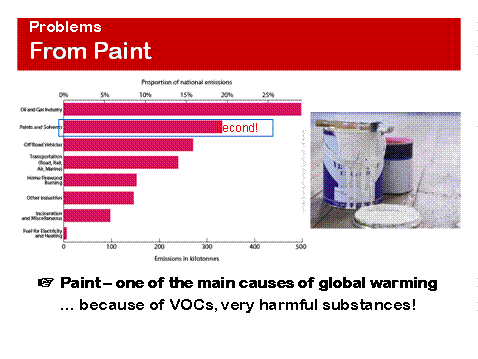
This presentation was given by Yoon Mi Gyeong, Son Sinae, and Kim Min Chang for their final presentation exam for the freshmen class Academic English. Because it is so well organized and presents on an environmental problem the world over, I asked if they would mind if I shared their information on my blog. They were so happy to share and so happy to be recognized for their very hard work! Very phenomenal work, my wonderful students!!!